
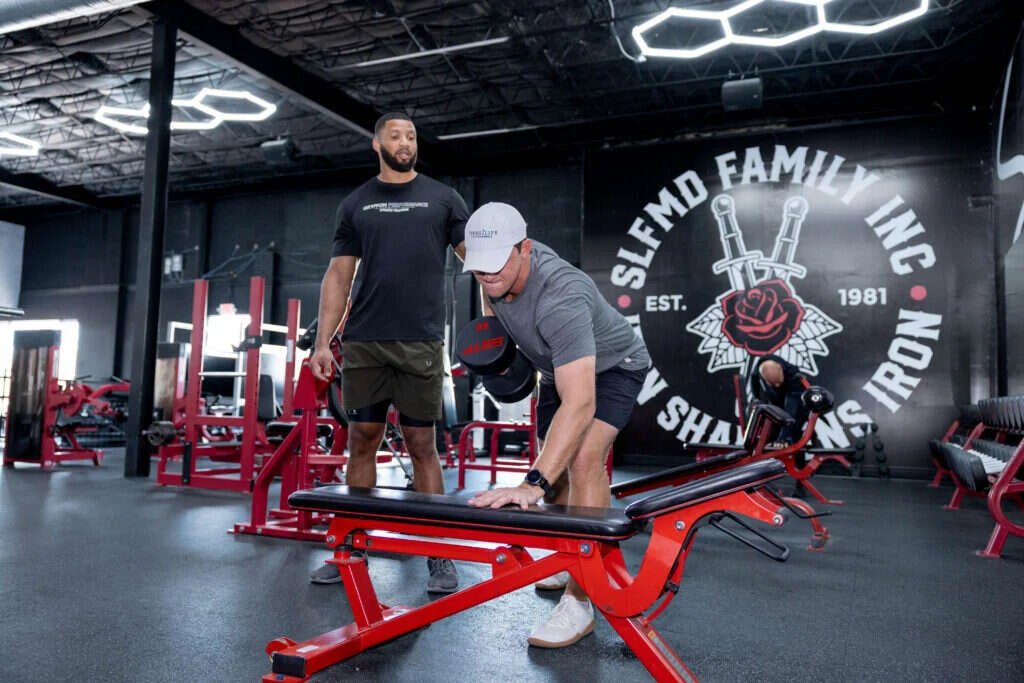
Your knee has been talking for months. Not enough to stop you, just enough that you think twice before pickleball and drop squats from the workout you still do alone. Or it’s your back after the drive home on the Tollway.
You’ve done the work. Physical therapy that helped. Exercises from a video. It got better, then a busy month brought it back.
So do you need a physical therapist or a personal trainer?
The short answer: they’re different jobs. Physical therapy is built to calm things down and get you moving again. An experienced personal trainer builds the strength that keeps you training after that. In our experience, most people never finish that part. If you can move but aren’t back to what you love, you likely need the second job. If your knee or back has kept you from training properly for months, apply for coaching and tell us what you’ve already tried. Your first session with us is a complimentary strategy session.
Key points
- A physical therapist handles the early stage after an injury or surgery. A personal trainer handles the months of strength work that come after it.
- In our experience, pain can fade in weeks, but the strength you lost takes months of consistent work to rebuild.
- If you can move but aren’t back to what you love, you likely need a personal trainer.
- Just had surgery? A good trainer builds around your surgeon’s protocol, not over it.
How is a personal trainer different from a physical therapist?
Physical therapists are licensed clinicians, and they do work a trainer doesn’t. After surgery or a fresh injury, they restore range of motion, settle a joint that’s angry and get you through the early stage. That’s real skill, and we respect it.
Training has a different goal. It isn’t just to get you out of pain. It’s to make you strong enough, and fit enough, that your week and the things you love stop feeling like a gamble. That takes progressive load over months: more weight, more range, more control, adjusted as your body adapts.
The way we see it, the two jobs sit on one line, one after the other. Therapy gets you through the first stretch. In our experience, the visits usually stop once the pain eases, well before the strength is back. That’s not a knock on anyone. Visits come to an end, life gets busy, and the home exercise sheet ends up in a drawer.
Why does it flare up again after physical therapy?
Pain settling and capacity coming back don’t happen on the same timeline. In our experience, pain can fade in weeks, while muscle and tendon take longer to adapt to load, and the strength you lost while protecting a joint takes months of consistent work to rebuild.
The way we see it, that’s why so many people feel fine, go back to what they used to do, and flare up a few weeks later. It looks like the injury coming back. Often it’s a body that’s been asked for more than it can handle yet. Feeling ready runs ahead of being ready.
And the work that closes that gap is exactly the work people do least well alone. Not because they’re lazy. Because nobody can see their own compensations, and nobody enjoys guessing whether today’s soreness means push or back off.
Which one do you need?
Here’s how we’d think about it. You’re probably ready for a personal trainer if:
- You can walk, work and drive, but you avoid certain movements or activities.
- You finished physical therapy and it comes back whenever you do more.
- You’ve been “careful” for months and you’re tired of it.
- You want something specific back: a full golf round, heavy lifting, chasing your kids, a tennis match without paying for it on Monday.
Just had surgery? You’ll have a protocol from your surgeon, and we’d build around it, not over it.
Can’t tell whether it’s your knee, your back or something else? Most people can’t, and it shouldn’t keep you waiting. David will look at how you move in person, and if you need more than training, he knows which doctors to send you to.
What a good trainer does with a joint that talks
This is our approach, not a program. What you should do depends on you.
- Look at how you move first. How you squat, hinge, step and press, side to side, before anything gets loaded. You can’t see your own knee drifting in or your hips shifting to one side. A coach sees it in a rep.
- Train around it, not through it. Keep training everything that doesn’t hurt, and find versions of the movements that do. Stopping everything costs you strength you’ll need later.
- Get the dose right. Go too light and the joint never gets stronger. Go too heavy and one flare-up has you swearing off lifting. Finding the middle, and moving it up week by week, is the hard part.
- Read the next day. How the joint responds the morning after tells you more than how it felt during the set. Adjusting the next session from that response is a big part of what a coach does.
- Train what’s weak, not just what hurts. A cranky knee often has hips and legs that need work above and below it.
- Handle the nutrition. The way we see it, carrying less body fat takes load off your joints, and the targets need adjusting as your weight, training and appetite change.
None of that is secret. A video can show you a split squat. It can’t tell you if your left side is doing half the work, and it won’t change the plan when your knee starts talking again on a week full of flights and client dinners.
From the floor: In our experience, the people who come to us after physical therapy rarely lack exercises. They have a folder full of them. What’s missing is someone to set the load, push it when it’s time, pull it back when it isn’t, and keep it going through a busy quarter.
If you finished physical therapy and still don’t trust that joint, apply for coaching and tell us where it stalled.
Why this takes a coach
You already know more exercises than you need. What’s hard is the months of progressive strength work, adjusted around your body and your week, with someone watching what you can’t see. That’s what an experienced coach is for, and it’s what we do.
Keeping you from getting hurt again is part of the job, too. Every exercise and every step up in load is chosen around the joint that’s been bothering you, so you build strength without paying for it the next week.
Strong is only half of it. At Gryffon Performance we train you toward a lean, balanced body that handles real load, so the joint that’s been talking stops running your calendar.
The first step is your complimentary strategy session, a full hour at the studio with David, our founder and head coach. He’ll go over your goals, your training history, your schedule and the joint that’s been bothering you, then run a physical assessment, talk through nutrition and show you around. You’ll walk out with a starting point, a schedule that fits your real week and a plan that makes sense.
David knows this from the inside: after a serious back injury, he came back and has since deadlifted 600 pounds.
Training after physical therapy in Dallas
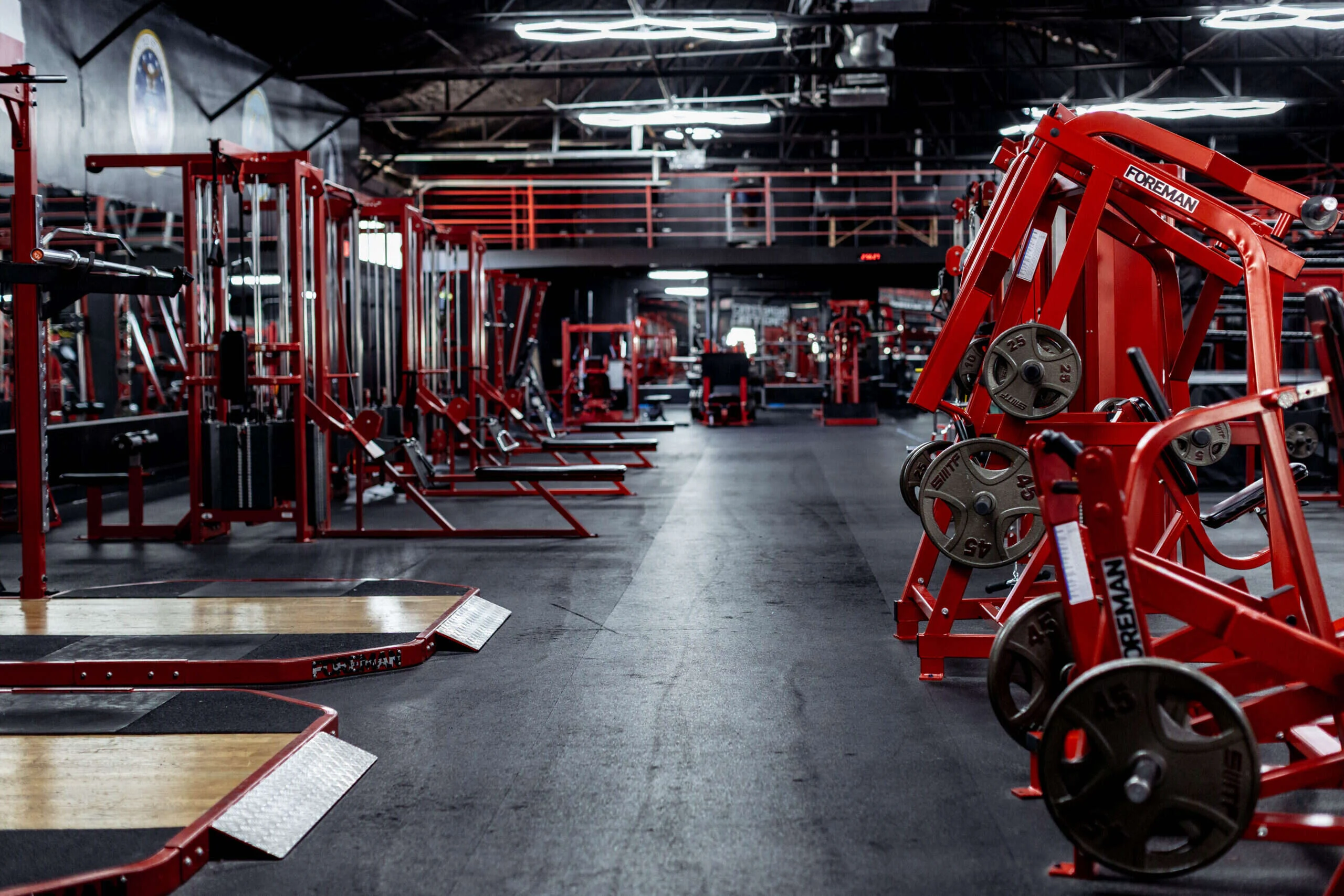
Gryffon Performance is a private training studio at 1925 E Levee St, Dallas, TX 75207, in the Dallas Design District, with free parking. We’re about 12 minutes from Highland Park and close to Uptown, Oak Lawn, the Medical District and Bluffview, and we coach people from the Park Cities and across Dallas. Get directions
50+ five-star Google reviews. Fifteen thousand square feet, private, built for coaching and nothing else. Every client gets a comprehensive assessment and personalized nutrition, included.
Apply for coaching and tell us what your joint has been doing. You’ll hear back within 24 hours, and your first session with us is a complimentary strategy session.
Related reading
- Getting Back to Training After an Injury
- Corrective Exercise: What Actually Helps, and What Doesn’t
- What Happens in Your Complimentary Strategy Session
General information about training, not medical advice.