
You used to be the athletic one. Now it’s client dinners, a flight most weeks, the kids’ games on Saturday, and a back that’s stiff for two days after eighteen holes. The jeans fit differently. You want to look good at 40-something and lift something heavy again.
You’ve tried. An app, a few months at a gym, a running streak in the spring. It worked for a few weeks, then work got busy.
So, is a personal trainer worth it after 40? Yes, when the trainer does what you can’t do for yourself. That means keeping you out of injury, carrying the planning for your training and food, building strength around the joints that ache, and keeping it going through a hard year. If you’re over 40 and tired of starting over, apply for coaching and tell us what keeps stalling. Your first session with us is a complimentary strategy session.
Key points
- After 40, a good trainer keeps you out of injury, because with a career and a family you don’t have weeks to lose to a tweaked back.
- A coach carries the planning for your training and nutrition, builds strength around the joints that ache, and keeps it going past the first few weeks.
- A meta-analysis of 49 studies and 1,328 adults aged 50 and older found resistance training added an average of 1.1 kilograms of lean mass.
- Across 11 studies in adults over 65, supervised training improved strength and power more than training alone.
What changes after 40?
In our experience, muscle and strength tend to slip with age when nobody’s training them. Recovery feels slower. Joints have a few stories. And life is fuller than it was at 25, so training gets squeezed into whatever’s left.
None of that means the window has closed. It means the margin for a bad plan gets smaller. Too little load and nothing changes. Too much and something flares, you lose three weeks, and you decide lifting isn’t for you anymore.
Does your body still respond after 40?
The research here is encouraging. A meta-analysis by Peterson and colleagues pooled 49 studies and 1,328 adults aged 50 and older. Resistance training added an average of 1.1 kilograms of lean mass. Higher-volume programs were linked to bigger gains, and older participants gained a bit less.
Two things to take from that. The body keeps adapting to strength training well past 40. And the authors suggest that starting earlier in life may give you more back. The way we see it, 40 isn’t late. It’s a good time to start doing this properly.
Notice the volume finding, too. Gains tracked with how much work people did. From what we see, that’s the part most people under-dose when they train on their own, usually because they’re guessing.
Where doing it yourself stalls
A 2017 meta-analysis by Lacroix and colleagues compared supervised and unsupervised strength and balance training. Across 11 studies, supervised training improved strength and power more than training alone. The studies were in healthy adults over 65, there weren’t many of them, and their quality was moderate, so it’s an older age range than yours and not the final word. But it lines up with what we see.
Here’s why, in our experience. You can’t watch your own form from the side. You can’t tell from the inside whether today’s weight is too light, which is the most common and least visible mistake in self-directed training. And nobody’s around to change the plan when your week falls apart.
Why a trainer is worth it after 40
These are the reasons that matter most once you’re past 40, and they’re the ones we build every plan around.
You don’t have weeks to lose to an injury
With a career and a family counting on you, a tweaked back doesn’t just cost a workout. It costs sleep, focus and a few weeks on the couch. Keeping you out of injury is part of our job. Every exercise, every load and every jump in weight is chosen so you get stronger without getting hurt: we watch your form, set the right dose and build up gradually.
The research points the same way. A 2014 meta-analysis by Lauersen and colleagues pooled 25 trials and 26,610 people, and strength training cut sports injuries to less than a third. Those studies were mostly in athletes and looked at sports injuries, not busy professionals, but it matches what we see on our floor.
It takes the planning off your plate
A proper training program is real work to design. So is a nutrition plan that survives client dinners and travel. Then both need adjusting every few weeks as your weight, strength and appetite change. After a full day of decisions at work and at home, most people don’t have the energy left to do that well. A coach carries it. You show up, and the thinking’s already done.
The aches usually aren’t a mystery
Knees that grumble on the stairs. A back that’s stiff after a flight. A shoulder that doesn’t love pressing. Often there’s nothing serious going on. In our experience, the joint usually aches because the muscles around it have gotten weaker and it’s doing work they used to do. Guessing your way through tends to end one of two ways: you stop training it, or you push through and it hurts more. A coach builds the strength around it instead, at a pace the joint can handle.
Someone expects you
Motivation comes and goes, especially in a hard quarter. A session on the calendar with someone waiting for you doesn’t. And when your week falls apart, a coach changes the plan instead of letting it drop.
You learn why
Every exercise has a reason, and you’ll know it: why this lift, why this weight, why now. Over time you understand your own body better, which makes everything easier, from a hotel gym to a Saturday round.
Experience sees what you can’t
An experienced coach spots in one rep what you’d never feel from the inside. David has more than 15 years of coaching men and women. He came back from a serious back injury and has since deadlifted 600 pounds, so he knows what getting strong again after a setback asks of you.
From the floor: In our experience, people over 40 who come to us rarely need more motivation. They need someone to take the guessing out of it. Once the load, the food and the schedule are someone else’s problem to get right, the consistency they’ve been missing tends to show up.
If you’ve restarted more times than you’d like to count, apply for coaching and tell us what your week looks like.
The honest cost of waiting
The way we see it, every year you put it off is a year of strength you’ll have to win back, and the Peterson data suggests the response gets a little smaller as you go. That’s not a reason to panic. It’s a reason not to wait for a quieter year, because there isn’t one coming.
Most people over 40 already know what they should be doing. What’s missing is doing it well, year after year, with a coach who catches what they miss.
At Gryffon Performance the goal is more than strength: a lean, balanced body that keeps up with your life. Your complimentary strategy session is where that starts, sixty minutes in person with David, our founder and head coach. You’ll cover goals, training history, your schedule and anything that hurts, then move through a physical assessment, a nutrition conversation and a tour of the studio. You’ll go home with a starting point, a schedule built for the week you really have, and a plan you understand.
Not sure what shape you’re in, or worried about an old injury? Plenty of people over 40 feel the same, and it’s a reason to start, not to wait. David looks at how you move in person, and if something needs more than training, he knows the right doctors for it.
Personal training after 40 in Dallas
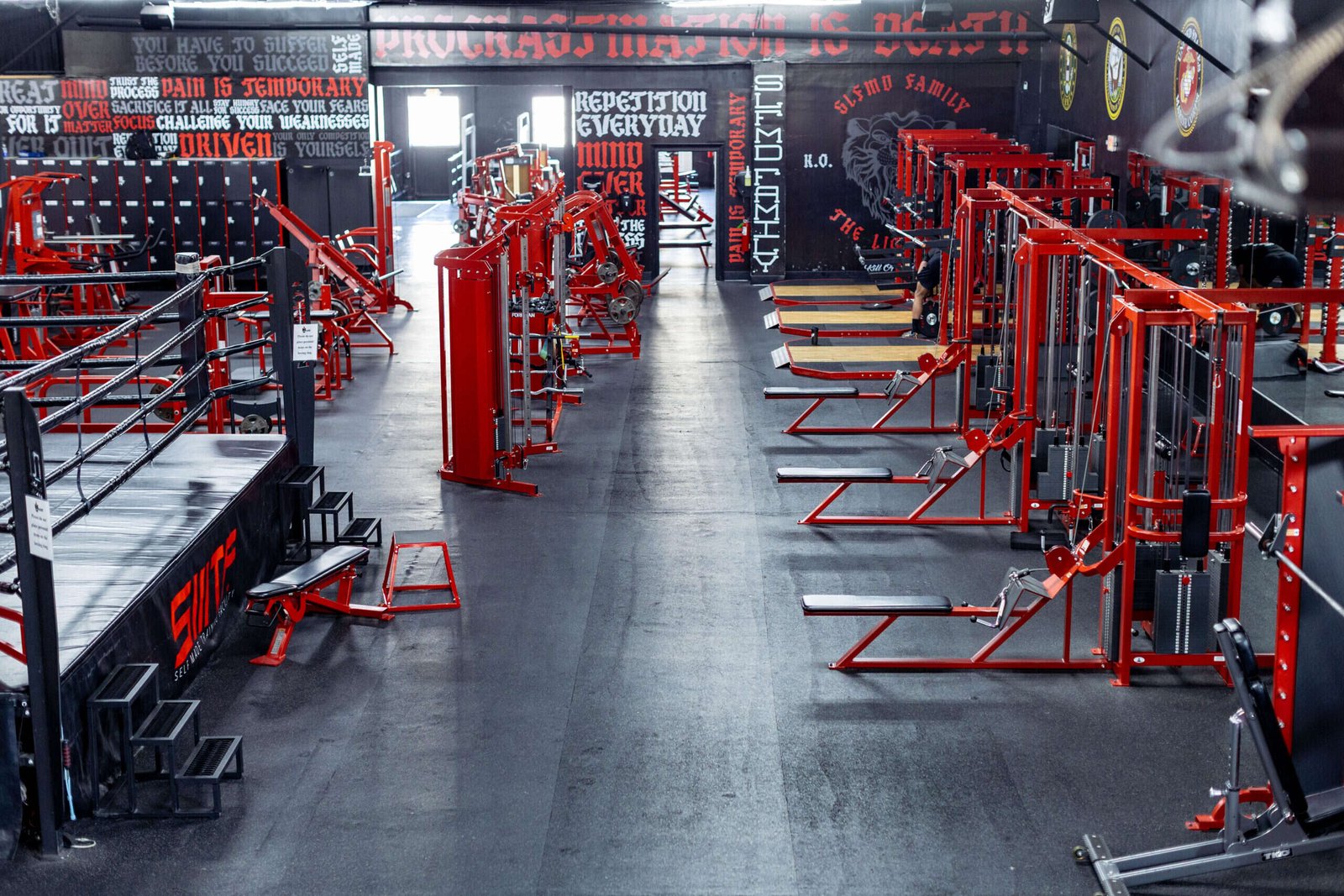
Gryffon Performance is a private training studio at 1925 E Levee St, Dallas, TX 75207, in the Dallas Design District, with free parking. We’re about 12 minutes from Highland Park and close to Uptown, Oak Lawn, the Medical District and Bluffview, and we coach people from the Park Cities and across Dallas. Get directions
50+ five-star Google reviews. Fifteen thousand square feet, private, built for coaching and nothing else. Every client gets a comprehensive assessment and personalized nutrition, included.
Apply for coaching and tell us what you want back. You’ll hear back within 24 hours, and your first session with us is a complimentary strategy session.
Related reading
- Building Muscle After 35: What the Research Says
- Strength Training After 50: What Changes, and What Doesn’t
- How Long Until You See Results?
General information about training, not medical advice.
References
- Peterson MD, Sen A, Gordon PM. Influence of resistance exercise on lean body mass in aging adults: a meta-analysis. Medicine and Science in Sports and Exercise, 2011;43(2):249-258. doi:10.1249/MSS.0b013e3181eb6265
- Lacroix A, Hortobágyi T, Beurskens R, Granacher U. Effects of supervised vs. unsupervised training programs on balance and muscle strength in older adults: a systematic review and meta-analysis. Sports Medicine, 2017;47(11):2341-2361. doi:10.1007/s40279-017-0747-6
- Lauersen JB, Bertelsen DM, Andersen LB. The effectiveness of exercise interventions to prevent sports injuries: a systematic review and meta-analysis of randomised controlled trials. British Journal of Sports Medicine, 2014;48(11):871-877. doi:10.1136/bjsports-2013-092538