
The car seat in and out of the back seat. The stroller in and out of the trunk. A baby on one hip while you answer email with the other hand. You’re lifting all day now, just not the way you’d choose, and the body in the mirror still doesn’t feel like yours.
Maybe you’ve tried to start. A postpartum video series, a few runs, a couple of good weeks. Then a sleep regression, a return to the office or a sick baby ended it.
The short answer: getting strong after having a baby is a strength project first and a weight project second. You rebuild from where you are now, add load in small steps, eat enough to train and parent, and use a plan that bends around a week you don’t control. If you’re ready to feel like yourself again, apply for coaching and tell us where you’re starting from. Your first session with us is a complimentary strategy session.
Key points
- Postpartum training is about rebuilding strength and capacity, not punishing workouts or crash diets.
- Parenting is real physical work. Training should make the carrying, lifting and getting off the floor easier.
- Progress comes from small, steady increases, adjusted around sleep and a schedule a baby runs.
- A plan that bends on bad weeks beats a perfect plan that breaks.
What changes after having a baby?
From a training point of view, pregnancy and the months after it are a long stretch of training less, sleeping less and carrying more. Strength you don’t use fades. Your fitness base shrinks. And the way you stand, carry and move has spent the better part of a year adjusting to a changing body.
Then there’s sleep. In our experience, short or broken sleep shows up everywhere in training: slower recovery, bigger appetite, less patience for a hard set. A good plan accounts for that instead of pretending it isn’t happening.
None of that is a reason to wait. It’s a reason to start from where you actually are.
Why doesn’t “bouncing back” work?
The pressure to snap back is everywhere. In our experience, it pushes people toward the two moves that backfire most: crash dieting on no sleep, and jumping straight into hard, fast workouts their body isn’t ready to recover from.
Both run into the same problem. The dose is wrong. Too much, too soon, and you’re sore for days, exhausted, and done by week three. Too little, and nothing changes, so you decide it doesn’t work.
The other problem is one you can’t solve alone. On a squat or a carry, a hip shifting to one side or your lower back taking over feels normal from the inside. A trained eye catches it within a rep or two.
What would we train?
Think of these as the building blocks, not a set routine. Where you start depends on you and your recovery so far.
- Start with how you move today. Not how you moved before the baby. Squat, hinge, push, pull, carry and getting up off the floor, looked at in person before any weight goes on.
- Rebuild the basics. The movements parenting asks for all day: lifting from the floor, carrying on one side, pressing overhead to a high shelf, standing up with weight in your arms.
- Add load in small steps. Progressive overload, a little at a time, across months. Knowing when to add weight and when to hold it there is the hard part, and it’s the part most people guess at.
- Keep conditioning simple. A stroller walk counts. Conditioning should build your engine without eating into your recovery.
- Feed the work. Enough food to train, recover and keep up with a baby, with targets that move as your weight, training and appetite change. Crash dieting on no sleep is how people stall.
- Plan for broken weeks. A teething baby, a partner traveling, a week back at work. The plan needs a short version for those weeks, so a bad week doesn’t become a lost month.
- Train toward something. Lifting your kids without thinking about it, a race, a heavy deadlift, looking and feeling like yourself.
Nothing here is hidden knowledge. An online program can demonstrate a split squat. It can’t see that one side is doing most of the work, and it won’t rewrite the week when the baby stops sleeping.
What if you lifted before the baby?
That history helps, and we’d use it. But pregnancy and birth change more than most people expect, and your old numbers aren’t the place to start. In our experience, the setbacks we see after a baby often come from going back to those numbers too fast. We build you back up in steps your body can handle, so you get strong again without getting hurt along the way.
And if a daily walk is all the bandwidth you have this month, that’s fine. A plan can start that small, with us carrying the planning so you don’t have to.
From the floor: In our experience, mothers who come to us aren’t short on motivation. They’re short on time, sleep and a plan that doesn’t fall apart when the baby’s schedule changes. Once the plan bends instead of breaking, the consistency tends to follow, and so does the strength.
If you’re living some version of that, apply for coaching and tell us what your week looks like with a baby in it.
What a coach adds when sleep is short
The hard part isn’t knowing that strength training helps. It’s getting the dose right on four hours of sleep, adjusting it every week, and keeping it going through the weeks a baby decides for you, with someone who sees what you can’t.
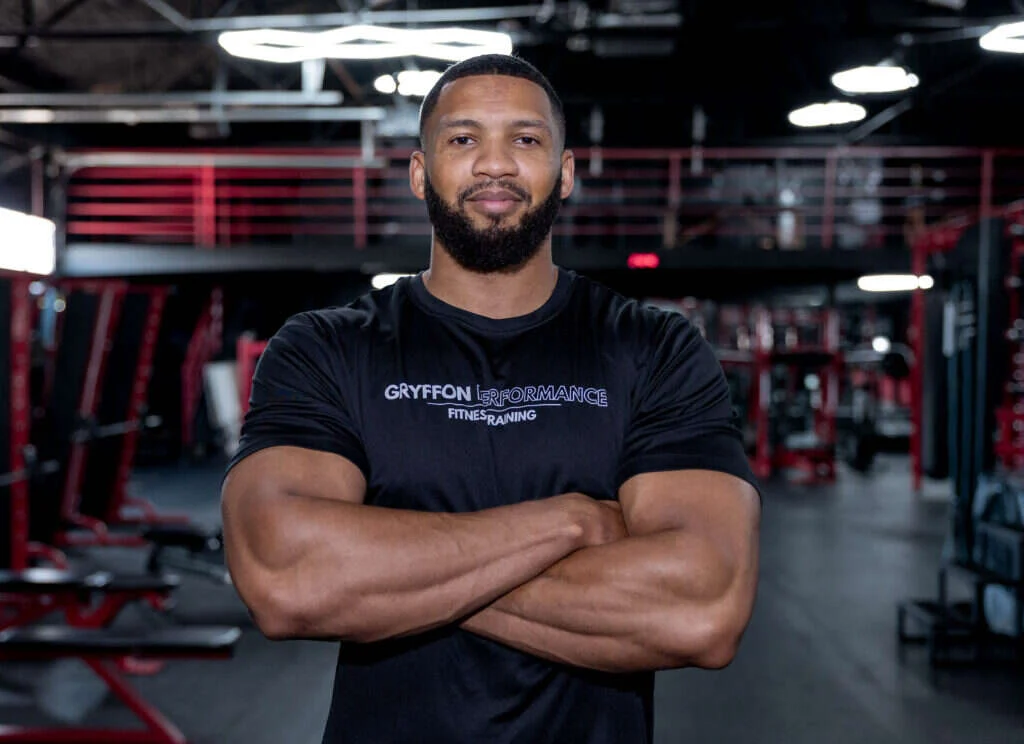
David has trained women through pregnancy and helped mothers, including his wife, get back in shape after having kids, always with their doctor’s clearance first. He has more than 15 years of training and coaching experience, and he trains men and women.
Getting strong is where we start at Gryffon Performance, not where we stop. We coach toward a lean, balanced body, and personalized nutrition coaching is built into every training program.
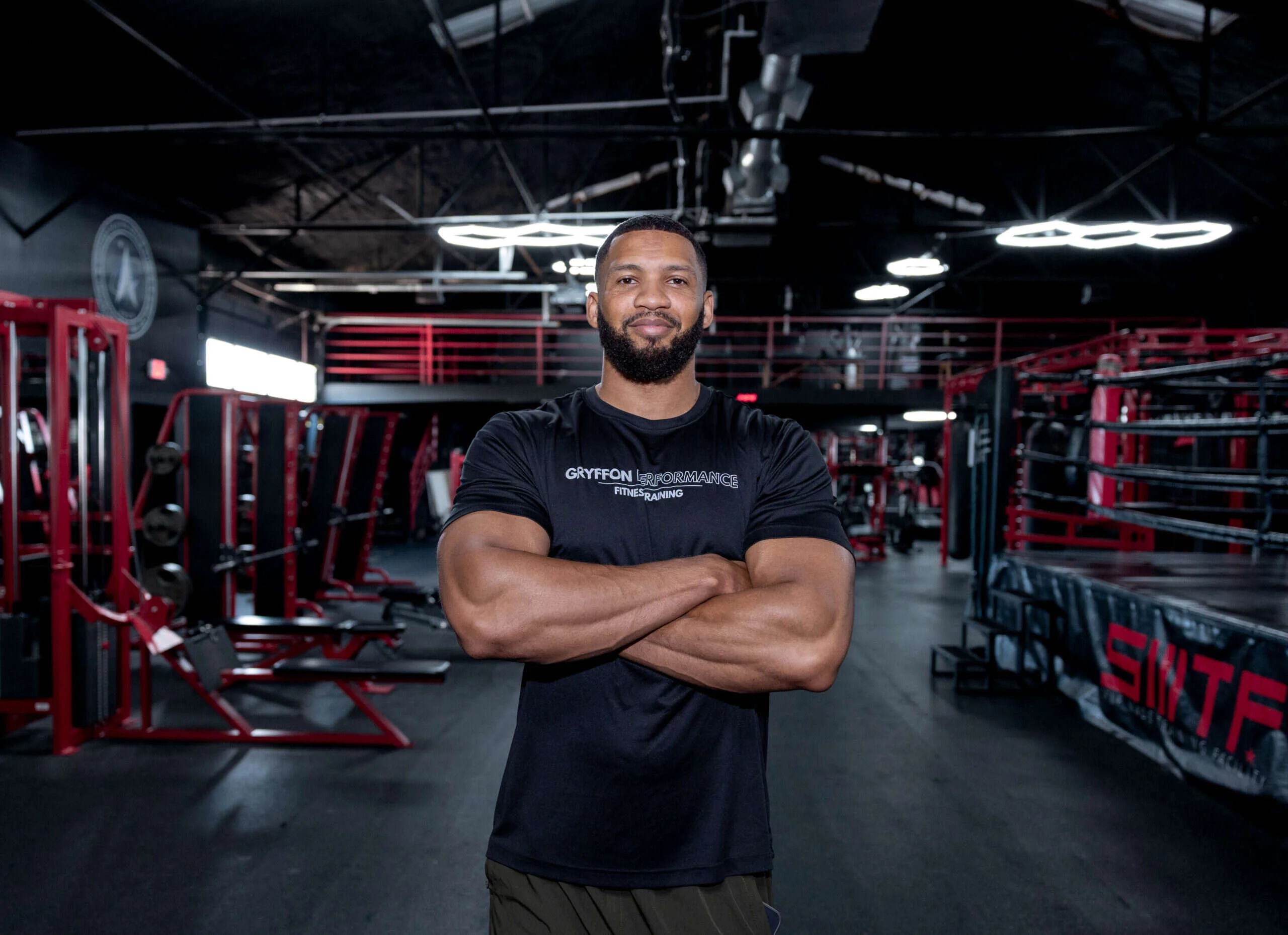
Your first visit is a complimentary strategy session, 60 minutes in person with David, our founder and head coach. Bring the real picture: your goals, how you trained before the baby, what your days look like now and anything that hurts. He’ll do a physical assessment, talk through nutrition and show you the studio. You’ll leave with a starting point, a schedule that fits a week with a baby in it and a plan you understand.
Not sure what’s going on with your body since the birth? That’s common, and it doesn’t mean you should wait. David looks at how you move in person. If anything needs more than training, he knows the right doctors to send you to.
Postpartum training in Dallas
Gryffon Performance is a private training studio at 1925 E Levee St, Dallas, TX 75207, in the Dallas Design District, with free parking. We’re about 12 minutes from Highland Park and close to Uptown, Oak Lawn, the Medical District and Bluffview, and we coach people from the Park Cities and across Dallas. Get directions
50+ five-star Google reviews. Fifteen thousand square feet, private, built for coaching and nothing else. Every client gets a comprehensive assessment and personalized nutrition, included.
Apply for coaching and tell us how old your baby is and what you want back. You’ll hear back within 24 hours, and your first session with us is a complimentary strategy session.
Related reading
- Strength Training for Women: Why Lifting Heavy Isn’t the Risk You Were Told
- What Happens in Your Complimentary Strategy Session
General information about training, not medical advice.