
Saturday is the long ride out past White Rock with the fast crew, and you hang on fine until someone attacks on the rollers. Then you’re off the back, legs full, watching wheels pull away. Midweek it’s the indoor trainer in the garage and nine hours in a desk chair. Your back aches on the drops, and off the bike you’re not doing much at all.
You’ve thought about lifting. You just don’t want sore legs for Saturday.
The short answer: strength training for cyclists works when the loads are genuinely heavy, the exercises match how you produce power on the bike, and the timing respects your riding week. Get those right and it shows up as a stronger finish and a body that tolerates more hours in the saddle. If you’ve plateaued on the bike, apply for coaching and tell us about your riding. Your first session with us is a complimentary strategy session.
Key points
- A 2025 meta-analysis of 17 studies and 262 trained cyclists found heavy strength training improved cycling efficiency, anaerobic power and cycling performance.
- VO2max didn’t change in those studies. The gains seemed to come from using what you already have more efficiently, plus more top-end power.
- Cycling keeps your hips bent and your back rounded for hours. Lifting trains the positions the bike never does.
- The difficult part is fitting heavy work around big riding weeks without flattening your legs.
Why should a cyclist lift at all?
Riding builds a big aerobic engine. It doesn’t do much for maximal strength, and it trains a very narrow slice of how your body can move: hips flexed, spine rounded, legs pushing in a small circle, thousands of times an hour.
Strength training fills three gaps.
- Force per pedal stroke. If each stroke takes a smaller share of your maximum strength, every effort costs a little less. That’s the theory behind the efficiency gains researchers keep finding.
- Top-end power. Closing a gap, sprinting for a town line, standing up on a short climb. Those efforts are where a stronger rider pulls ahead.
- Everything the bike leaves out. Hip extension, an upper back that holds you up on the drops, a trunk that keeps you stable when you’re tired. The way we see it, cycling also loads your skeleton very little compared with lifting, which is another reason to get in the weight room.
What does the research show?
A 2025 meta-analysis by Llanos-Lagos and colleagues looked at 17 studies covering 262 endurance cyclists, 60 of them women. Programs used heavy loads, at least 80 percent of a one-rep max, and ran from 5 to 25 weeks. Compared with riders who only rode, those who also lifted improved cycling efficiency, anaerobic power and actual cycling performance in time trials and time-to-exhaustion tests. VO2max didn’t change.
The authors rated the certainty of the evidence as low, and the riders in these studies were well trained. It’s still a consistent picture, and it matches what an older review by Rønnestad and Mujika concluded: for cycling, heavy strength training is the version that shows the clearest benefit.
Notice the word heavy. Light circuits with high reps aren’t what these programs used.
Where cyclists go wrong on their own
- Too light, too many reps. Endurance athletes default to what feels familiar: lots of reps, short rest, a sweaty circuit. It feels productive and doesn’t build the strength that showed up in the research.
- Heavy lifting without the technique. A loaded squat or deadlift is a skill. Learning it from a video, with nobody watching your back position, is how people scare themselves off.
- Bad timing. Heavy legs the day before your hardest ride wrecks both. Strength work has to slot around your key rides, and that slotting changes across the season.
- Dropping it in summer. Volume climbs, lifting disappears, and the strength fades by the time your target event arrives.
What we’d train for a cyclist
Treat this as the thinking behind a plan rather than the plan itself. Yours depends on your riding, your history and your goals.
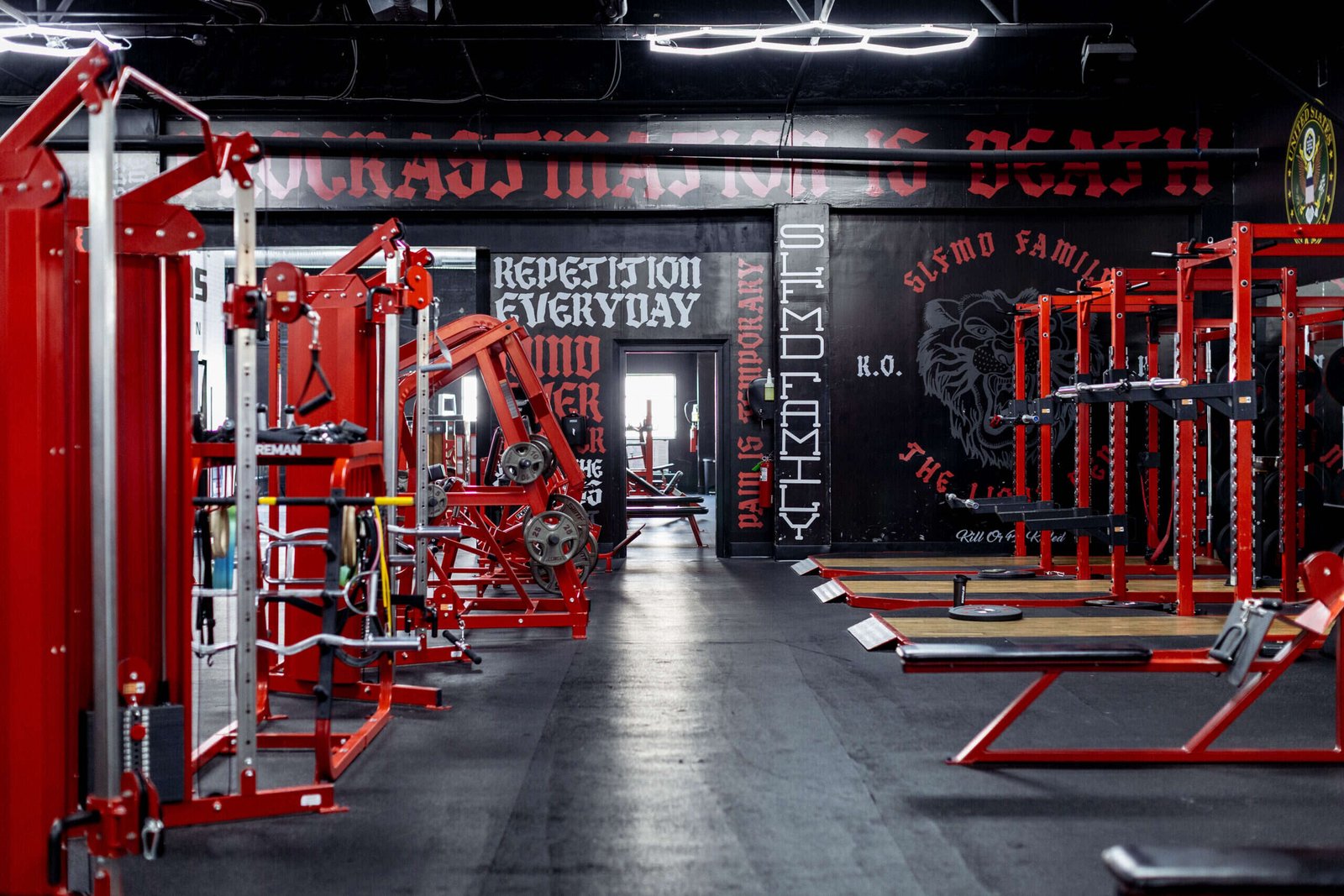
- Heavy lower body work. Squats, leg presses, split squats and hinges, worked up to genuinely heavy loads with clean technique.
- Single-leg strength. You pedal one leg at a time. We look for the side that does less and close the gap.
- The posterior chain. Hip extension through full range, which the bike never asks for.
- Upper back and trunk. So the last hour on the drops doesn’t turn into a fight with your neck and lower back.
- Power, carefully. Some explosive work once you’re strong, aimed at the efforts that decide a ride.
- A season plan. More building in the off-season, a smaller maintenance dose during the heavy riding months.
- Food that fuels the work. Plenty of riders under-fuel while chasing a lighter climbing weight. Every training program includes nutrition coaching built for you, so leaning out doesn’t cost you power.
From the floor: In our experience, the cyclists who walk into the studio have strong lungs and surprisingly little strength for how fit they are. The first few weeks of proper lifting usually feel humbling. Once the technique clicks and the loads start to climb, the change tends to come quickly.
If you’ve been meaning to add strength for a few seasons, apply for coaching and tell us what your riding week looks like.
Why work with a coach on this
Your riding already takes a lot of planning. Adding strength work means more decisions: which lifts, how heavy, which days, how to taper it before a big ride, what to do in a week you’re on the road for work. We take all of that off your plate and explain the reasoning, so Saturday’s legs stop being a surprise.
We also take your health personally. A tweaked back from a careless deadlift costs you riding, work focus and patience at home. Keeping you out of injury in the weight room is part of what we do. Lifts, loads and progressions are all picked to build strength safely, and the plan moves when your riding load moves.
That nagging lower back on long rides? In our experience it’s often a strength problem, not a mystery. We find the gap and build it rather than guessing.
At Gryffon Performance the bigger goal is a lean, balanced body that’s strong off the bike as well as on it.
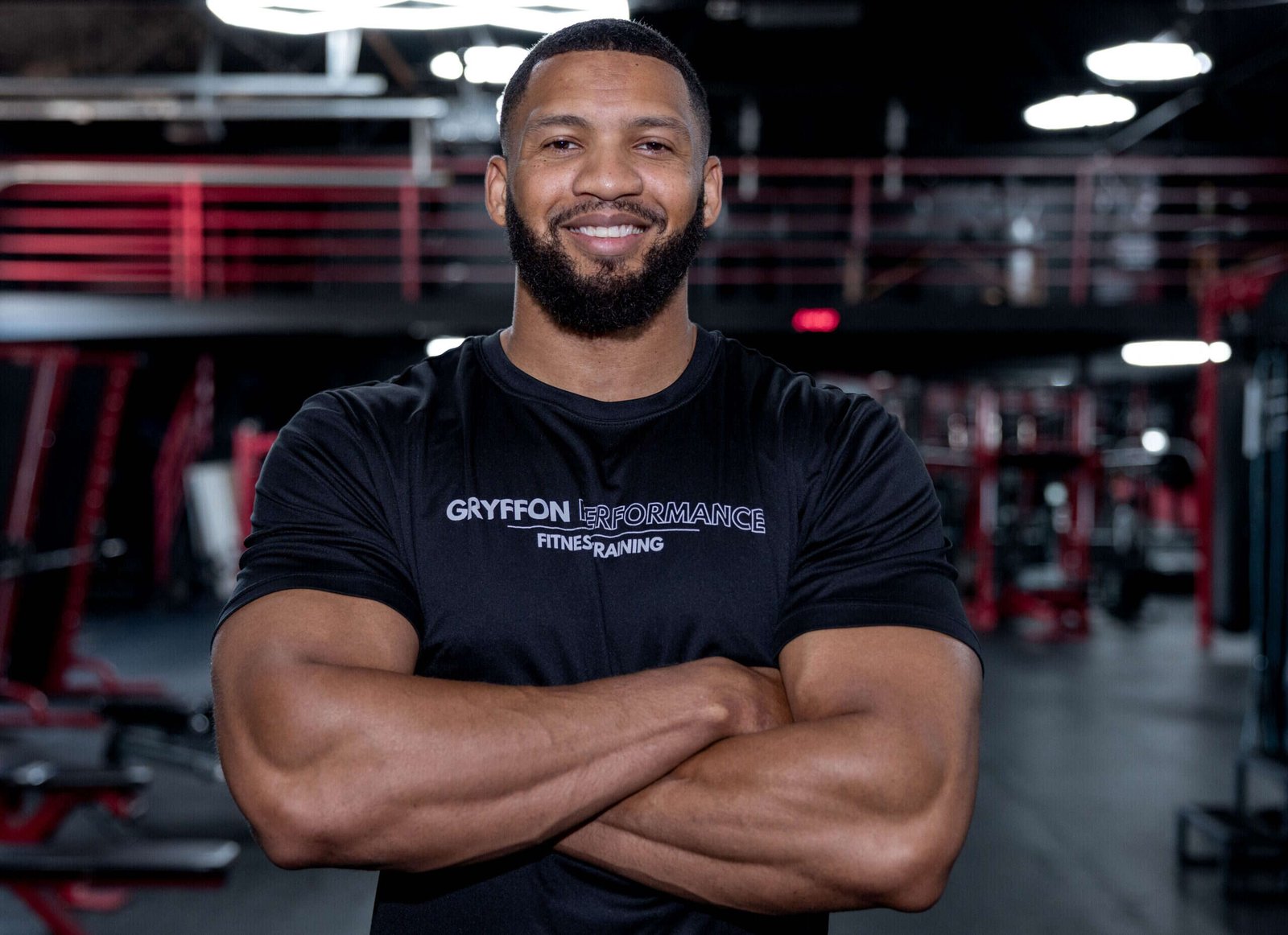
Step one is a complimentary strategy session, an hour on site. David, our founder and head coach, will ask about your riding, your target events, your goals, your schedule and anything that aches. After a physical assessment and a look at your fueling, he’ll show you the training floor. You walk out with a clear first step and a plan that respects your time on the bike.
Coaching men and women has been David’s work for 15-plus years. He knows comebacks firsthand, too: a serious back injury, and since then a 600-pound deadlift.
Not sure what’s behind the back or knee pain you get on long rides? You don’t have to know before you come in. David checks how you move when you’re here, and if anything points beyond training, he can connect you with the right doctor.
Strength training for cyclists in Dallas
Gryffon Performance is a private training studio at 1925 E Levee St, Dallas, TX 75207, in the Dallas Design District, with free parking. We’re about 12 minutes from Highland Park and close to Uptown, Oak Lawn, the Medical District and Bluffview, and we coach people from the Park Cities and across Dallas. Get directions
50+ five-star Google reviews. Fifteen thousand square feet, private, built for coaching and nothing else. Every client gets a comprehensive assessment and personalized nutrition, included.
Apply for coaching and tell us the ride or event you’re building toward. You’ll hear back within 24 hours, and your first session with us is a complimentary strategy session.
Related reading
- Your Desk Job Isn’t Wrecking Your Posture. It’s Something Else.
- Athletic Performance Training in Dallas: Getting Capability Back
General information about training, not medical advice.
References
- Llanos-Lagos C, Ramirez-Campillo R, Sáez de Villarreal E. Heavy strength training effects on physiological determinants of endurance cyclist performance: a systematic review with meta-analysis. European Journal of Applied Physiology, 2026;126(1):193-222 (published online July 2025). doi:10.1007/s00421-025-05883-2
- Rønnestad BR, Mujika I. Optimizing strength training for running and cycling endurance performance: a review. Scandinavian Journal of Medicine and Science in Sports, 2014;24(4):603-612. doi:10.1111/sms.12104