
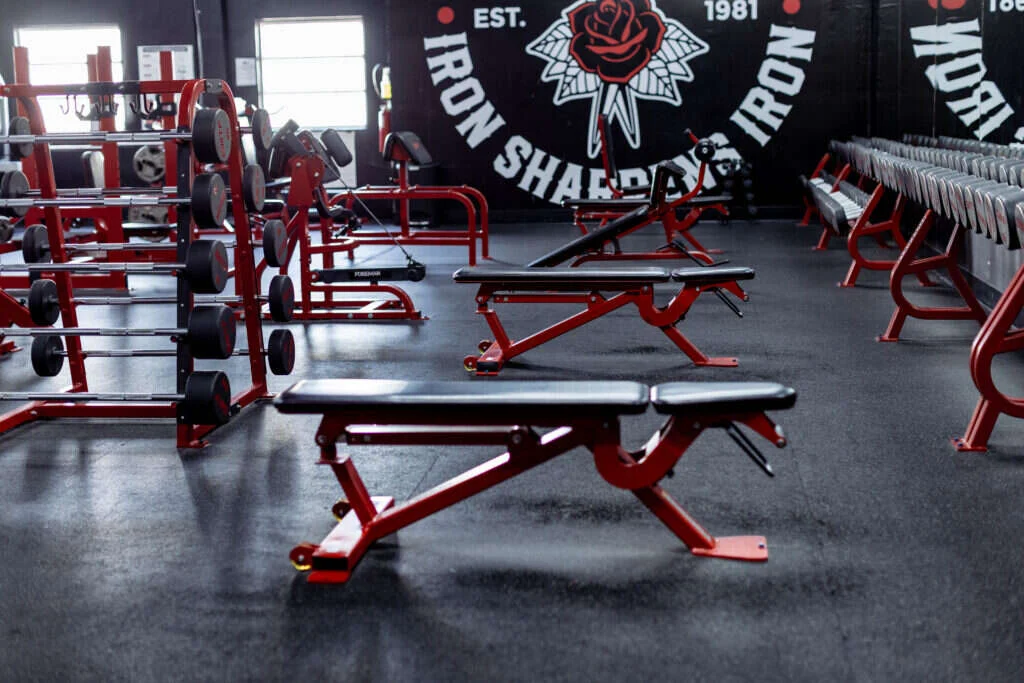
Out of DFW on the first flight, back through Love Field three days later. In between: a hotel gym with dumbbells that stop at fifty, a client dinner at a steakhouse, a breakfast buffet and one night of decent sleep out of three.
Every trip sets you back. You come home stiff from sitting, a few pounds up, and spend the next week getting back to where you were before you left. Then the next trip is on the calendar.
The short answer: if you travel for work, don’t try to train the same way every week. Build in the studio when you’re home, hold on when you’re away, and learn from a coach exactly what to do on the road, so trips stop costing you progress. If your calendar has more boarding passes than free weekends, apply for coaching and tell us how often you’re on the road. Your first session with us is a complimentary strategy session.
Key points
- Travel weeks are for holding on to what you’ve built. Home weeks are for building, with at least three strength days, the minimum we recommend.
- A 2021 review found strength and muscle size can hold for up to 32 weeks on as little as one strength session a week, as long as the loads stay just as heavy.
- The hard parts are timing your hardest training around trips, eating well at dinners and airports, and recovering from bad sleep.
- A coach who knows your travel calendar plans your home training around it and teaches you what to do while you’re away, so you’re not starting over every time you land.
Why does every trip feel like starting over?
It’s rarely the missed workouts on their own. It’s everything that comes with the trip. Hours in a seat. Short nights in a strange bed. Food you didn’t choose, and drinks that came with the deal. You get home tired and tight, then try to make up for lost time with one big session, and something complains.
Do that every few weeks and the pattern becomes the problem. You never string enough weeks together to build anything, and every return feels like week one.
The fix isn’t to travel less. It’s to stop treating a trip as a break in the plan and start treating it as part of the plan.
How little training keeps your strength?
Less than most people think, as long as you keep the weights heavy.
A 2021 review by Spiering and colleagues looked at the smallest dose of exercise needed to maintain fitness when time gets tight. Strength and muscle size held for up to 32 weeks on as little as one strength session a week and one set per exercise, as long as the relative load stayed the same. That finding comes mostly from younger adults. Older adults may need more to keep their muscle: up to two sessions a week and two to three sets per exercise. Endurance held for up to 15 weeks on as few as two sessions a week, as long as the effort stayed high.
It’s a narrative review, not a single trial, but the takeaway is clear. When time shrinks, intensity is what you protect. Short and heavy beats long and light.
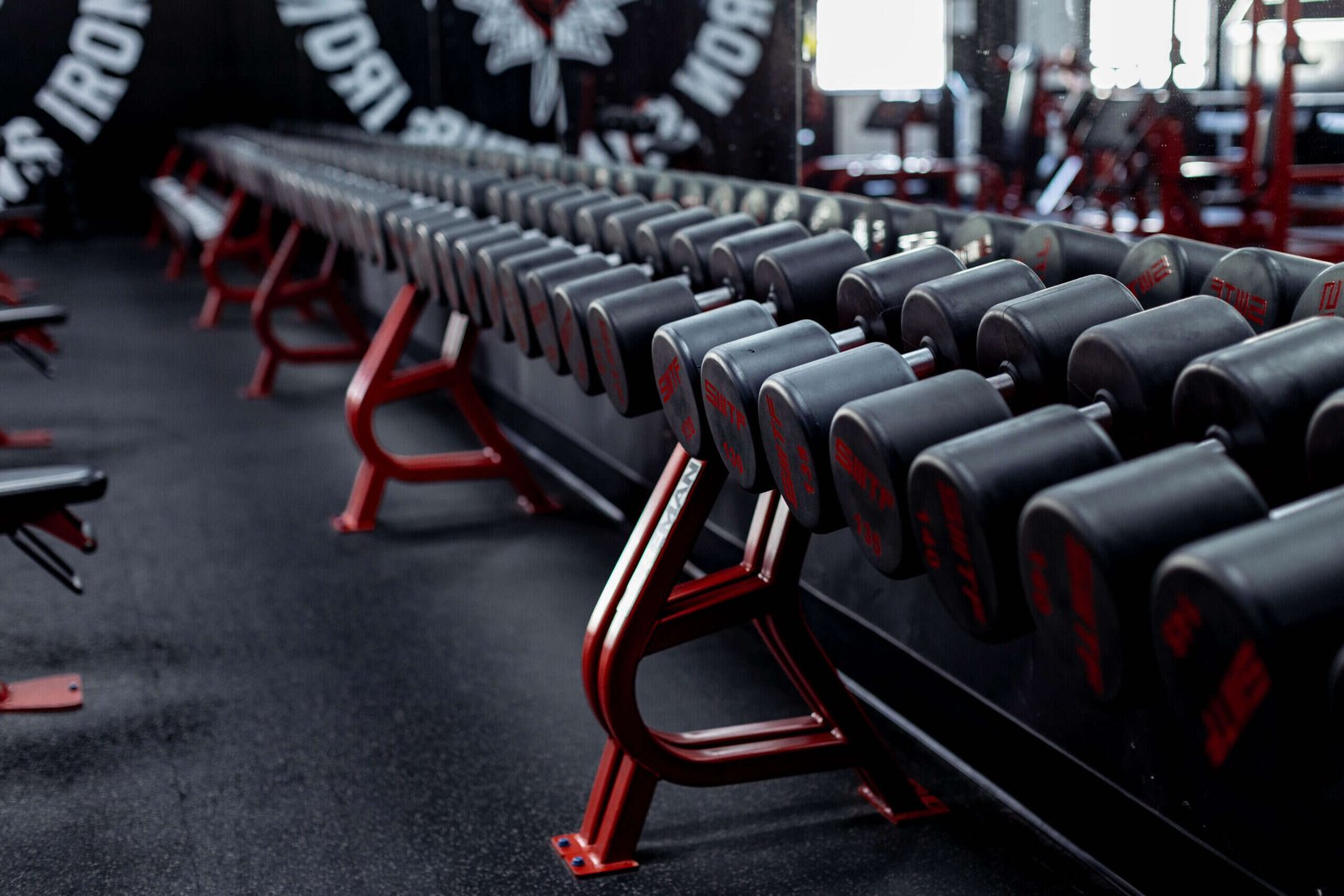
That’s useful on the road. It also explains why a lot of hotel gym sessions don’t do much: the dumbbells stop before the work gets hard enough. Knowing what to do with what’s there is part of what you learn from a coach.
How should home weeks and road weeks fit together?
Here’s how we think about it.
- Do the building at home. The heaviest, most demanding training goes in the weeks you’re in Dallas, sleeping in your own bed and eating your own food. Those weeks get at least three strength days, our minimum for steady progress. The one-session figure above is a floor for a trip, not a plan for the year.
- Plan around the flight. In our experience, a brutal leg session the day before a long flight is a bad trade. You’ll sit stiff and sore for hours.
- Keep the road simple. A few heavy-enough movements, short and hard, that you’ve learned properly in the studio and can run in any hotel gym, so you hold what you built.
- Come back gradually. The first session home should match how you slept and how your back feels after the flight, not how many sessions you missed.
On paper that’s easy. In practice, calendars move. A trip gets extended, a second one appears, a red-eye replaces a morning flight. Rebuilding the plan every time takes energy most people don’t have left after a work week. That’s the planning we take off your plate: your home weeks get reshaped around each change, and you leave the studio knowing what to do until you’re back.
What about eating on the road?
In our experience, this is where travel weeks usually go sideways. Breakfast buffets, airport food, the steakhouse with clients, the hotel bar after.
The answer isn’t to skip the dinner or order a salad while everyone else eats. It’s having a few clear rules that travel with you: protein first, an idea of how much, what to do with the bread basket and the second drink. Then targets that get adjusted when you get home, based on what the scale, your training and your appetite did.
Calorie and macro coaching come built into every training program with us, as part of personalized nutrition. For people who live out of a suitcase, the food side is often where the biggest change shows up.
Why travelers need a coach more, not less
Travel makes everything harder to manage on your own. It’s also where getting hurt costs you the most. Stiff from a flight, short on sleep, then loading up heavy to make up for the week: that’s a common setup for a tweaked back. We plan around that on purpose: loads and progressions are set so you stay healthy and keep training through a full travel season, not just the easy weeks.
Accountability matters more too. When you’re away, nobody’s waiting for you. When you’re home, someone should be, and they should know exactly what the last trip did to you.
And you learn why. Once you understand why heavy matters more than long, or why protein comes first at a client dinner, you make better calls in places your coach never sees.
From the floor: In our experience, the travelers who keep progressing aren’t the ones who never miss. They miss plenty. What they don’t do is treat a missed week as a reason to start from zero.
If your progress resets with every trip, apply for coaching and tell us what a typical month on the road looks like.
Training with us around a travel calendar
Training on the road isn’t a mystery. What’s hard is keeping a plan that bends around trips for a whole year, with someone who notices when the travel is winning.
We’re after more than strength. The goal is a lean, balanced body that holds up through the busy seasons as well as the quiet ones.
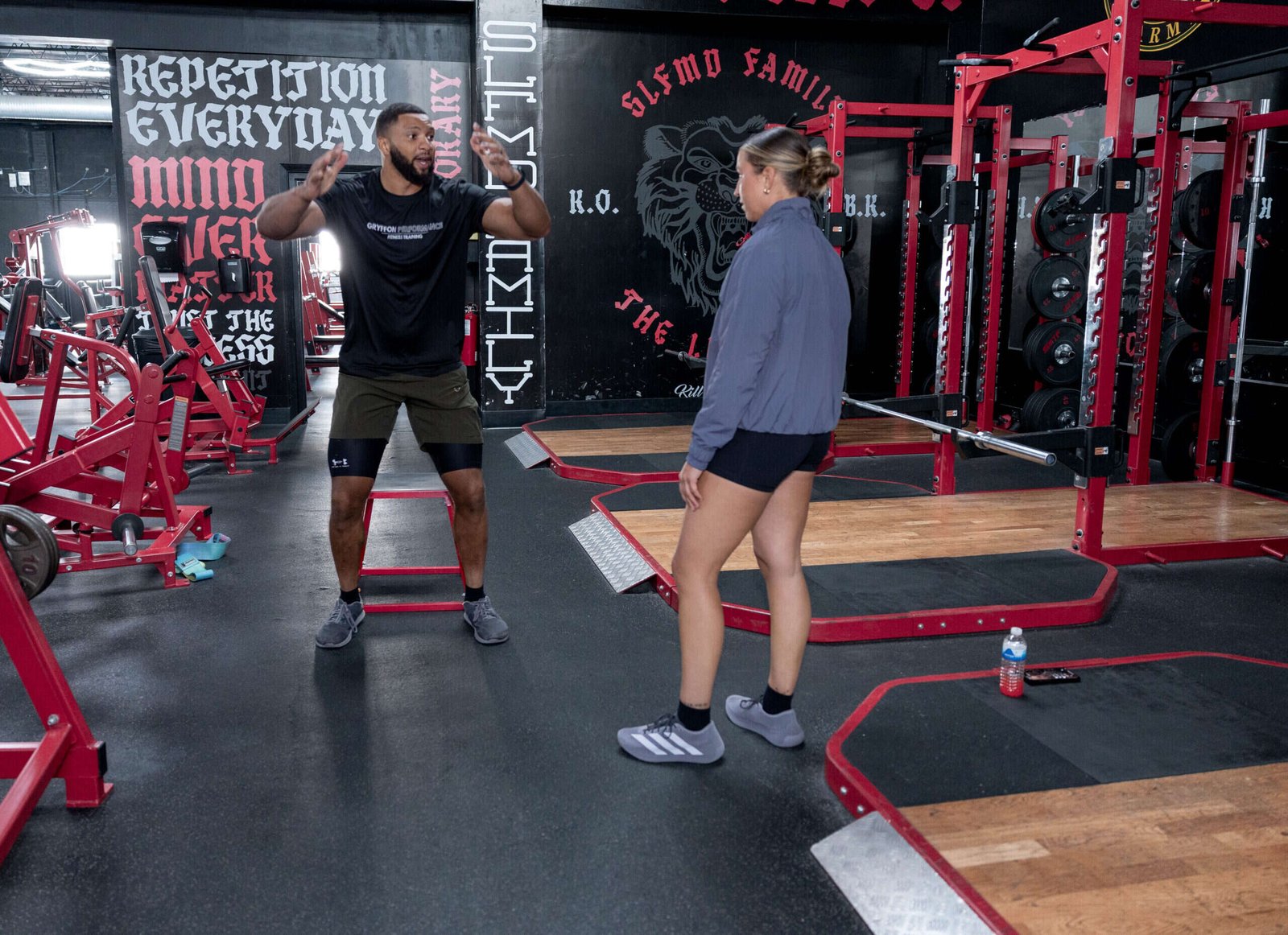
It opens with a complimentary strategy session: one hour at the studio, face to face with David, who founded Gryffon Performance and leads the coaching. Bring your goals, your training history, your travel calendar and anything that hurts. He’ll run a physical assessment, talk through how you eat at home and away, and show you the floor. Trips and all, you’ll head home knowing your starting point, with a schedule shaped to how you actually live and a plan that’s clear to you.
David has spent over 15 years coaching men and women whose lives rarely sit still. He also came back from a serious back injury of his own and has since deadlifted 600 pounds, so in how we coach, staying healthy sits right next to getting strong.
Back stiff from all the flights and not sure what’s behind it? You don’t have to figure that out first. David starts by watching you move, and if what he sees calls for a doctor, he’ll put you in touch with one he trusts.
Training between trips in Dallas
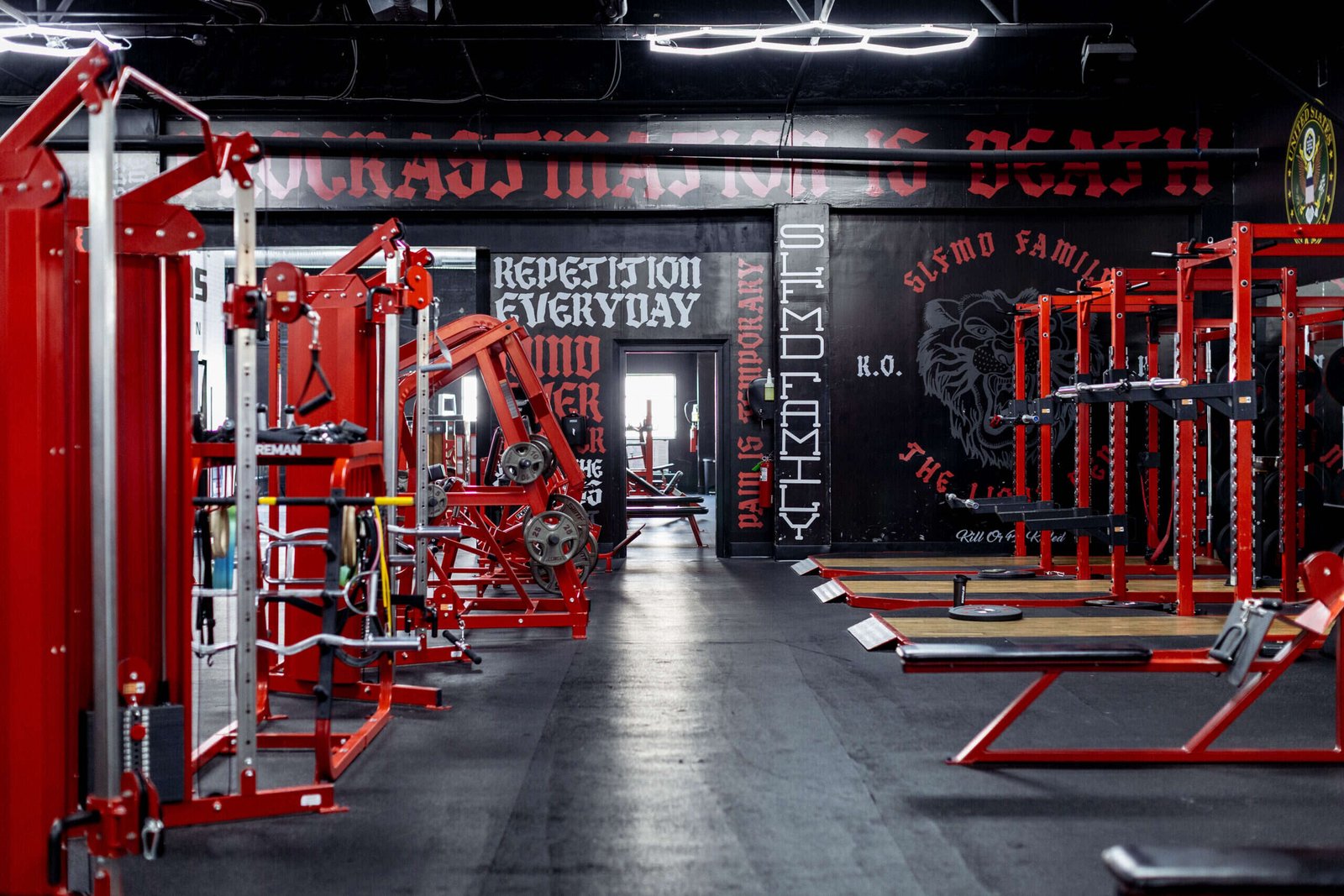
Gryffon Performance is a private training studio at 1925 E Levee St, Dallas, TX 75207, in the Dallas Design District, with free parking. We’re about 12 minutes from Highland Park and close to Uptown, Oak Lawn, the Medical District and Bluffview, and we coach people from the Park Cities and across Dallas. Get directions
50+ five-star Google reviews. Fifteen thousand square feet, private, built for coaching and nothing else. Every client gets a comprehensive assessment and personalized nutrition, included.
Apply for coaching and tell us where work takes you. You’ll hear back within 24 hours, and your first session with us is a complimentary strategy session.
Related reading
General information about training, not medical advice.
References
- Spiering BA, Mujika I, Sharp MA, Foulis SA. Maintaining physical performance: the minimal dose of exercise needed to preserve endurance and strength over time. Journal of Strength and Conditioning Research, 2021;35(5):1449-1458. doi:10.1519/JSC.0000000000003964