
Nothing changed. Same breakfast, same walks with the dog, same reformer studio twice a week, same glass of wine on Friday. But somewhere in your late 40s the weight started settling around your middle, your favorite jeans stopped closing, and the things that always worked quit working. So you ate less and walked more. The scale barely moved, and you felt worse.
You’re not imagining it, and you’re not lazy.
The short answer: strength training is usually the missing piece, and the research says it works after menopause about as well as before. Pair it with nutrition that’s adjusted, not slashed, and conditioning placed on purpose. If your body has changed and the old fixes aren’t working, apply for coaching and tell us what hasn’t worked. Your first session with us is a complimentary strategy session.
Key points
- Strength training works after menopause. A 2026 review of 126 studies and 4,019 women found similar strength gains before and after menopause.
- In that review, fat mass went down and lean mass went up with strength training, before and after menopause alike.
- Eating less and walking more doesn’t build muscle, which is why, in our experience, it often stops working on its own.
- Conditioning still has a job. A separate review found aerobic and combined training did more for fat mass, and strength work did more for muscle.
Why does the old approach stop working?
We coach training and nutrition, not hormones, so we’ll stay in our lane. What we can tell you is what we see from the training side.
The usual fix is to cut calories and add cardio. In our experience it runs into the same wall every time. It does nothing to build muscle and can cost you some. It leaves you hungry and tired. And it doesn’t change your shape the way you hoped, because shape comes from what’s under the fat as much as from the fat itself.
Then life piles on. Teenagers, aging parents, a demanding job, travel. A plan built on willpower and a perfect week doesn’t survive that.
What does the research say about strength training after menopause?
The most useful recent paper is a 2026 meta-analysis by Isenmann and colleagues. It pooled 126 studies with 4,019 healthy women, two thirds of them postmenopausal, average age about 51.
Strength training improved strength in both premenopausal and postmenopausal women, with no difference between them. Lean mass (the authors call it functional mass) went up, and fat mass went down, again before and after menopause. Age, training frequency and program length weren’t linked to the results. The authors’ plain conclusion: general training guidelines could apply to women, with individualization mattering more than strict age or sex rules.
That’s the encouraging part. Your body still responds.
The honest part comes from a 2023 meta-analysis by Khalafi and colleagues, which looked at 101 studies and 5,697 postmenopausal women. Exercise training raised muscle mass and lowered fat mass, body fat percentage, waist size and visceral fat. Aerobic and combined training had the bigger effect on fat. Strength and combined training had the bigger effect on muscle.
So the answer isn’t lifting instead of cardio. It’s a plan that does both on purpose, with strength as the base.
What we’d train after menopause
These are the principles we’d build your plan on. Your version will look different from anyone else’s.
- Look before you load. Joints with a history, a back that tightens after a long flight, hips that don’t move like they used to. Those patterns are hard to feel in yourself, and they decide where the plan starts.
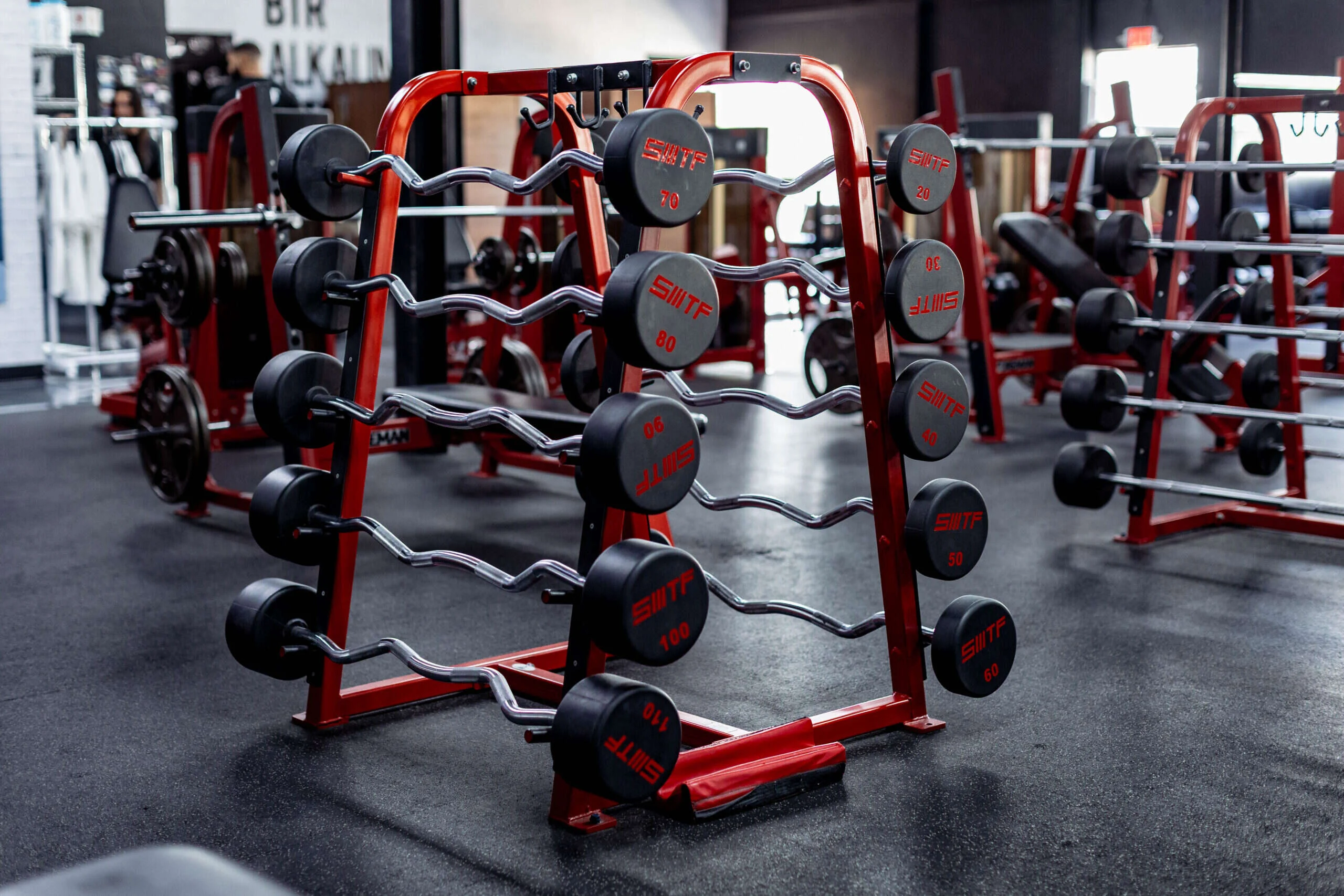
- Lift heavier than you’ve been told to. In our experience, light weights for high reps feel safe and change very little. Load has to climb over months for your body to keep adapting. The dose is the hard part, and it’s where most people stall on their own.
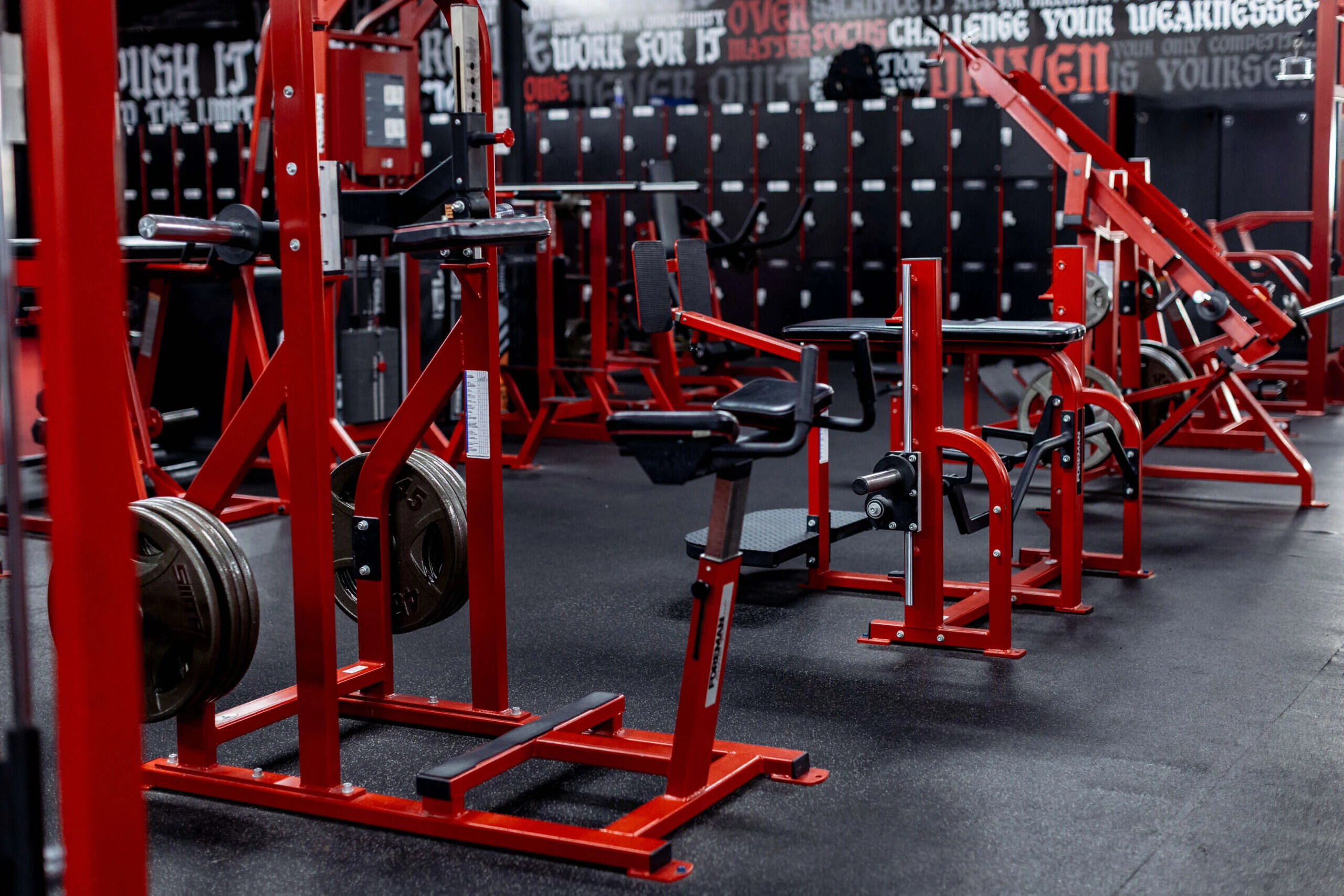
- Train legs and hips hard. Squats, hinges, split squats, step-ups and carries. They’re the big movements that change how you look and how stairs, travel and tennis feel.
- Place conditioning on purpose. Enough to build your engine and support fat loss, not so much that it eats into your strength work and recovery.
- Feed the training. Enough protein to build and hold muscle, and calorie targets that shift as your weight and training do. Slashing food is how people lose muscle and quit by week four.
- Read your recovery. A bad night’s sleep or a brutal work week changes what today’s session should look like. Spotting that and adjusting on the day is where a coach earns their keep.
- Track the tape and the bar, not just the scale. Waist, strength, photos, how your clothes fit.
Most of this you’ve probably read before. A video can show you a goblet squat. It can’t tell you when it’s time to go heavier, or that your right hip is doing less than your left.
What if you’re already lifting on your own?
Good. That’s a head start, and a coach builds on it instead of starting over. Where we usually add the most is load and safety: raising the weight steadily enough to keep your body changing, while choosing each step so a hip, a shoulder or a back with some history stays out of trouble. Add a protein target that fits your real week, and the work you’re already doing starts to pay off.
From the floor: In our experience, women who come to us at this stage have usually done everything they were told. They ate less, walked more and picked up the light dumbbells. They’re not short on discipline. What’s usually missing is load: weights heavy enough to give the body a reason to change, and someone to keep raising them safely, week after week.
If that sounds like the last few years, apply for coaching and tell us how your body has changed.
Why a coach changes the outcome
Knowing you should lift was never the problem. The hard part is lifting the right amount, eating the right amount and adjusting both every few weeks as life shifts around you, for long enough to see it. That takes someone who sees what you can’t.
Strong is only half of what we’re after at Gryffon Performance. The other half is a lean, balanced body, which is why personalized nutrition coaching, down to calories and macros, comes in every training program.
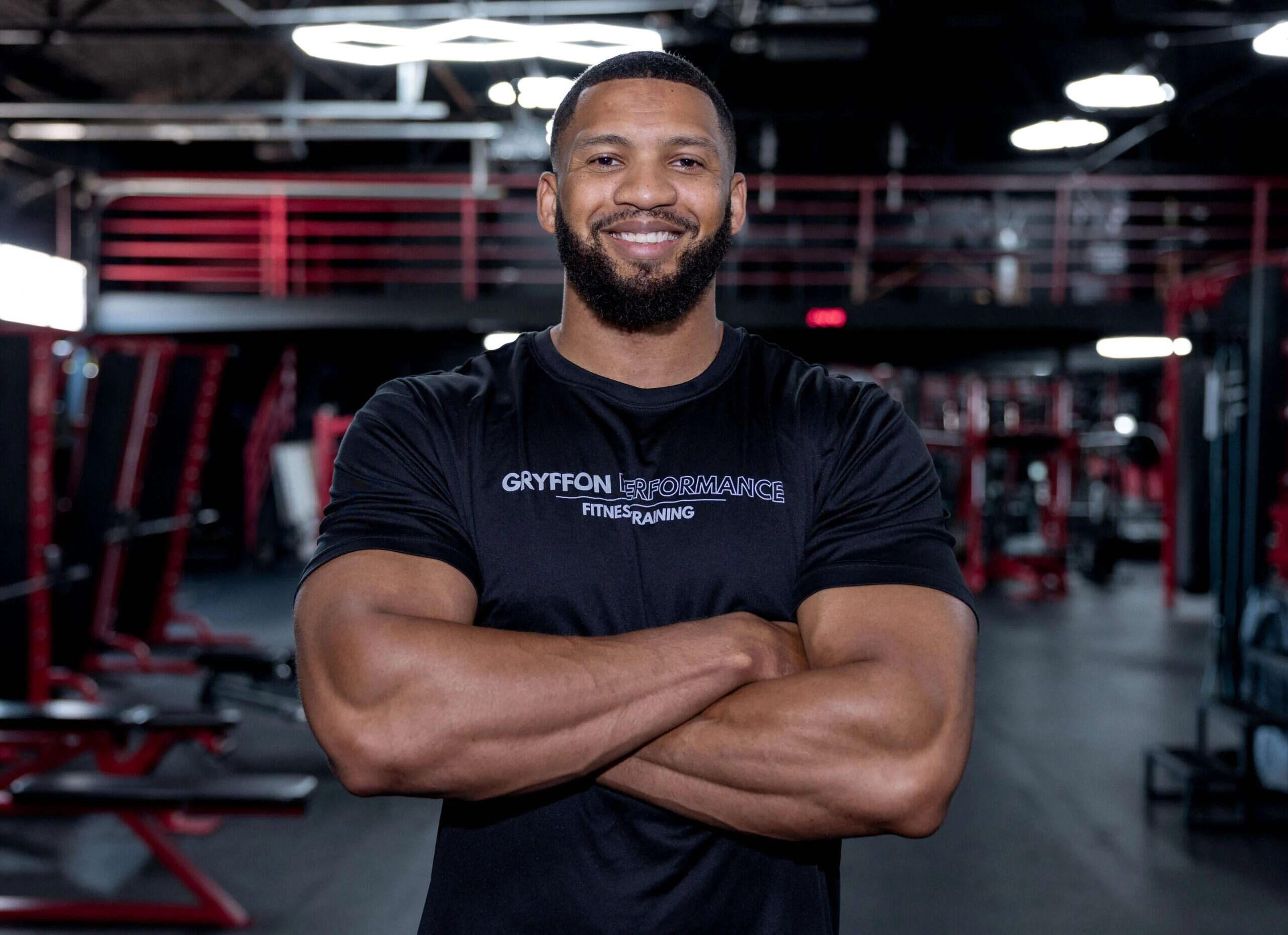
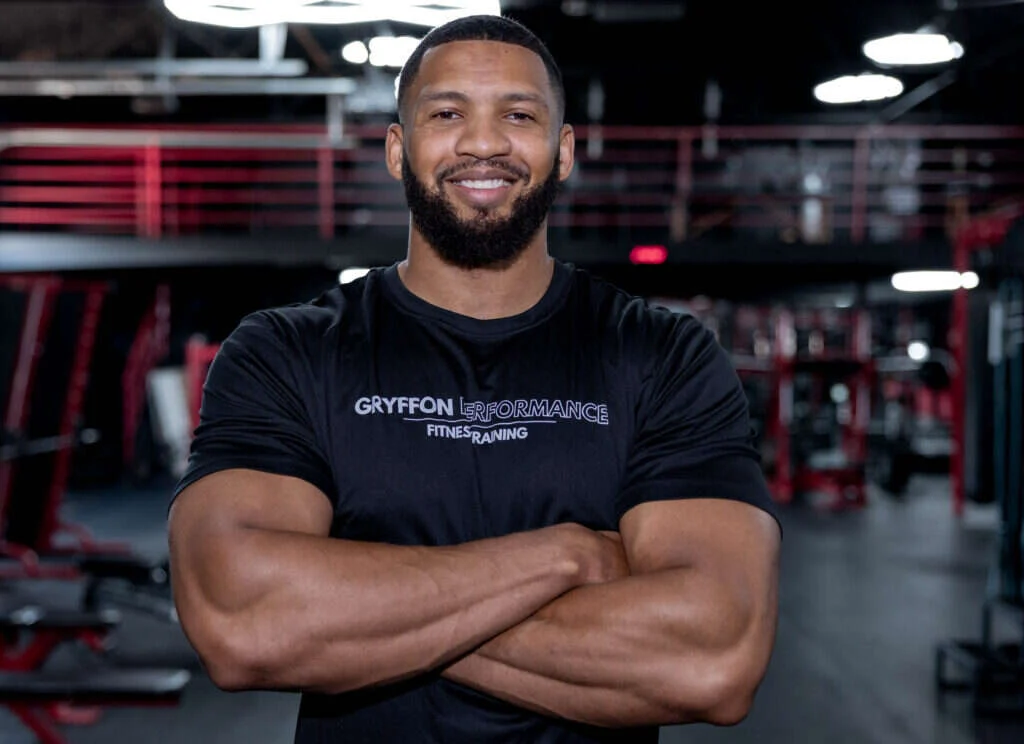
We begin with a complimentary strategy session. That’s 60 minutes in person with David, our founder and head coach, covering your goals, your training history, your schedule and anything that’s been bothering you. He’ll take you through a physical assessment and a nutrition conversation, and show you around the studio. You’ll leave with a starting point, a schedule that respects how full your life is and a plan you understand.
David brings more than 15 years of training and coaching experience, working with women and men alike.
Unsure what’s changed in your body, or why? That’s common, and it’s no reason to put this off. David looks at how you move in person, and he knows the right doctors to send you to if anything calls for more than training.
Strength training through menopause in Dallas
Gryffon Performance is a private training studio at 1925 E Levee St, Dallas, TX 75207, in the Dallas Design District, with free parking. We’re about 12 minutes from Highland Park and close to Uptown, Oak Lawn, the Medical District and Bluffview, and we coach people from the Park Cities and across Dallas. Get directions
50+ five-star Google reviews. Fifteen thousand square feet, private, built for coaching and nothing else. Every client gets a comprehensive assessment and personalized nutrition, included.
Apply for coaching and tell us what you’re ready to change. You’ll hear back within 24 hours, and your first session with us is a complimentary strategy session.
Related reading
- Strength Training for Women: Why Lifting Heavy Isn’t the Risk You Were Told
- Strength Training After 50: What Changes, and What Doesn’t
General information about training, not medical advice.
References
- Isenmann E, Geisler S, Havers T, Siegert F, Hemke F, Held S. It’s never too late: the impact of resistance training on strength and body composition in females across the lifespan. A systematic review and meta-analysis. Journal of Science and Medicine in Sport, 2026;29(10):1174-1185. doi:10.1016/j.jsams.2026.03.002
- Khalafi M, Habibi Maleki A, Sakhaei MH, et al. The effects of exercise training on body composition in postmenopausal women: a systematic review and meta-analysis. Frontiers in Endocrinology, 2023;14:1183765. doi:10.3389/fendo.2023.1183765