
You notice it getting out of the car after forty minutes on Stemmons. A pinch deep in the front of the hip, or an ache on the outside that makes lying on that side a bad idea. Putting on socks takes a little planning now. You’ve started sitting out the sideline-to-sideline points in pickleball.
You’ve tried to sort it out. Hip flexor stretches, a lacrosse ball, a few visits that helped until a busy month brought it back. Maybe you quietly stopped training legs.
The short answer: choose a coach who tests your hip in every direction before adding weight, strengthens the glutes and trunk that support it, and sets each week’s load by how the hip handled the last one. If your hip has been editing your week for months, apply for coaching and tell us what it’s stopped you doing. Your first session with us is a complimentary strategy session.
Key points
- Long hours of sitting leave the hip bent and the glutes quiet, so standing up and stepping off are often when it complains.
- Many hip plans only train front to back. Turning, stepping wide and holding steady on one leg are where a lot of hips are weakest.
- In a Cochrane review of people with hip arthritis, exercise programs reduced pain by about 8 points on a 100-point scale, and the benefit held three to six months later.
- Stretching can feel good for an hour. In our experience, strength around the hip is what changes how it holds up.
One exception up front: if you can’t put weight on your hip after a fall, or it’s hot and swollen and you have a fever, get to a doctor today. Training can wait for that one.
What do hours of sitting do to a hip?
Think about a normal Dallas week. The drive in, eight hours at a desk, a client dinner, the drive home. For most of it your hip sits bent at about ninety degrees, and the glutes that should steady it have almost nothing to do. Then you stand up, and the joint is asked to open, take your weight and carry you across a parking lot in one go.
That’s why so many sore hips speak up at the transitions: out of the car, up from the couch, the first few steps in the morning. Where it hurts tells a coach something too. A pinch in the groin, an ache on the outside, a deep spot in the buttock: each one points the plan in a different direction.
Not sure which one you’ve got? Plenty of people aren’t, and you can start anyway. David will watch your hip move in person, and if it looks like a job for a doctor, he’ll tell you which one he’d send you to.
Why do turning and side-to-side strength matter?
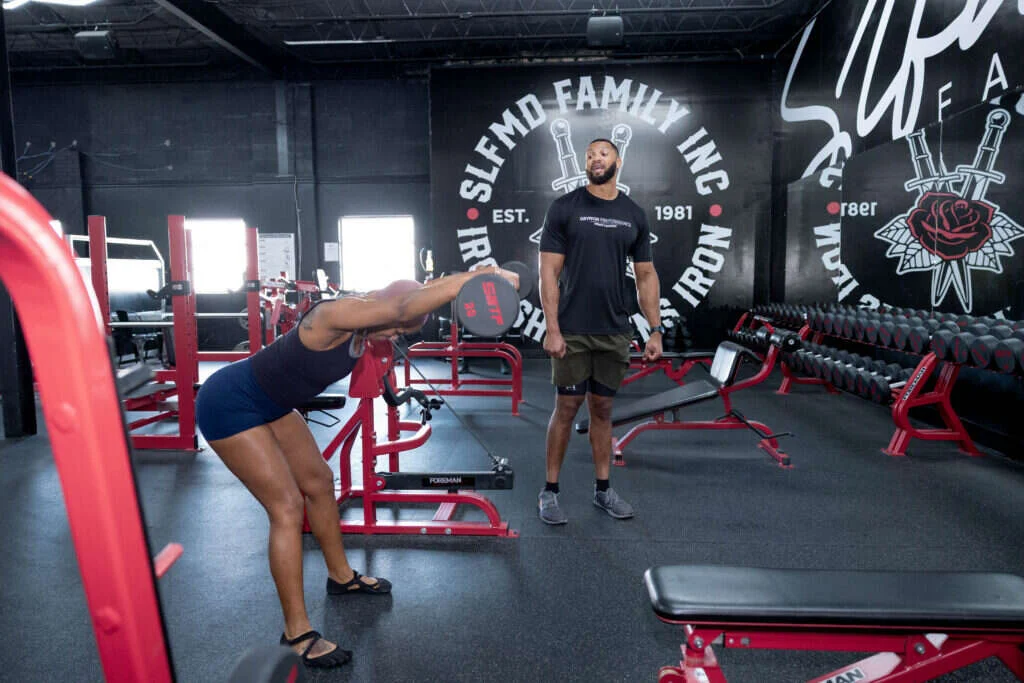
A hip isn’t a hinge. It rotates, it swings out to the side, and every time you’re on one leg, walking, climbing stairs or lunging for a drop shot, it’s holding your pelvis level against your whole body weight. Yet a lot of hip programs live in one plane: squats, bridges, leg presses, all front to back.
Turning, stepping wide and staying steady on one leg are where many hips are weakest, and they’re what pickleball, tennis and golf ask for most. Building them takes patient work: lateral steps, split stances, single-leg holds that get harder only as the hip earns it.
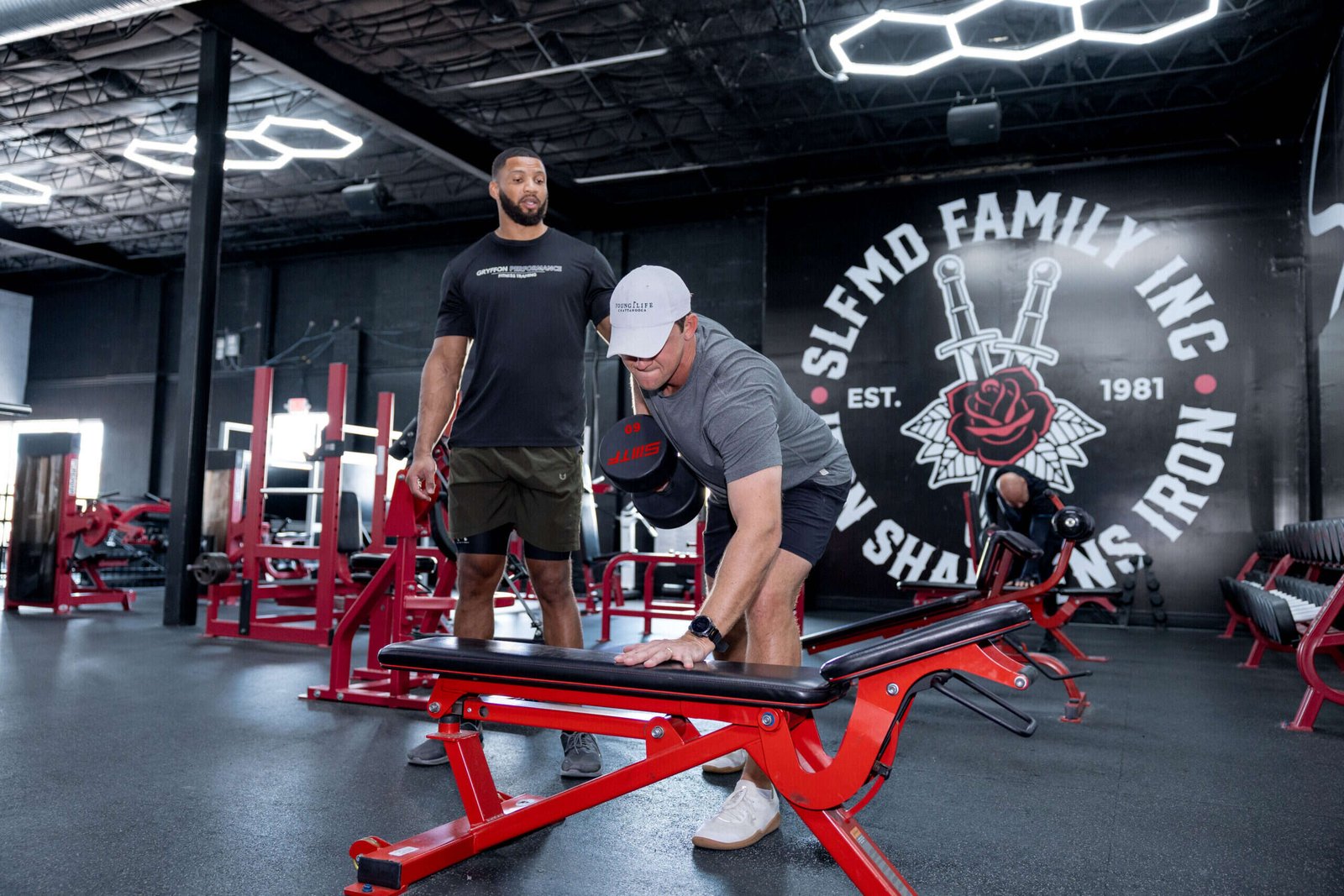
You won’t feel where you’re compensating. A pelvis that drops on one side when you stand on one leg, hips that drift away from the sore side at the bottom of a squat, a lower back doing the glutes’ job: it all feels normal from the inside. Standing behind you, a coach usually sees it in the first rep or two.
What does the research say about exercise and hip pain?
A 2014 Cochrane review by Fransen and colleagues pooled 10 trials of land-based exercise in people with hip arthritis. Across nine trials and 549 people, exercise reduced pain by about 8 points on a 100-point scale and improved physical function by about 7 points. Those gains were still there three to six months after the programs ended.
Those are modest numbers, and everyone in the trials knew whether they were exercising. Still, the people who exercised did better than the people who didn’t. The way we see it, the real question is what happens after a short program ends, because that’s when most people stop building.
Why doesn’t stretching fix it?
A hip flexor stretch or a lacrosse ball can make the hip feel looser for an hour. Then you sit through a two-hour meeting and you’re back where you started. Feeling loose and being strong enough are different things.
Resting it doesn’t help much either. Leave a hip alone for months and the glutes and thighs around it get weaker, and we think that lost support is often part of the ache. So we keep you training, and keeping you out of injury along the way is part of our job: movements your hip tolerates today, loads picked with care, small steps up.
Judging the load is the tricky bit. Too light and the hip never gets the signal to adapt. Too heavy and you wake up stiff, limp to the coffee maker and decide lifting is the problem. A coach reads that next-morning response and adjusts week after week, through busy months and trips, which is exactly the part that falls apart when you’re guessing alone.
Physical therapy has its place, especially after hip surgery or a fresh injury, and it does skilled work calming a joint down. In our experience the visits tend to stop once the pain does, before the hip is strong enough for a full week of driving, flying and playing. Building that strength is the coaching job.
From the floor: Sore hips tend to arrive here with a list of things already dropped, in our experience: the long runs, then the deep squats, then the court. People have protected the hip for so long that they’ve forgotten what it can do with some strength behind it.
If that list sounds familiar, apply for coaching and tell us which activity you want back first.
Why hip strength takes a coach
There’s no secret hip exercise. What works is months of well-judged loading: a shorter range or a split stance on the night it flares, rotation and single-leg work built in from the start, and depth and load raised in small steps by how the hip answered the day before.
Food is part of it too. Every pound of body fat you lose is one less pound the hip carries with each step, and we shift your food targets as the weight comes off and your training picks up.
Be wary of anyone who says they’ll fix your hip or offers a guaranteed result by a set date, who puts you in deep, heavy squats on day one, or who keeps you stretching for months with no strength work behind it.
Our aim goes past a hip that stops complaining. We’re building a lean, balanced body, where the glutes and trunk carry their share so the joint isn’t covering for them.
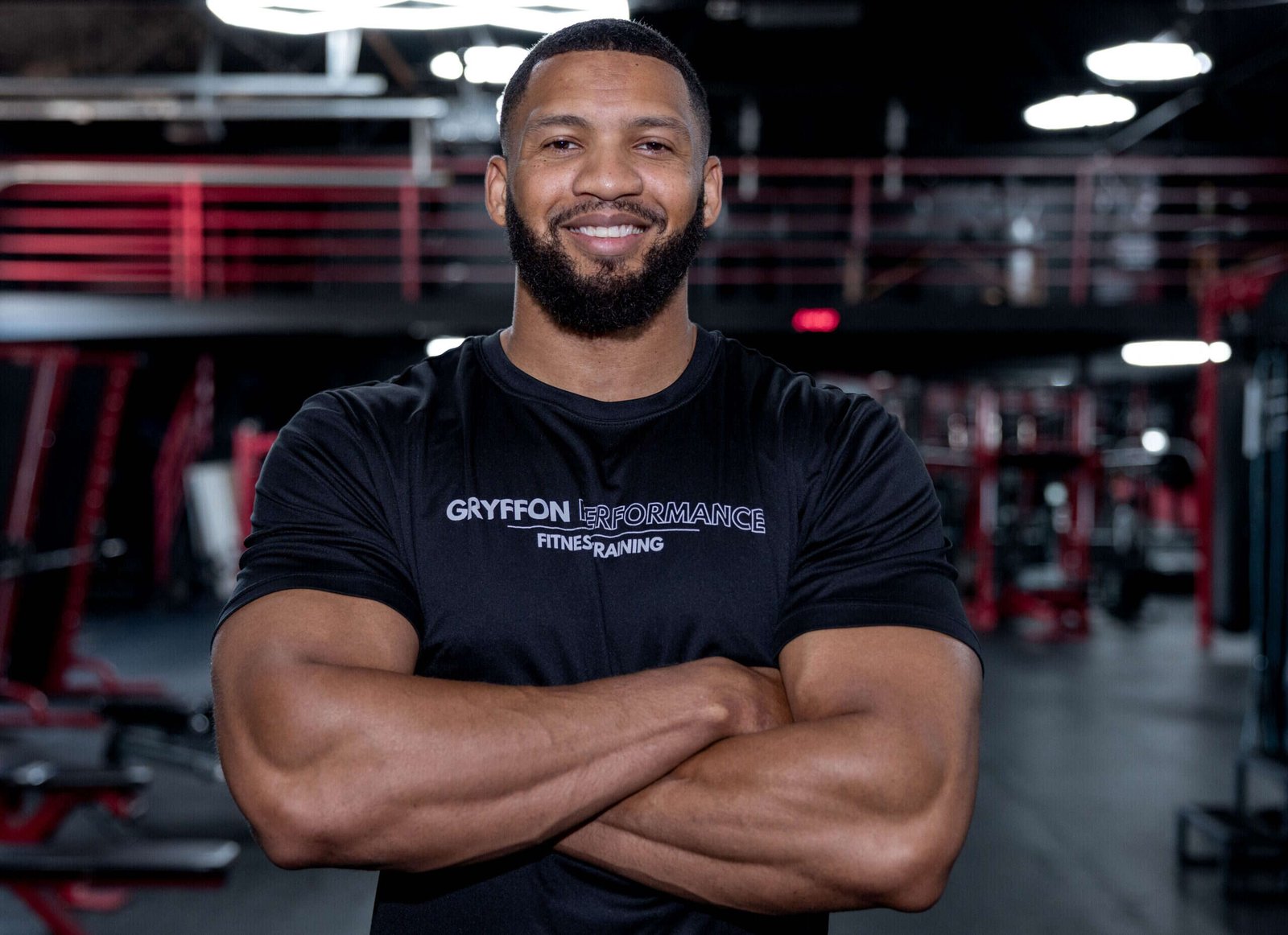
You start with a complimentary strategy session. David, our founder and head coach, spends an hour with you in person on what your hip keeps you from doing, then your goals, training history and schedule. He’ll watch you move through a physical assessment, go over what you eat and show you the floor. You’ll go home knowing where your hip stands, how training slots into your real week and what the first steps are.
More than 15 years of coaching men and women go into how David reads a hip, and he knows nagging pain firsthand: after a serious back injury he rebuilt his own strength, all the way to a 600-pound deadlift.
A personal trainer for hip pain in Dallas
Gryffon Performance is a private training studio at 1925 E Levee St, Dallas, TX 75207, in the Dallas Design District, with free parking. We’re about 12 minutes from Highland Park and close to Uptown, Oak Lawn, the Medical District and Bluffview, and we coach people from the Park Cities and across Dallas. Get directions
50+ five-star Google reviews. Fifteen thousand square feet, private, built for coaching and nothing else. Every client gets a comprehensive assessment and personalized nutrition, included.
Apply for coaching and tell us when your hip bothers you most. You’ll hear back within 24 hours, and your first session with us is a complimentary strategy session.
Related reading
- Training With Joint Pain in Dallas: What Actually Helps
- Sciatica From Sitting? Why Your Glutes and Piriformis Matter
General information about training, not medical advice.
References
- Fransen M, McConnell S, Hernandez-Molina G, Reichenbach S. Exercise for osteoarthritis of the hip. Cochrane Database of Systematic Reviews, 2014;(4):CD007912. doi:10.1002/14651858.CD007912.pub2