

The deal was supposed to close three weeks ago. It still hasn’t. You’ve eaten dinner at your desk more nights than at home, and the gym bag in your trunk has ridden up and down the Tollway for two weeks without being opened.
You know this loop. A good stretch, then a launch, a trial or a run of flights out of Love Field, and it all stops. Then you start from scratch.
How do you stay consistent with exercise when work is crazy? Stop treating busy weeks as a pause, and plan for them as part of the program. Have a shorter version ready before the crunch, take the decisions off your plate, and work with someone who expects you and adjusts the plan as your week changes. If work keeps breaking your streak, apply for coaching and describe the month that usually derails you. Your first session with us is a complimentary strategy session.
Key points
- Consistency is mostly a planning problem, not a willpower problem. The busy-week version of your training should exist before the busy week does.
- In one trial, adults aged 20 to 35 held on to the muscle they’d built for 32 weeks while training at one-third of their earlier dose.
- A study of 111 new gym members found that consistency, a simple routine and the right environment all predicted whether exercise became a habit.
- A coach carries the decisions, keeps the plan moving through hard weeks and brings you back carefully afterward.
Why does exercise fall apart when work gets busy?
It’s rarely laziness. In our experience, the people who struggle most with consistency are often the most disciplined people in their office. They just spend all of it at work.
Three things usually break it. The plan is all or nothing, so when the full workout doesn’t fit, nothing happens. The plan lives in your head, which means every session starts with a decision you’re too tired to make. And nobody notices when you drift, so one missed week quietly becomes six.
There’s a training cost, too. Your body adapts to a stimulus that keeps showing up. Take it away long enough and the gains fade. The good news: holding on to them takes less than most people think.
How little training does it take to keep your progress?
A 2011 trial by Bickel and colleagues trained 70 adults for 16 weeks, then cut their training to one-third or one-ninth of the original dose for the next 32 weeks. In the younger adults, aged 20 to 35, both reduced doses kept the muscle they’d built. The one-third dose even added a little more muscle fiber size. Adults aged 60 to 75 needed more weekly work to keep their muscle. And strength held up well across the board, even in the people who stopped completely, slipping only slightly by the end.
For a busy professional, that means a brutal month doesn’t have to cost you what you built. Strength hangs on for a while by itself, and in younger adults a reduced dose kept the muscle too.
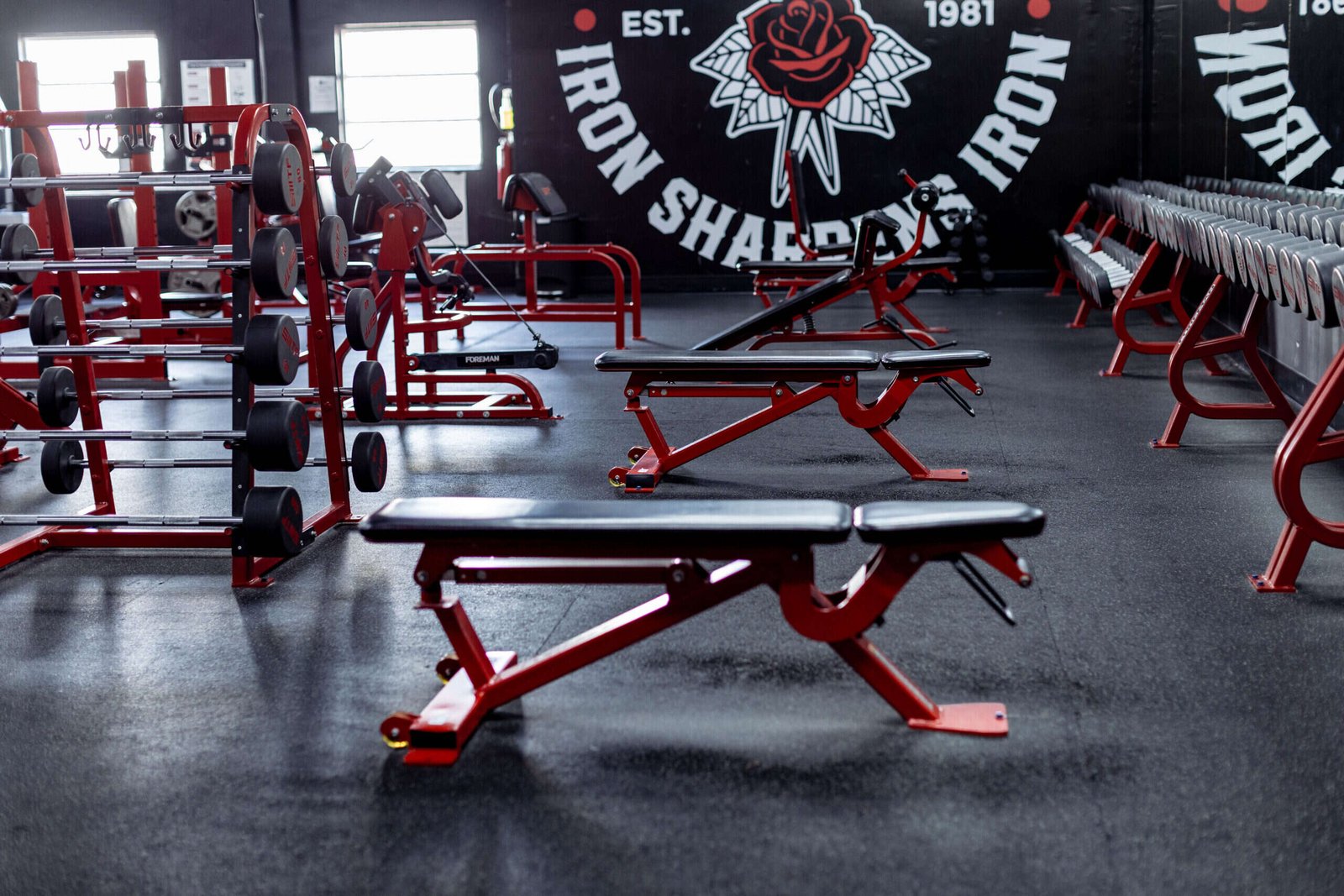
But it has to be the right dose. Which lifts stay, how heavy, how hard each set should feel. Too light and you’re going through the motions. Too hard on five hours of sleep and you’re nursing a sore back by Friday. That call is hardest to make in exactly the week you’d be making it.
What actually makes exercise stick?
Kaushal and Rhodes followed 111 new gym members for 12 weeks. For them, exercising at least four times a week for six weeks was the minimum it took for exercise to become a habit. What predicted the habit forming was consistency, a routine that wasn’t complicated, the environment people trained in, and whether they enjoyed it. The authors’ advice was aimed at trainers: keep it simple and enjoyable for new clients, and focus on consistency.
That’s one study of new gym members, not a rule for your week. But look at the list. None of it is motivation. Simple, repeated, a place built for it, a session you don’t dread. Those are design choices, and somebody has to make them.
How to stay consistent with exercise: what we’d build in
This is our approach, not a program. Yours depends on your goals, body and calendar.
- A short version, written ahead of time. The crunch-week plan gets made while you’re thinking clearly, not at the end of a fourteen-hour day. People planning alone tend to plan for their good weeks and have nothing ready for the bad ones.
- Fewer lifts, same intent. In a hard week the big movements stay and the extras go, so the days get shorter but you keep at least three strength days, our minimum. Picking which lifts stay is where people guess.
- No making up for lost time. Cramming three missed sessions into one weekend is how people get hurt. Avoiding injury is part of what we coach for, so after a rough stretch the load comes back in steps, each one picked to rebuild you without anything getting tweaked.
- Food that survives the calendar. Your personalized nutrition coaching comes with the training program, and the targets get adjusted for client dinners, airport meals and weeks of eating in the car.
- Someone who expects you. A coach waiting is harder to skip than a plan nobody else knows about. When you go quiet, we notice.
- A plan for the week after. The week after the deadline matters more than the deadline week.
Why is this so hard to do on your own?
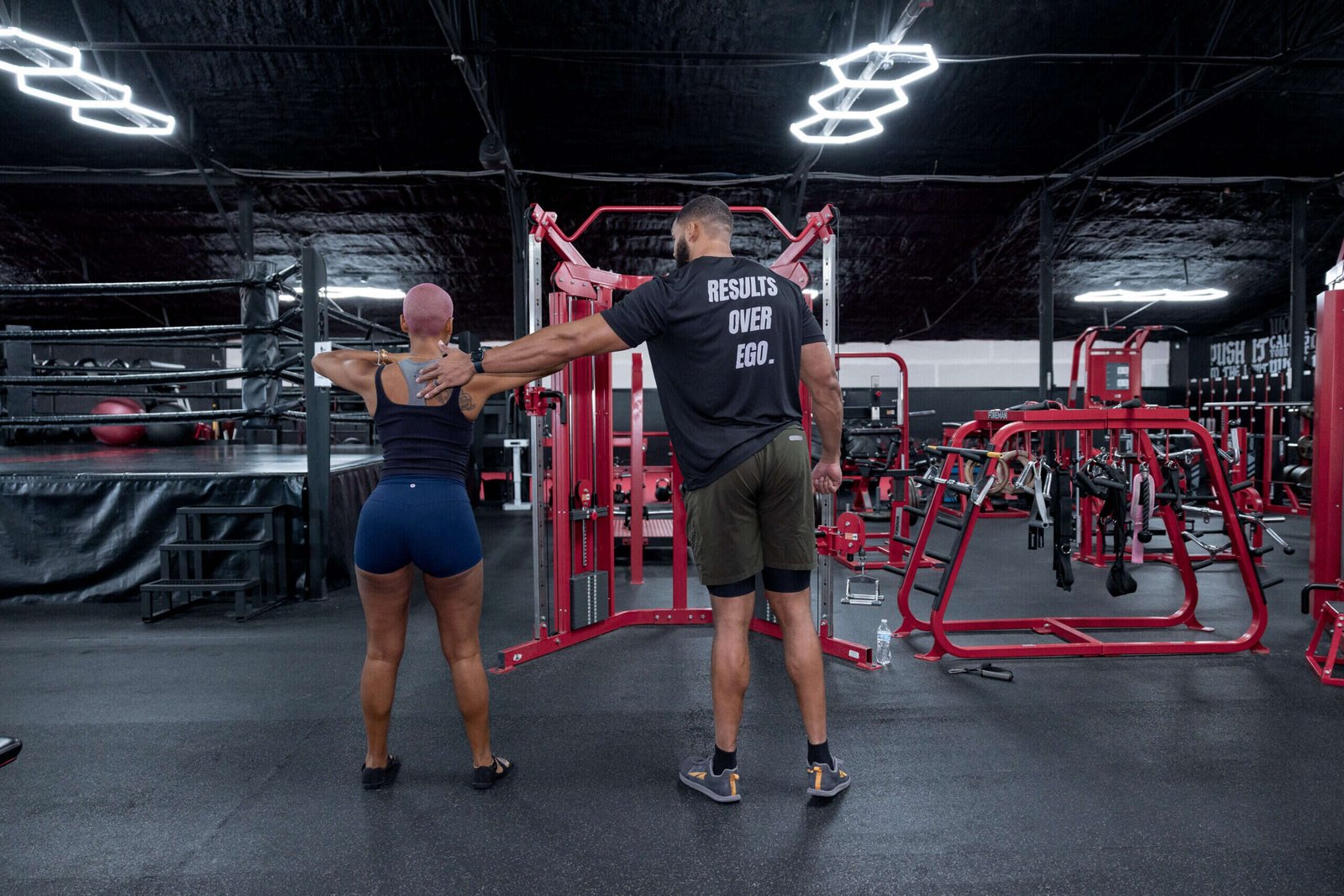
Because it’s another job. You already run a team, a practice or a company. Designing a program, adjusting it every few weeks, planning food around travel and deciding what to cut when the week collapses is real work, and it lands on you when you have the least left to give. A coach takes that load, and you just show up.
Then there are the aches of long weeks: a stiff lower back after three days in a conference room, a shoulder that grumbles from the laptop. The way we see it, that’s usually a strength gap around the joint, not a reason to stop. Guess your way through and you either skip training or push through until it hurts more. So we strengthen what’s around it, in steps your joint agrees with.
And you’ll learn why each piece is there, so a hotel gym or a twenty-minute window still counts for something.
From the floor: Willpower isn’t what we see carry people through a hard year. In our experience, consistent clients are the ones whose plan already had an answer for the bad weeks, and who had someone notice on day three that things were slipping, instead of week five.
If your calendar has beaten your training more than once, apply for coaching and tell us when it usually falls apart.
What does waiting for a calmer month cost?
Usually more than it seems. There’s always another quarter-end, another trial date, another season of the kids’ games. Every restart costs you the first few weeks again, the ones that feel hardest and pay back least. The honest cost of waiting is starting over, again.
Getting strong is only part of what we’re after. What Gryffon Performance builds toward is a lean, balanced body that doesn’t fall apart when the calendar does.
Step one is a complimentary strategy session, sixty minutes at the studio with our founder and head coach, David. Bring your real calendar, not the ideal one. Expect questions about what you want, your training past, the shape of a normal week and anything that aches. A physical assessment follows, then a nutrition conversation and a look around the studio. By the end you’ve got a starting point, a schedule built for your actual calendar, and a plan that makes sense on a bad week too.
Fifteen-plus years of coaching men and women sit behind that conversation. So does a serious back injury David came back from before he went on to deadlift 600 pounds. He knows a setback doesn’t have to end your progress.
Something been nagging for a while? Bring it with you instead of waiting on it. David looks at your movement in person, and if training isn’t the whole answer, he’ll point you to the right doctor.

Staying consistent with training in Dallas
Gryffon Performance is a private training studio at 1925 E Levee St, Dallas, TX 75207, in the Dallas Design District, with free parking. We’re about 12 minutes from Highland Park and close to Uptown, Oak Lawn, the Medical District and Bluffview, and we coach people from the Park Cities and across Dallas. Get directions
50+ five-star Google reviews. Fifteen thousand square feet, private, built for coaching and nothing else. Every client gets a comprehensive assessment and personalized nutrition, included.
Apply for coaching and tell us what your busiest season looks like. You’ll hear back within 24 hours, and your first session with us is a complimentary strategy session.
Related reading
General information about training, not medical advice.
References
- Bickel CS, Cross JM, Bamman MM. Exercise dosing to retain resistance training adaptations in young and older adults. Medicine and Science in Sports and Exercise, 2011;43(7):1177-1187. doi:10.1249/MSS.0b013e318207c15d. PMID 21131862.
- Kaushal N, Rhodes RE. Exercise habit formation in new gym members: a longitudinal study. Journal of Behavioral Medicine, 2015;38(4):652-663. doi:10.1007/s10865-015-9640-7. PMID 25851609.