
Your back has a schedule of its own. Stiff after the drive in, worse by the end of a long day in a chair, and two days of payback after a round of golf. You’ve tried. An adjustment that felt great until the next morning. Physical therapy that helped until a busy month. Stretches from a video, most nights, for a while.
Now you want someone who can get you strong again, and you’re not sure who that is.
The short answer: choose someone who builds capacity, not just relief. That means someone who looks at how you move in person, trains your hips and trunk and not only where it hurts, raises the load over months, and changes the plan when your back talks. If your back has stalled your training for months, apply for coaching and tell us what you’ve tried. Your first session with us is a complimentary strategy session.
Key points
- Choose someone who builds capacity, not just relief: they look at how you move in person, train your hips and trunk, and raise the load over months.
- A network meta-analysis of 217 randomized trials and 20,969 people with chronic low back pain found most types of exercise beat minimal treatment for pain and function.
- People with low back pain tend to have weaker glutes and knee extensors. That’s a link, not proof, but it’s why a good coach looks beyond the spot that hurts.
- Walk away from promises to fix your back, a program that looks like everyone else’s, and anyone who loads you before watching you move.
One exception: pain or weakness in both legs, numbness around your groin, or trouble controlling your bladder or bowels means the ER, today, not a training plan.
Relief and capacity are different jobs
Most people with a bad back have already met a few kinds of help. They’re not competing for the same job.
Adjustments and massage can make your back feel better for a while. Physical therapy settles a flare and gets you moving again, and in our experience it usually wraps up as the pain fades, before your back is any stronger. A strength coach picks up the part that comes next: months of progressive training until your back handles the load your life puts on it.
From what we see, that last part is where most people stop. Not because it doesn’t work. Because it’s slow, it’s hard to dose, and it’s easy to drop when work gets busy.
What does the research say about exercise for back pain?
A large network meta-analysis by Hayden and colleagues pooled 217 randomized trials and 20,969 people with chronic low back pain. Most types of exercise beat minimal treatment for pain and function. A few did better than others, but the authors’ practical advice was simple: do the exercise you enjoy, so you keep doing it.
The way we see it, that tells you what the real problem is. It isn’t finding the one magic exercise. It’s sticking with good training long enough for it to work.
A second meta-analysis, by de Sousa and colleagues, looked at 14 studies covering 1,870 people. People with low back pain had weaker hip abductors and hip extensors, mostly the glutes, and weaker knee extensors than people without it. That’s a link, not proof. But it’s why a good coach looks well beyond the spot that hurts.
Six questions to ask before you choose
Ask us these, too. We’d want you to.
- Will you look at how I move before you load anything? You can’t see your own compensations. In our experience, when the glutes are quiet, your lower back and hamstrings take over, and from the inside it feels like the exercise is working.
- Do you train what’s weak, or only what hurts? Hips, legs and trunk, not just a set of back exercises.
- How do you decide how much, and when to add more? The dose is the hard part. Under-do it and your back stays where it is. Overdo it and one bad morning convinces you lifting is the problem.
- What happens when my back flares? You want to hear that the plan adjusts. Not that you push through, and not that you stop everything. Reading how your back feels the next morning and changing the next session is a big part of the job.
- What’s the goal: no pain, or strong? No pain is a start. The goal we’d set is a back that handles a heavy deadlift, a full round of golf and picking up your kids without a second thought.
- Who handles nutrition? The way we see it, carrying less body fat takes load off your back and hips. The targets need adjusting as your weight, training and appetite change.
Anyone who’s built a real process can answer those without hesitating.
What should you walk away from?
Promises to fix your back or realign anything. A program that looks like everyone else’s. “No pain, no gain.” The opposite, too: someone who tells you to stop lifting for good. And anyone who starts loading you before they’ve watched you move.
From the floor: In our experience, people with a bad back usually aren’t missing information. They’ve seen the exercises. What they’ve been missing is someone to pick the right ones for their body, build them up at the right pace, and keep it going through the weeks when work takes over.
If you’ve done the stretches and the visits and your back still decides your weekend, apply for coaching and tell us what your back has been doing.
Why this needs a coach
Knowing the exercises isn’t the hard part. Doing the right ones well, for months, with someone who sees what you can’t, is. You can’t check your own form mid-rep, and you can’t see it if your left side does half the work of your right.
Not hurting your back while you build it is the first rule we coach by. Each lift, each weight and each progression is picked so your back gets stronger instead of getting tweaked by a guess.
At Gryffon Performance the target is bigger than a back that doesn’t hurt: a lean, balanced body, where the big muscles carry the load they were built for and your back stops covering for them.
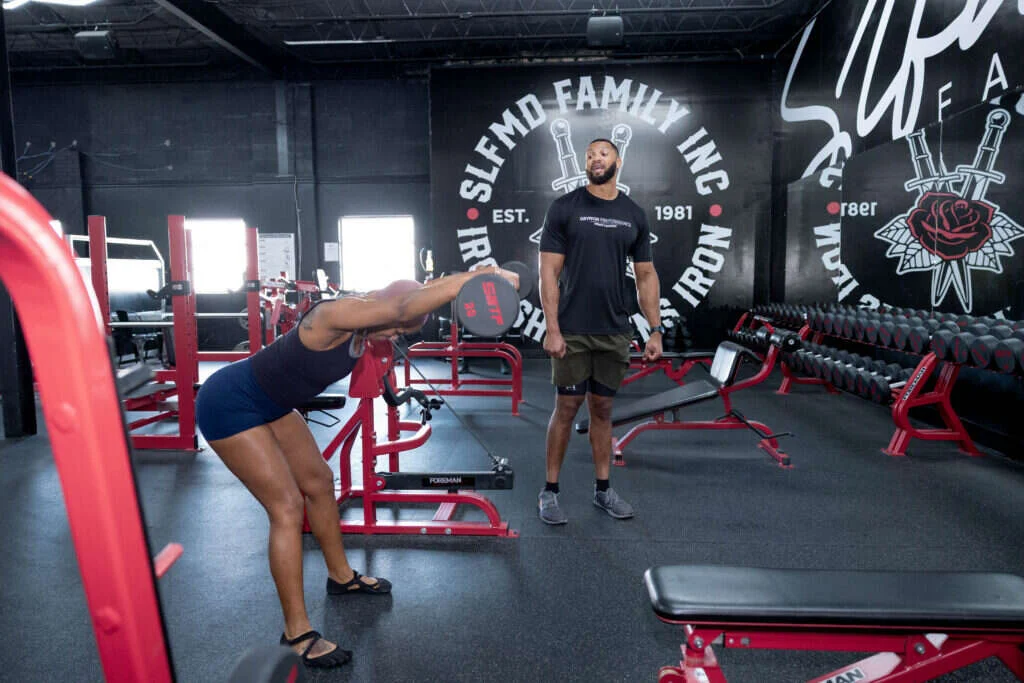
You’d begin with a complimentary strategy session, an hour in person with David, our founder and head coach. Expect questions about your goals, your training history, your week and what your back has been doing, then a physical assessment, a talk about nutrition and a look around the studio. You’ll leave with a clear starting point, a schedule that fits the week you actually live, and a plan you understand.
David knows this one personally. He came back from a serious back injury and has since deadlifted 600 pounds.
Don’t know whether it’s a disc, a muscle or something else? Nobody expects you to know before you come in. David will look at how you move in person, and if your back needs something beyond training, he knows the right doctors to send you to.
Strength coaching for back pain in Dallas
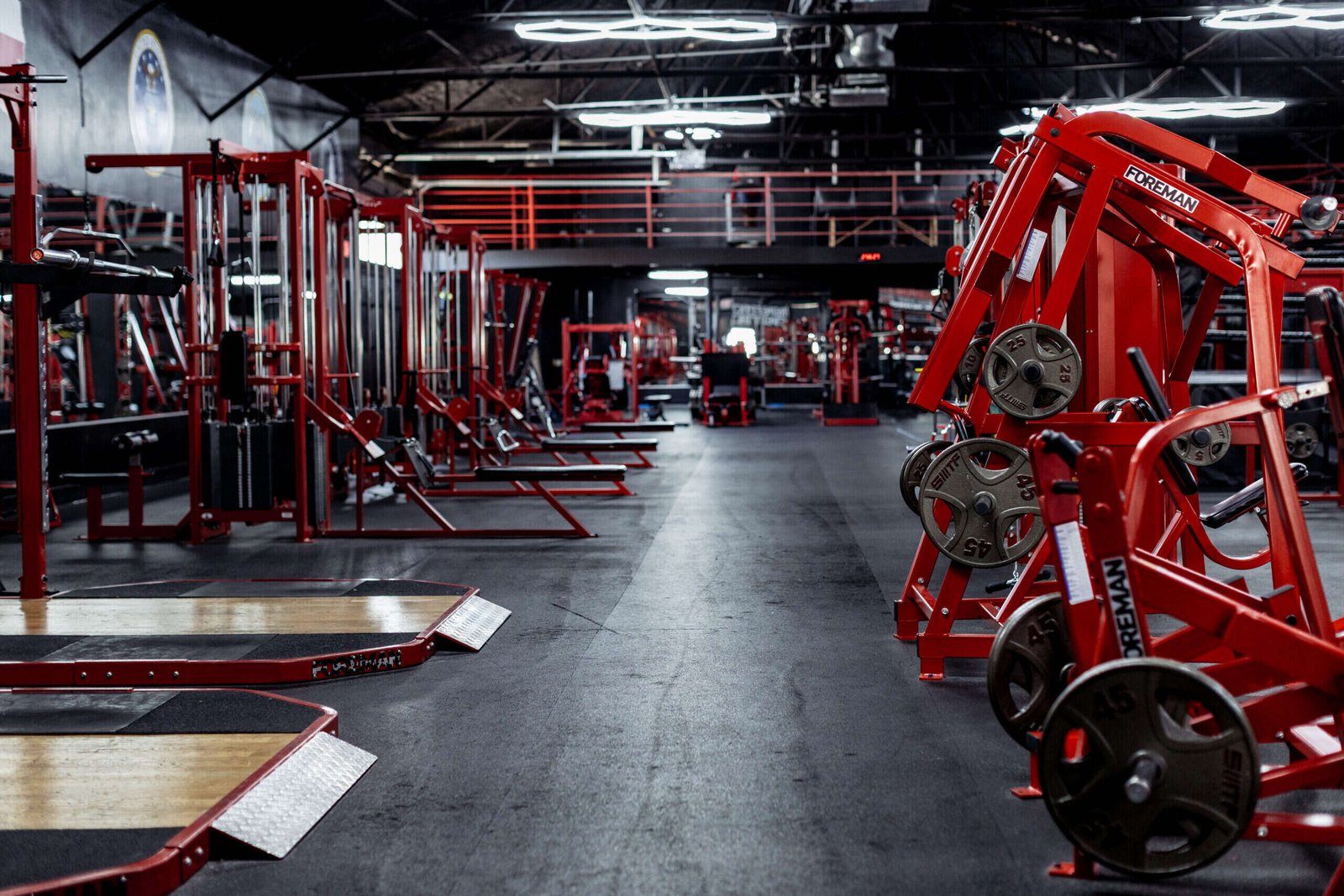
Gryffon Performance is a private training studio at 1925 E Levee St, Dallas, TX 75207, in the Dallas Design District, with free parking. We’re about 12 minutes from Highland Park and close to Uptown, Oak Lawn, the Medical District and Bluffview, and we coach people from the Park Cities and across Dallas. Get directions
50+ five-star Google reviews. Fifteen thousand square feet, private, built for coaching and nothing else. Every client gets a comprehensive assessment and personalized nutrition, included.
Apply for coaching and tell us what you want your back to handle again. You’ll hear back within 24 hours, and your first session with us is a complimentary strategy session.
Related reading
- Lower Back Stretches vs Strength: What Actually Helps a Bad Back
- Sciatica From Sitting? Why Your Glutes and Piriformis Matter
- Training With Joint Pain in Dallas: What Actually Helps
General information about training, not medical advice.
References
- Hayden JA, Ellis J, Ogilvie R, et al. Some types of exercise are more effective than others in people with chronic low back pain: a network meta-analysis. Journal of Physiotherapy, 2021;67(4):252-262. doi:10.1016/j.jphys.2021.09.004
- de Sousa CS, de Jesus FLA, Machado MB, et al. Lower limb muscle strength in patients with low back pain: a systematic review and meta-analysis. Journal of Musculoskeletal and Neuronal Interactions, 2019;19(1):69-78.