
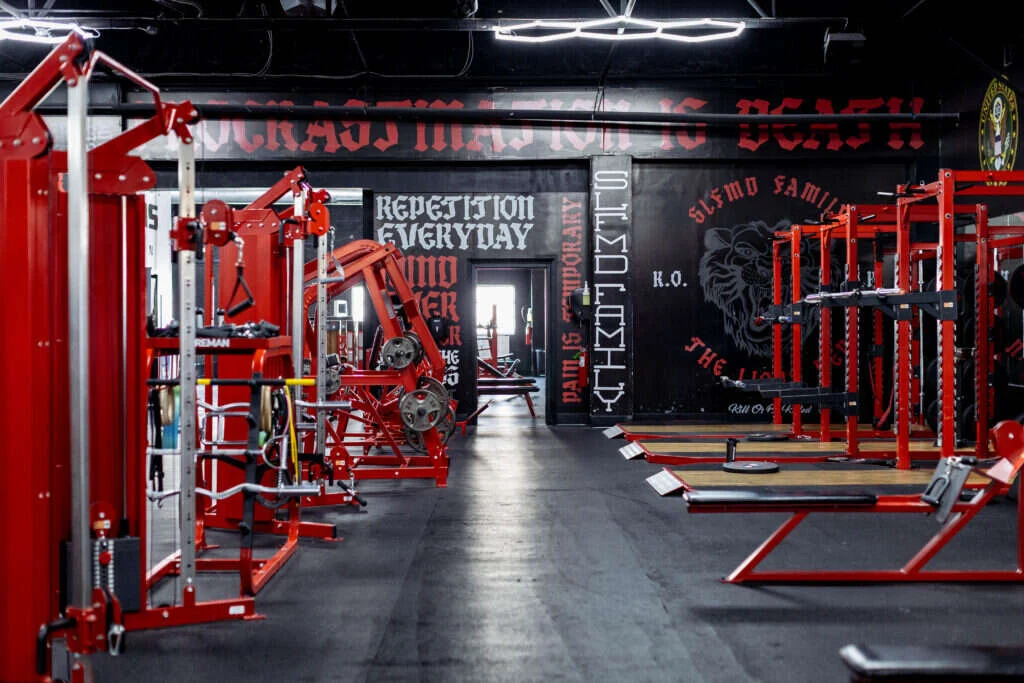
You’ve walked past the weight room for years. Treadmill, a couple of machines you understand, then out. The barbells were for people who already knew what they were doing, and you weren’t going to be the person googling “how to deadlift” between sets while everyone watched.
Meanwhile you’ve been told to “lift weights” by everyone from your doctor to your sister. You’d like to. You just don’t want to look lost, or get hurt.
The short answer: a personal trainer for beginners is one of the smartest places to start. The first months are when you learn the movements, and the habits you build then tend to be the ones you keep. A good coach makes the weights feel normal fast. If you’ve never lifted and want to start right, apply for coaching and tell us you’re new to this. Your first session with us is a complimentary strategy session.
Key points
- Nobody has to be fit before they start. Everyone begins with weights they can control.
- Beginners usually get stronger quickly at first, as the body learns each movement.
- Expect a little soreness in the first couple of weeks. It fades as your body adapts.
- The coach’s real job early on is teaching you to move well, then adding load at the right pace.
“Do I need to get in shape before I hire a trainer?”
No. This is the one we hear most, and it’s backwards. Getting in shape is what the training is for.
Every exercise has an easier version. A squat can start as standing up from a box. A deadlift can start with a kettlebell sitting on a low block. Push-ups can start against a bench. You start where you are, and the load goes up as you’re ready for it. That’s the whole system, for a beginner and for someone who’s lifted for twenty years.
What the first weeks actually feel like
Here’s what to expect, roughly. Everyone’s a little different.
The first visit is mostly talking and moving. A good coach wants your goals, your history, anything that hurts and what your week looks like. Then they’ll watch you squat, hinge, push, pull and balance with little or no weight. Nobody’s testing you. They’re finding your starting point.
The first couple of weeks are about learning patterns. Squat, hinge, lunge, push, pull, carry. Most strength training is some version of those six. You’ll feel awkward at first, and that’s normal. Your brain is figuring out which muscles to fire and in what order.
You’ll probably be sore. Muscles that haven’t worked this way before tend to ache a day or two later, especially in the first week or two. It’s usually the legs and glutes. As your body adapts, the same work stops leaving you sore.
Then the numbers move. This is the fun part. Beginners tend to get stronger fast early on, a lot of it because the nervous system gets better at the movement, before much muscle has been built. In our experience, that early progress is what hooks people. You see the weight go up and realize you’re not “bad at this.” You were just new.
What beginners worry about, honestly
- “I’ll look like I don’t know what I’m doing.” You won’t have an audience. In a private studio built for coaching, there’s no crowded floor of people watching you figure out a split squat.
- “I’ll get hurt.” Lifting is a skill, and like any skill it goes better with someone teaching it. A coach chooses loads you can control, watches your form and changes the plan when something doesn’t feel right.
- “I’ll get bulky.” Building a lot of muscle takes years of hard, deliberate work and a lot of food. What most beginners actually see is a leaner, firmer, more balanced body.
- “I don’t know what to eat.” Neither do most people starting out. That’s why nutrition coaching is part of every training program we run.
What trips up most beginners?
There’s no shortage of beginner programs online. The problem isn’t the program. It’s everything around it.
You can’t see your own form. A lower back that rounds on a deadlift, or knees caving on a squat, feels fine while you’re doing it. You also can’t tell when you’re ready to add weight. Most beginners either stay too light for months, out of caution, or jump too fast because the internet said to. Both stall progress.
And then life happens. A busy month, a trip, a sick kid. Without someone expecting you, the habit that was barely three weeks old is the first thing to go.
From the floor: In our experience, the beginners who do well aren’t the most athletic people in the room. They’re the ones who showed up nervous, learned the basics properly and kept coming through the boring middle, when the soreness was gone and the novelty had worn off.
Why start with a coach instead of figuring it out?
Walking and an easy bike ride are good habits, and we’d never talk you out of them. But if you want strength and a real change in how your body looks and feels, lifting is a skill. Skills are much easier to learn right the first time than to unlearn later.
A coach also keeps you safe while you learn. Getting you stronger without getting you hurt is what we’re there for, so every new lift starts light, gets taught properly and only gets heavier once you own it. In our experience, the setbacks beginners run into usually come from guessing at form or adding weight too fast, and that’s exactly what a coach is there to watch.
If you’d rather learn it right the first time, apply for coaching and tell us what’s held you back from starting.
How we coach people who’ve never lifted
The way we see it, nobody fails at lifting because the exercises are too hard. They stop because nobody showed them how, nobody adjusted the plan, and nobody noticed when they drifted. That’s the part we take off your plate.
We teach the movements first, then build load at a pace your body can handle, with your nutrition coached alongside it. At Gryffon Performance the goal isn’t just a heavier lift. It’s a lean, balanced body you’re confident in.
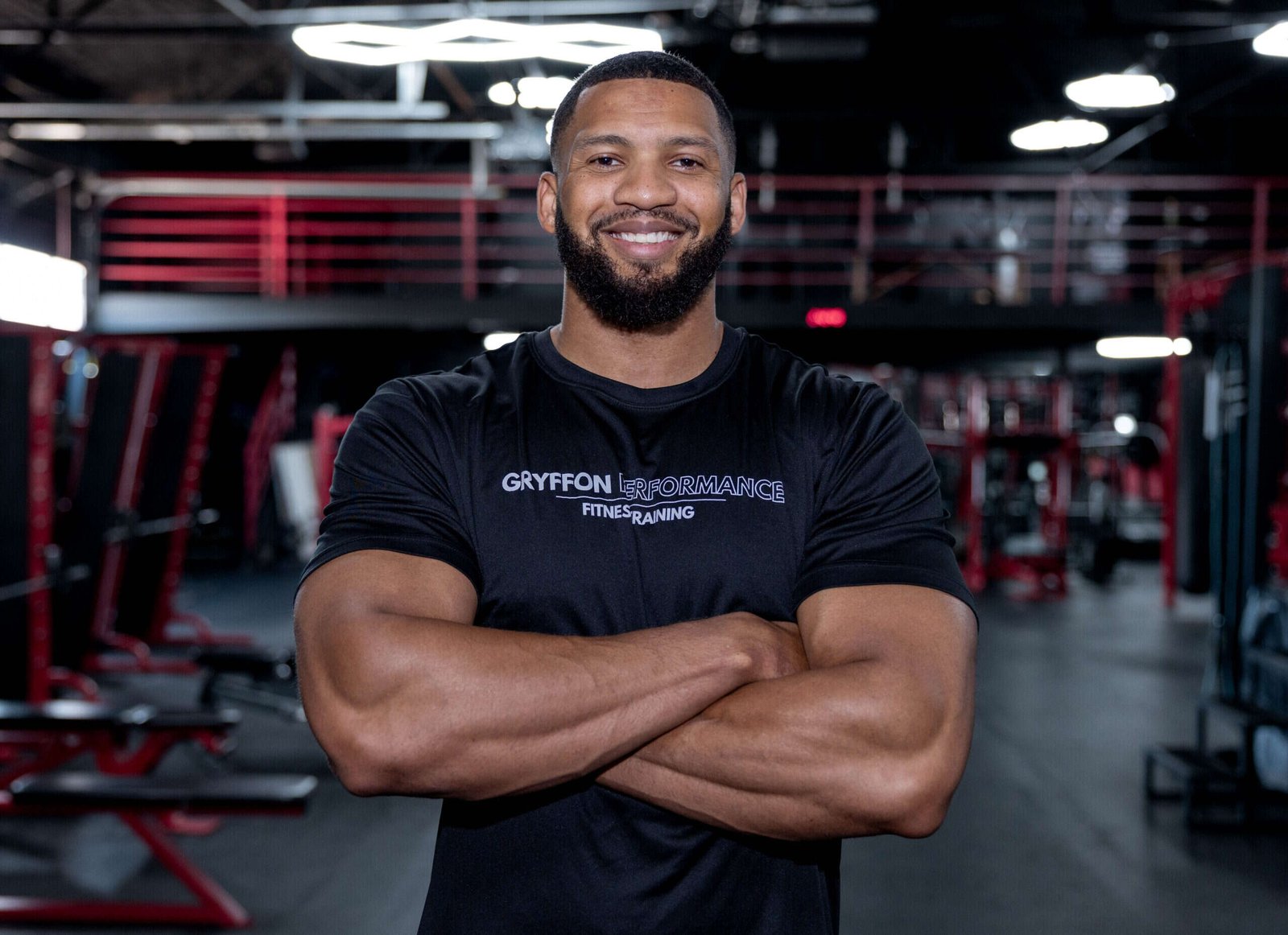
You’d start with a complimentary strategy session, sitting down in person with David, our founder and head coach, for about an hour. No hard workout on day one. You’ll talk about what you want, what you’ve done before, how your week runs and anything that hurts, then move through a gentle physical assessment, talk food and see the studio. You’ll leave knowing exactly where you’re starting and what the plan is.
David has taught men and women to lift for more than 15 years. He’s also had to start over himself: he came back from a serious back injury and went on to deadlift 600 pounds, so he won’t judge anyone for being new.
Learning to lift in Dallas
Gryffon Performance is a private training studio at 1925 E Levee St, Dallas, TX 75207, in the Dallas Design District, with free parking. We’re about 12 minutes from Highland Park and close to Uptown, Oak Lawn, the Medical District and Bluffview, and we coach people from the Park Cities and across Dallas. Get directions
50+ five-star Google reviews. Fifteen thousand square feet, private, built for coaching and nothing else. Every client gets a comprehensive assessment and personalized nutrition, included.
Apply for coaching and tell us you’re starting from zero. That’s a fine place to start. You’ll hear back within 24 hours, and your first session with us is a complimentary strategy session.
Related reading
- What to Expect in Your First Month of Personal Training in Dallas
- Strength Training for Women: Why Lifting Heavy Isn’t the Risk You Were Told
General information about training, not medical advice.