
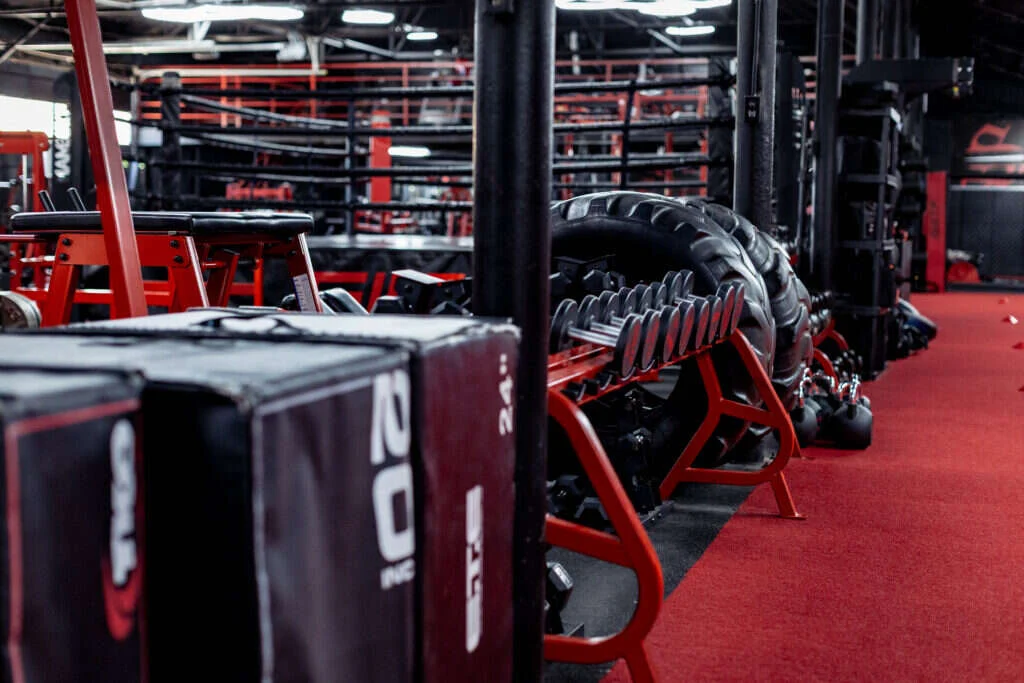
Same routine since spring. A few machines, some dumbbells, twenty minutes on the bike, then back to the office or home to the kids. You feel fine. You look about the same as you did in March. Your squat hasn’t moved, and you’re not sure it was ever right in the first place.
You’re starting to wonder if it’s time to get help, or if you just need to try harder.
The short answer: you likely need a personal trainer if you’ve stopped progressing, keep restarting, train around something that hurts, or keep missing the same goal on your own. Worrying about getting hurt, or running out of energy to plan it all, counts too. If any of the signs below sound like you, apply for coaching and tell us which ones. Your first session with us is a complimentary strategy session.
Key points
- The clearest sign is a plateau: same weights, same body, for months.
- Restarting every January, or every time work calms down, usually means the plan doesn’t fit your life.
- In one study, women who trained with a personal trainer chose loads of about 51 percent of their max, against about 42 percent for women who trained on their own.
- Worrying about getting hurt, or having no energy left to plan your training and food, are signs too.
What are the signs you need a personal trainer?
Here’s how we’d read them.
- Same weights, same body, for months. Your body adapts to what you ask of it, then stops changing once the ask stays the same. Progress needs progression: more load, more reps, more control, added in the right amount at the right time. Most people who train alone repeat what feels familiar.
- You restart more than you continue. Six good weeks, a trial or a quarter-end, then back to zero. That’s rarely a willpower problem. It’s a plan with no version for the hard weeks.
- You’re working out, not training. Every session is whatever you feel like that day. You’re tired and sweaty, and nothing is building on anything.
- Something hurts, and you’ve quietly dropped half your training around it. A knee that complains on squats, a shoulder that doesn’t like pressing. Stopping everything costs you strength. Pushing through blindly costs you weeks.
- You’re not sure your form is right. Is your back rounding on the deadlift? Are your knees drifting in? Nobody can watch their own hips and spine mid-rep, and a mirror only shows one angle.
- The scale moves, but the mirror doesn’t. Lighter but softer usually means too little lifting and too little food structure.
- You don’t know what to eat to support any of it. Lifting can’t out-train a food plan that doesn’t exist, at least not if leaner is the goal.
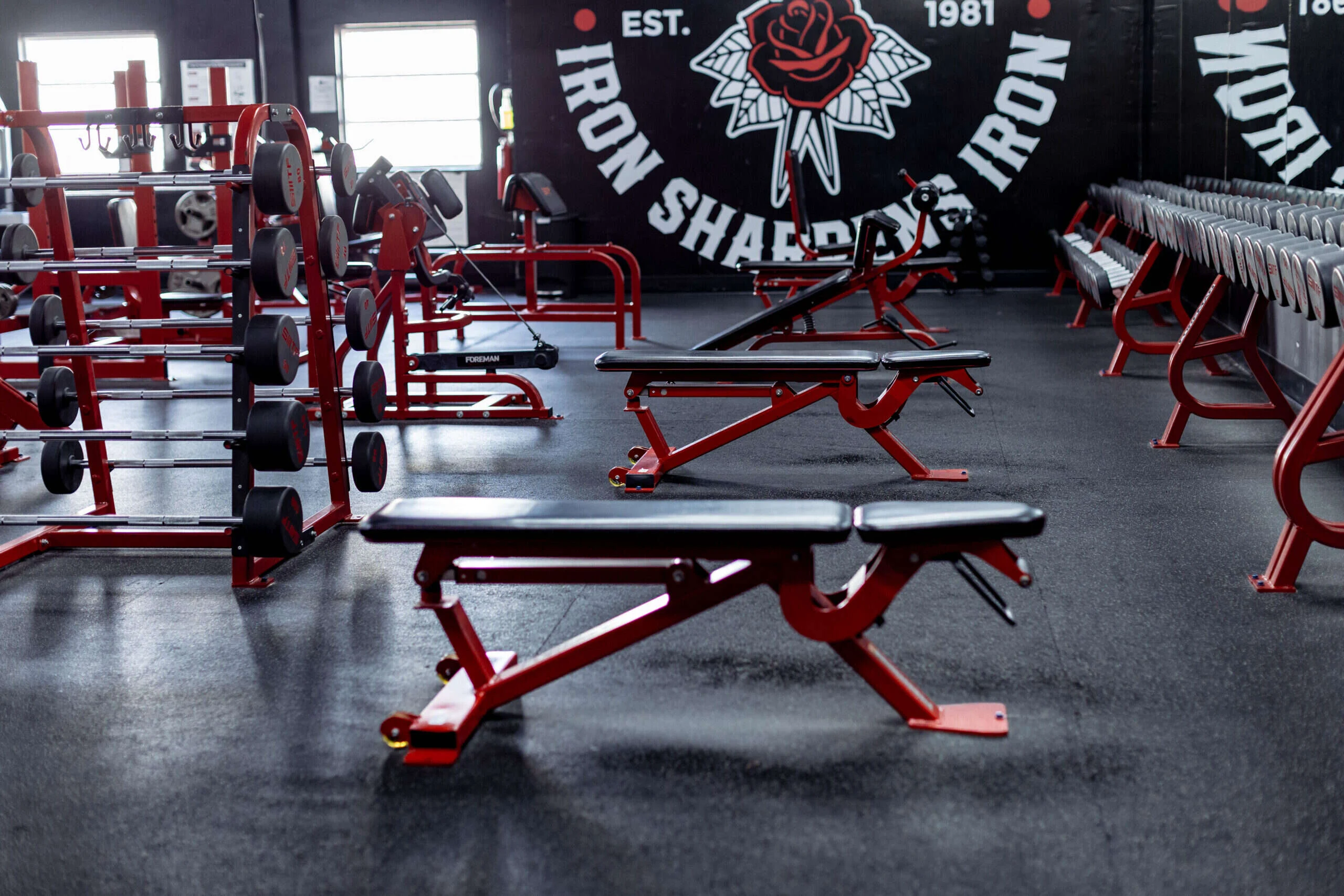
Is training alone really that different?
One study put a number on a pattern coaches see all the time. Ratamess and colleagues looked at 46 women who already lifted. Nineteen trained with a personal trainer, and 27 trained on their own. Each was asked to pick the weight she’d normally use for 10 reps on four machines.
The women who trained with a trainer picked heavier. On average they chose about 51.4 percent of their one-rep max, against about 42.3 percent for the women training alone. The gap was clearest on the leg press (50 versus 41 percent), chest press (57.4 versus 48) and seated row (56 versus 42). They were also stronger on three of the four lifts.
Two honest caveats. The study compared women who already trained one way or the other, so it can’t prove the trainer caused the difference. And the women averaged about 27 years old. Still, it matches what we watch happen in our studio. Left alone, most people pick weights that feel comfortable, and comfortable doesn’t change much.
What are the quieter signs?
These are easy to miss, and they matter just as much.
- You’re worried about getting hurt. A bad back or a tweaked shoulder would cost you work, sleep and time with your kids. Making sure you don’t get hurt is the first thing we plan around, so every load and every step up in weight is chosen with that in mind.
- You don’t have the energy to plan it. A real program, a food plan and changes to both every few weeks. After a full day, that’s the first thing to slide.
- You don’t know why you’re doing what you’re doing. If you can’t say why this exercise, this weight, this week, you’re following a list, not a plan.
- Nobody would notice if you stopped. When no one’s expecting you, one skipped week turns into a skipped month.
- Your goal has a reason behind it. A wedding, a golf season, keeping up with your kids. Something you care about deserves more than guesswork.
From the floor: In our experience, people rarely come in with just one sign. The plateau tends to come with the restarts. The restarts come with a shoulder they’ve been working around for a year. And nobody has looked at their nutrition since a macro app they gave up on. Each one is small. Together, they’re why the last few attempts didn’t stick.
If you recognized yourself in more than one of those, apply for coaching and tell us which ones you keep running into.
What should change once you hire the right trainer?
Not a program, just what good coaching looks like from your side of it.
- Someone looks at how you move first. Squat, hinge, push, pull, carry and single-leg work, checked before the first heavy set.
- The weights go up on purpose. How much, and how fast, is the real skill. Too light and nothing changes. Too much and something flares up and sets you back weeks.
- The sore spot gets trained around, not ignored. Everything that doesn’t hurt keeps getting trained, and the movements that do get swapped for versions you can load.
- Your food gets a plan. Targets that fit your real week, adjusted as your weight, training and appetite change.
- The plan bends instead of breaking. Travel, client dinners, a sick kid. A coach plans for those weeks before they arrive.
- Progress gets measured. Strength, measurements, photos, how your clothes fit, not just how tired you felt.
Nothing on that list is complicated. Doing all of it for yourself, every week, for a year, is another story.
Why the signs point to a coach
Every sign above comes back to one gap. You probably know roughly what to do. Doing it right, long enough, with a second set of eyes that catches what you can’t, is the part that’s missing.
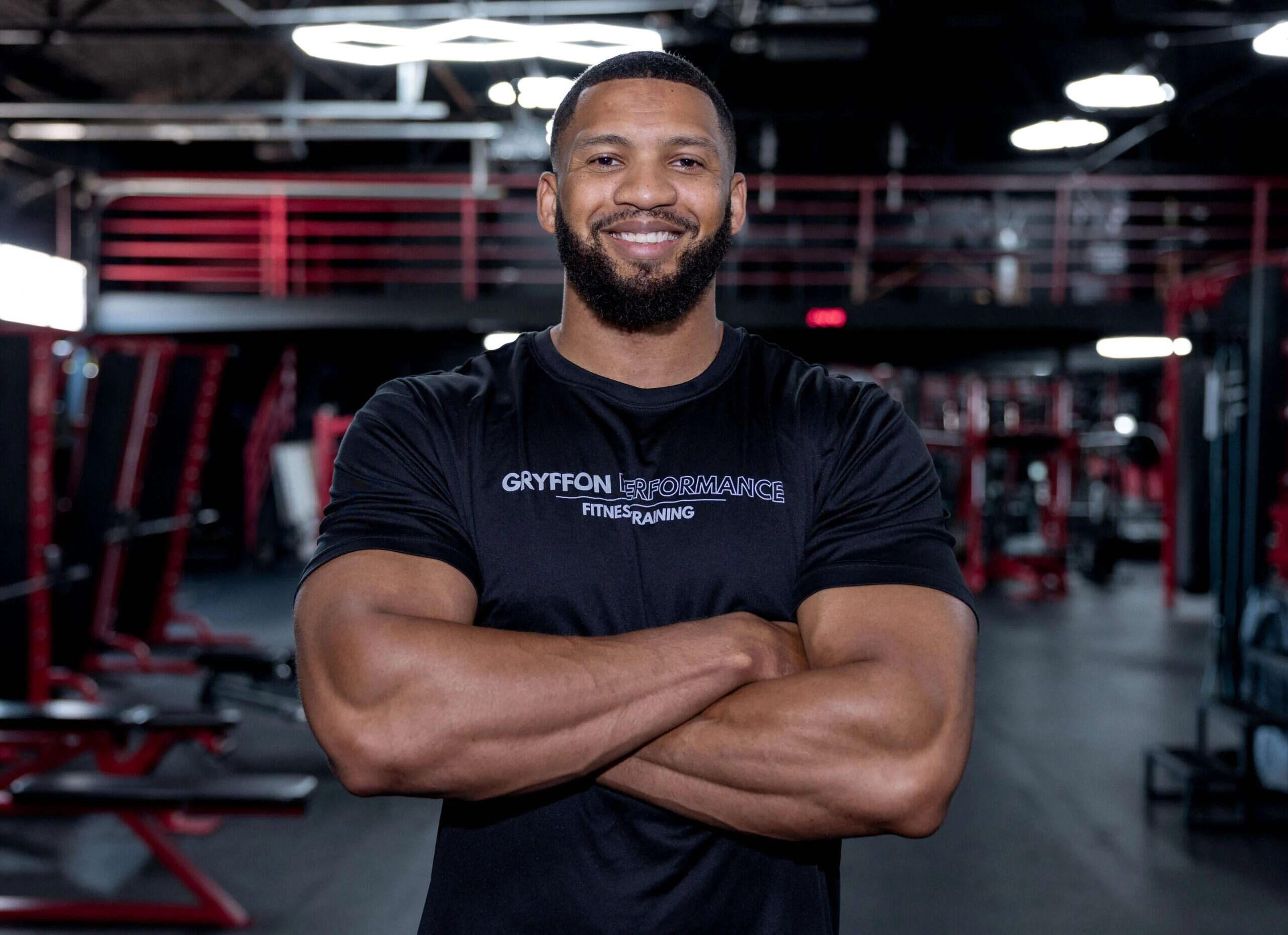
That gap is exactly what we fill. We want more for you than a bigger lift: Gryffon Performance trains people toward a lean, balanced body, with personalized nutrition coaching in every training program.
Step one is a complimentary strategy session with David, our founder and head coach: 60 minutes, in person. Your goals, how you’ve trained so far, your calendar and anything that aches all get covered, along with a physical assessment, a talk about nutrition and a look around the studio. You’ll go home with a clear starting point, a schedule shaped around your actual week and a plan you can explain back to us.
More than 15 years of training and coaching sit behind how David reads these signs, and he coaches both men and women.
Can’t tell what’s going on with that knee or shoulder? You can come in without knowing. David looks at how you move in person, and should it need more than training, he knows the right doctors to send you to.
A personal trainer in Dallas when the signs add up
Gryffon Performance is a private training studio at 1925 E Levee St, Dallas, TX 75207, in the Dallas Design District, with free parking. We’re about 12 minutes from Highland Park and close to Uptown, Oak Lawn, the Medical District and Bluffview, and we coach people from the Park Cities and across Dallas. Get directions
50+ five-star Google reviews. Fifteen thousand square feet, private, built for coaching and nothing else. Every client gets a comprehensive assessment and personalized nutrition, included.
Apply for coaching and tell us which signs sounded like you. You’ll hear back within 24 hours, and your first session with us is a complimentary strategy session.
Related reading
General information about training, not medical advice.
References
- Ratamess NA, Faigenbaum AD, Hoffman JR, Kang J. Self-selected resistance training intensity in healthy women: the influence of a personal trainer. Journal of Strength and Conditioning Research, 2008;22(1):103-111. doi:10.1519/JSC.0b013e31815f29cc