

Your friend swears by reformer Pilates. You tried it, your abs shook for fifty minutes, and you walked out feeling taller. So you kept going. Your posture got better, your hips loosened up, and you felt more put together.
Then month four came, and not much else had changed. Carrying the suitcase up the stairs still felt heavy. The jeans fit the same. You started wondering whether you should be lifting instead.
The short answer: if the goal is strength, a personal trainer who builds you up with progressively heavier loads will take you further than Pilates. Pilates is good at control, mobility and endurance. Strength comes from weight that keeps climbing, coached so you don’t get hurt. If you’re ready to get properly strong, apply for coaching and describe your current routine. Your first session with us is a complimentary strategy session.
Key points
- Pilates builds trunk control, mobility and muscular endurance, and a good instructor teaches excellent body awareness.
- Strength comes from loads that rise over months. Springs and body weight run out of room.
- A 2017 meta-analysis of 21 studies found heavy loads built more maximal strength than light loads, while muscle growth was similar across both.
- A personal trainer also covers what Pilates usually doesn’t: your nutrition, your progression, and building strength around the joints that ache.
What does Pilates do well?
More than its critics admit. Pilates teaches you to control your trunk, breathe under effort and move through a full range without collapsing. Good instructors are sharp at cueing. People who’ve done it for a while often have better body awareness than people who’ve lifted for years.
It’s low impact, which matters if your knees or back have opinions. It’s a real workout. And it can make you feel loose and upright after a day hunched over a laptop.
None of that is in question. The question in the title is narrower: which builds more strength?
Where does strength actually come from?
Muscle responds to a demand it isn’t used to. Once that demand stays flat, the response fades. Raising it on purpose is called progressive overload. To keep getting stronger, the load has to keep rising, a little at a time, for months.
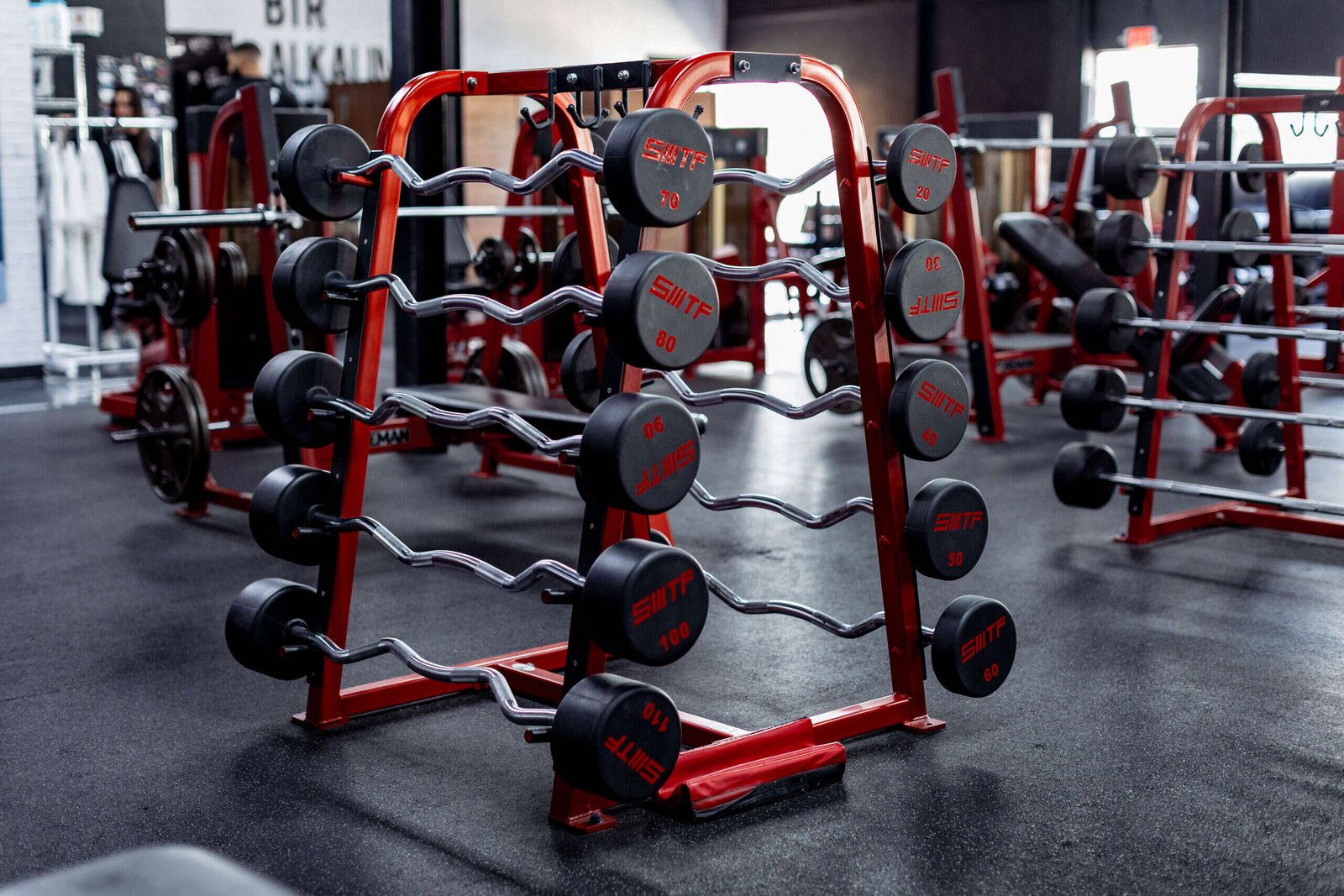
That’s where the two part ways. A reformer gives you springs. A mat gives you your own body weight. Both can be made harder, but only up to a point. A barbell, dumbbells and plate-loaded machines let the weight climb for years.
The research lines up with that. A 2017 meta-analysis by Schoenfeld and colleagues pooled 21 studies comparing light loads with heavy loads, with every set taken to failure. Gains in maximal strength were greater with heavy loads. Muscle growth, on the other hand, was similar across the loading range.
Two things follow. Light loads can build muscle about as well, as long as each set is pushed to failure. But getting stronger, the kind of strength that moves furniture and picks up a sleeping kid, comes from heavy loads. The way we see it, that’s the gap Pilates can’t close on its own.
Why does Pilates feel so hard, then?
Because it is hard. That shaking in your abs is real effort. It’s mostly endurance, though: lots of reps against a resistance that isn’t very heavy. You get better at lasting longer, and that’s a skill worth having.
But a burn isn’t the same signal as a heavy set of five. In our experience, people often read soreness and shaking as proof they’re building strength. Then they test it on a heavy deadlift and find the endurance didn’t carry over the way they’d hoped.
Personal trainer vs Pilates: how do they compare?
- Maximal strength. A personal trainer using progressive loads wins clearly.
- Muscle. Both can build some. Heavier training gives you far more room to keep progressing.
- Control and mobility. Pilates is very good here. A good trainer builds these too, under load.
- Nutrition. Rarely part of a Pilates session. With us, it’s included in every training program.
- Aches and pains. Pilates tends to work around them. A strength coach builds the muscle around them, so the joint stops doing work it shouldn’t.
- Progression. Pilates sessions often follow a set flow. A trainer writes the next session from how the last one went.
What does a good trainer add?
A heavier bar on its own isn’t the point. What matters is the coaching around it.
Staying healthy comes first. If a career and a family are counting on you, you can’t lose a month to a tweaked back. Keeping you out of injury is built into every choice we make: the exercise, the load, how fast the weight goes up. You get stronger without getting hurt.
Then there’s the thinking. Designing a strength program that progresses, and a nutrition plan that holds up through client dinners, is real work. It also needs adjusting every few weeks. A coach takes that off your plate.
Aches are a big one. A hip that pinches or a shoulder that grumbles is often a strength gap, not a mystery. Guessing your way through it usually ends with you avoiding the movement or pushing through and making it worse. Our approach is to strengthen the muscles around that joint, slowly enough that it keeps up.
And you learn the reasons: what each lift is for, and why the weight moves when it does. That knowledge stays with you, including in your Pilates.
Can you do both?
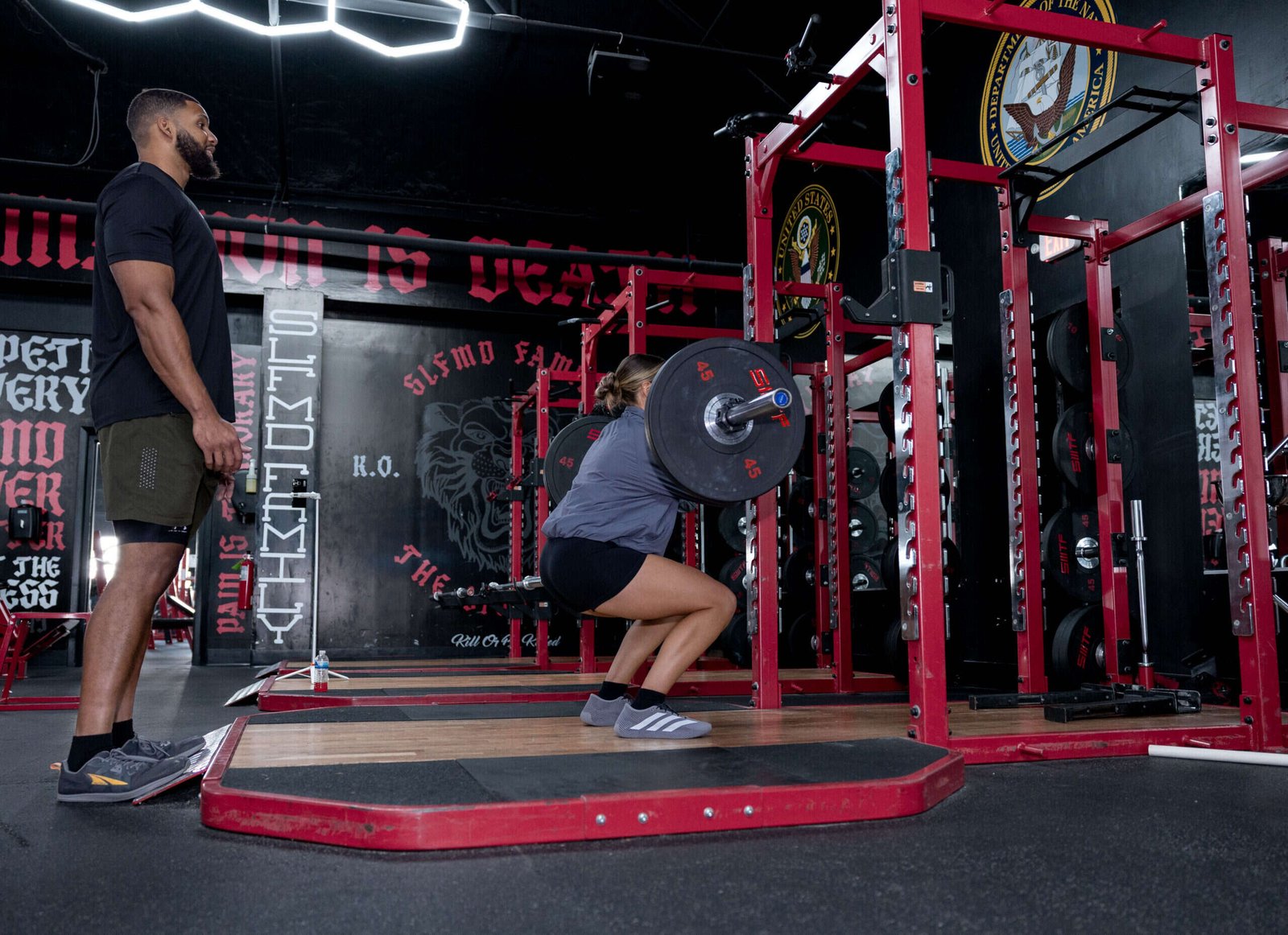
Yes, and plenty of people do. If you love your Pilates, there’s no reason to give it up. Strength training is what we’d build underneath it, so the control you’ve learned has real strength behind it.
From the floor: Pilates regulars tend to arrive moving well, in our experience, often with better control than most beginners to lifting. What tends to surprise them is how much weight they can handle once it’s built up gradually, and how quickly the strength starts showing up in everyday life.
If you’ve got the control and now want the strength, apply for coaching and name the lift you’d love to own.
How we’d build your strength
None of this asks you to choose between feeling good and getting strong. The hard part is getting the load and the progression right, week after week, for months, with a coach who catches the shifts you’d never notice. That’s our job.
At Gryffon Performance, strength is part of a bigger goal: a lean, balanced body. That’s why nutrition coaching comes with every training program.
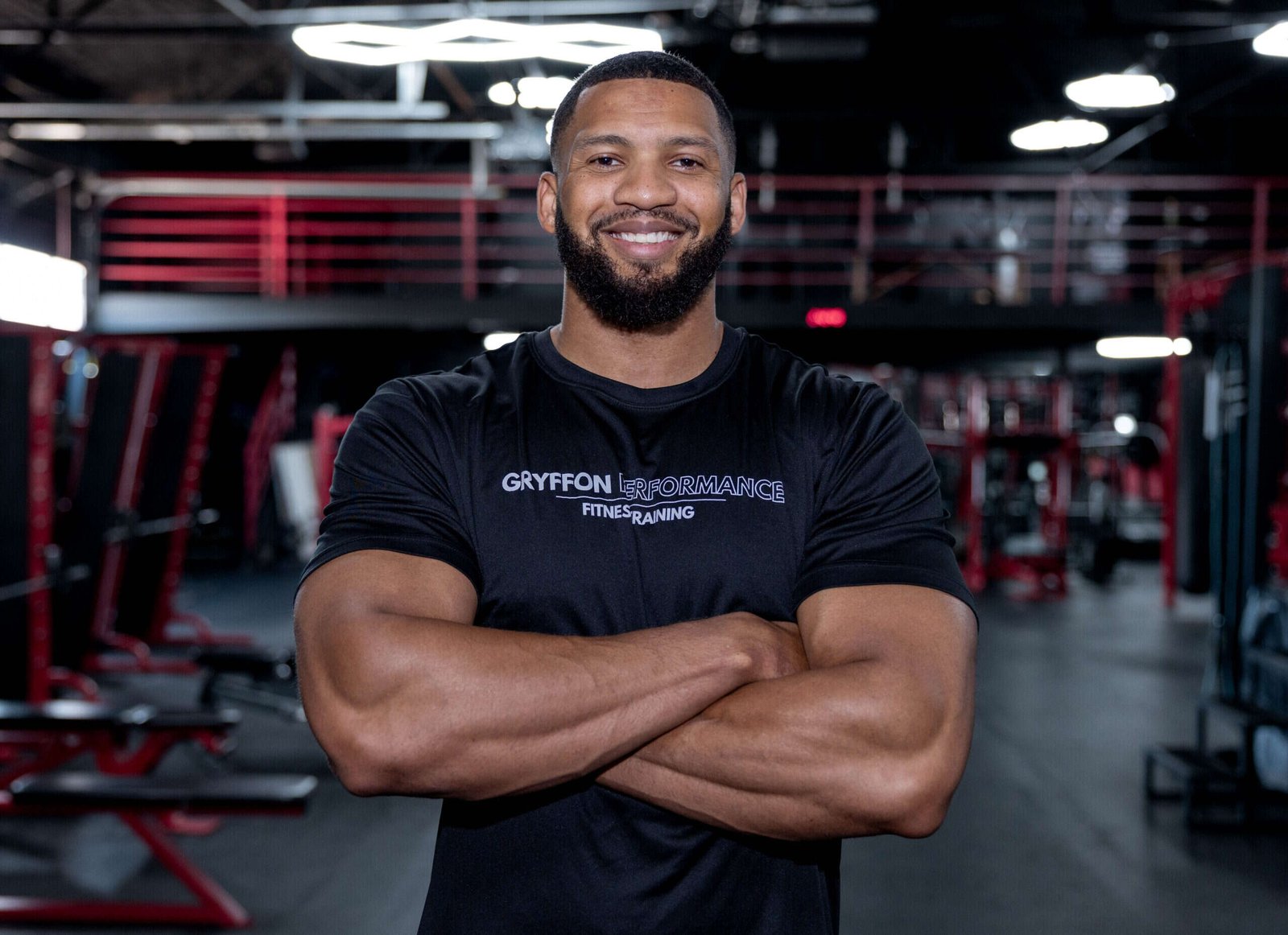
Step one takes an hour: a complimentary strategy session, in person, with David, our founder and head coach. He’ll want to hear what you’re aiming for, what Pilates and anything else have done for you, how your schedule runs and whether anything hurts. A physical assessment follows, along with a nutrition chat and a tour of the floor. By the end you’ll know exactly where you’re starting, with a schedule matched to your real week and a plan you can follow without guessing.
David’s coached both men and women for over 15 years. His own strength came back the hard way, after a serious back injury, and it’s carried him to a 600-pound deadlift since.
Never touched a barbell? Plenty of people start exactly there. David checks how you move before anything gets heavy, and if he spots something a doctor should look at, he’ll tell you who to see.
Strength training in Dallas
Gryffon Performance is a private training studio at 1925 E Levee St, Dallas, TX 75207, in the Dallas Design District, with free parking. We’re about 12 minutes from Highland Park and close to Uptown, Oak Lawn, the Medical District and Bluffview, and we coach people from the Park Cities and across Dallas. Get directions
50+ five-star Google reviews. Fifteen thousand square feet, private, built for coaching and nothing else. Every client gets a comprehensive assessment and personalized nutrition, included.
Apply for coaching and tell us how strong you want to be. You’ll hear back within 24 hours, and your first session with us is a complimentary strategy session.
Related reading
- Strength Training for Women: Why Lifting Heavy Isn’t the Risk You Were Told
- Strength Coach vs Personal Trainer: What’s the Difference?
General information about training, not medical advice.
References
- Schoenfeld BJ, Grgic J, Ogborn D, Krieger JW. Strength and hypertrophy adaptations between low- vs. high-load resistance training: a systematic review and meta-analysis. Journal of Strength and Conditioning Research, 2017;31(12):3508-3523. doi:10.1519/JSC.0000000000002200