
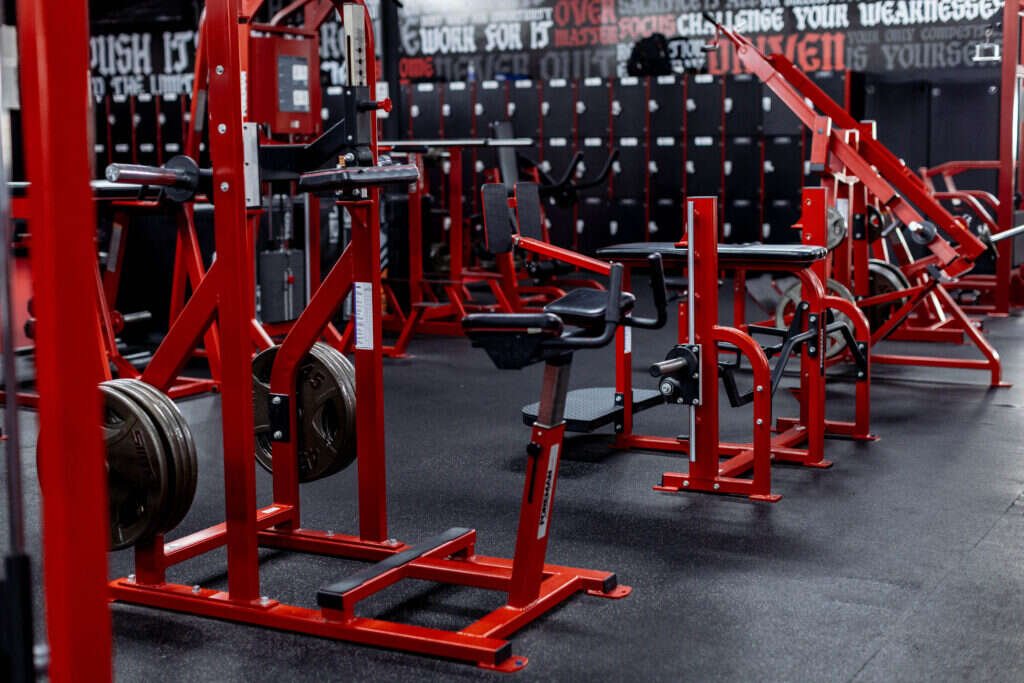
You built it properly. A rack, a bench, dumbbells heavier than you’ll need for a while. For the first month you used it four times a week.
Then a work trip. Then a busy stretch. Now it’s a very well-equipped room you walk past on the way to the car.
Nothing’s wrong with you, or with the equipment. A home gym solves an access problem. Most people who stall at home never had one.
The short version
If you train at home consistently and you’re still making progress, keep doing exactly that. You don’t need us, and we’d tell you so.
If it’s turned into storage, a better rack won’t fix it. What’s usually missing is someone who decides what you do next, notices when you skip, and handles your food too. That’s a coaching problem, not an equipment problem.
Your first appointment with us is free. If you already know you want help, apply for coaching and skip the rest.
Why home gyms stall
It’s rarely discipline. It’s the setup.
Nobody decides what’s next. You can do the workout. The hard part is knowing which workout, at what weight, and when to change it. Without that, most people repeat last week, and the body has no reason to change.
The weights quietly settle. Left alone, most of us pick a load that feels fine and stay there for months. Fine is comfortable. Comfortable doesn’t build much.
There’s no appointment. The shortest commute in the world is still easy to skip when nobody’s expecting you. A session on the calendar with a person waiting gets kept in a way that “I’ll do it after this call” doesn’t.
The thing that hurts doesn’t get dealt with. A cranky knee or a stiff back turns into skipping the exercises that aggravate it, then skipping the session. Training around pain well takes someone watching how you move.
Food is left to you. You can train well for a year and see very little change in the mirror if nutrition isn’t handled. Equipment can’t help with that at all.
Why a program off the internet doesn’t fix it
The usual next step is a program. An app, a PDF, a famous template. It’s a reasonable move, and for some people it works.
Here’s the catch. Researchers put 585 people through an identical 12-week strength program. Same exercises, same progression. Strength gains ranged from nothing at all to roughly 250 percent. Some people’s muscles barely grew. Others grew substantially.
Same plan. Wildly different results.
A template is written for the average of a group like that, and you aren’t the average. You’re the person with the old shoulder, the travel schedule, and one specific thing that’s holding everything else back. Finding that thing comes before writing the plan, not after.
The honest alternatives
Keep the home gym and run a program. If you’ve trained for years, know how to progress, and genuinely enjoy training alone, this is the cheapest good option. The gap: nobody watches you lift, nobody adjusts the plan when life changes, and nobody touches your nutrition.
A trainer who comes to your house. The convenience is real. No drive at all. The gap: you’re limited to the equipment you own, and the session competes with everything else going on at home.
A membership gym closer to home. More equipment, sometimes a trainer on the floor. The gap is the same one you started with. Access was never the problem, and a bigger room doesn’t change who decides what you do in it.
Each of these solves a slice. None of them looks at the whole thing.
What actually closes the gap
Whoever you choose, here’s what to look for.
Someone assesses you before writing anything. Goals, training history, schedule, current ability, and whatever hurts. A plan handed over in the first five minutes means nobody found out.
Your training and your food are handled by the same people. Each one decides what the other should look like. Split them across two providers and they quietly work against each other.
The plan changes as you do. Month one and month six need different things.
There’s a time on your calendar with someone expecting you. That alone wins most of the consistency battle.
The place is built for training. Enough room and equipment that the session is decided by what you need, not by what fits in the garage.
Hold anything you’re considering up against that list. Including us.
How it works from Preston Hollow
Gryffon Performance is in the Dallas Design District at 1925 E Levee St. From Preston Hollow it’s about 14 minutes and 6.9 miles, almost all of it straight down the Dallas North Tollway (Google Maps, checked on a weekday afternoon). Parking is free and it’s right outside the door.
It starts with your free first appointment: 60 minutes in person with David, our founder and head coach. We go through your goals, training history, schedule, anything that hurts, and a physical assessment, then a nutrition conversation and a tour of the studio. You leave knowing what’s actually limiting you, whether or not you train with us.
From there, nutrition coaching is included for every client, and the plan gets reviewed as you go. Apply for coaching to book that first appointment.
What we’re not
We’re strength and nutrition coaches, not physicians or physical therapists. We don’t diagnose or treat anything. If you’re dealing with something clinical, keep your doctor involved and we’ll work alongside them.
We also won’t promise you a number by a date. Nobody can do that honestly, and the study above is why.
Personal training near Preston Hollow
Gryffon Performance is a private training studio in Dallas, TX. 40+ five-star Google reviews. Fifteen thousand square feet, private, built for coaching and nothing else. Every client gets a comprehensive assessment and personalized nutrition, included.
We also coach people from Bluffview, Highland Park and the Park Cities, and Uptown.
Apply for coaching and tell us what stopped you using the home gym. That’s the fastest way for both of us to find out what’s actually in the way. Your first appointment is free.
Related reading
- What Happens in Your Free First Appointment
- Private Training Studio vs Public Gym
- How to Choose a Personal Trainer in Dallas
- Personal Training for Busy Professionals
This article shares general information about exercise research and coaching. It isn’t medical advice, and it doesn’t diagnose or treat any condition. Speak with your physician before starting a new training program, particularly if you have pain, an injury, or an existing medical condition.
References
- Hubal MJ, Gordish-Dressman H, Thompson PD, et al. Variability in muscle size and strength gain after unilateral resistance training. Medicine and Science in Sports and Exercise, 2005.