
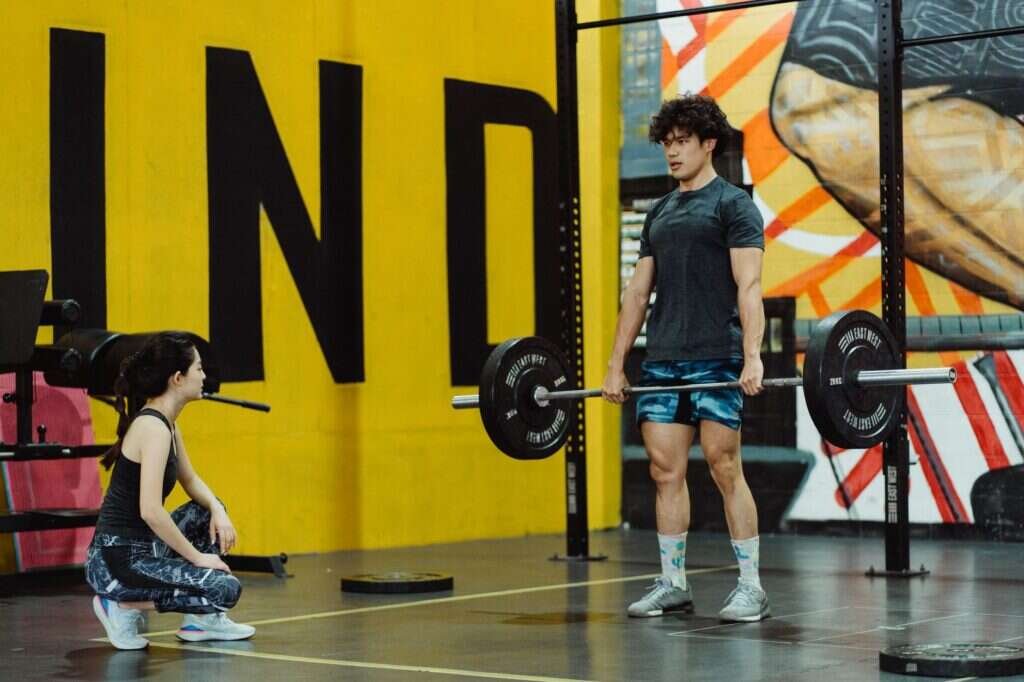
Walk into almost any commercial gym in Dallas and you’ll find the same equipment we have. Squat racks. Barbells. Dumbbells that go heavy enough to matter. Cables, benches, plenty of plates. So when someone hears that training at a private studio costs more than a gym membership, the reasonable question is what exactly they’re paying for. Quieter music? Nicer towels?
It’s a fair question, and if equipment were the thing that decided results, the honest answer would be: not much.
But equipment isn’t the thing that decides results. The program you’re running is, and whether that program was built for you.
The same program produces wildly different results
Hubal and colleagues put 585 people through an identical 12 week resistance training program. Same exercises, same progression, same duration.
Strength gains ranged from nothing at all to roughly 250 percent. Muscle size ran from slight losses to substantial growth.
That’s the finding worth sitting with, because it explains something most people have experienced without being able to name. You can do everything the program says and get a fraction of what somebody else got from the same twelve weeks. Not because you did it wrong. Because the program wasn’t built for the body running it.
A gym membership gives you access to equipment and a program you found somewhere. It has no mechanism for finding out that you’re one of the people it won’t work for.
What the room actually changes
Some of this is obvious once you say it out loud.
The equipment is there when you need it. At 6pm in a busy public gym, the rack you need is occupied, so you improvise. Improvising is fine once. Improvising every session means you’re not running a program anymore, you’re just working out. Progressive overload requires doing the same movements and adding to them, which is hard when the equipment is a lottery.
Nobody interrupts the session. No waiting, no circling back, no rest period that stretches to six minutes because the bench got taken. Rest intervals are part of the program, not dead time.
The environment isn’t a barrier. A lot of people who’d benefit most from strength training avoid gyms because the floor feels intimidating. If you’ve been away from training for years, or you’re carrying weight you’re not happy about, a crowded public gym is a real obstacle rather than a personality quirk. A private studio removes it.
You stop making decisions. By the end of a working day you’ve already spent your judgment. Deciding what to train, how heavy, how many, and whether that shoulder should stop you is one more set of decisions on a day that already had too many.
The honest caveat
The room won’t change your body. Neither will the coaching, by itself.
You can train well for a year and see very little change in the mirror if what you eat is left entirely to you. That’s not a knock on training. It’s just that body composition is decided by training and food together, and most people who’ve been frustrated by a gym membership were running half a plan without knowing it.
That’s the actual reason personalized nutrition coaching is included for every client here instead of sold as an add-on.
What private actually means here
Worth being specific, because the word gets used loosely.
Private means the training floor isn’t a public gym floor. No drop-ins. No open classes anyone can walk into. Not a membership that thousands of people share access to at the same hours you want to train. The space and the equipment are there for the people who train here, at the time they’re scheduled to be there.
It’s a different product from a gym membership, and it’s priced differently for that reason. If what you need is access to equipment and you already know what to do with it, a gym membership is a good deal and we’d tell you so.
What good coaching looks like in that room
The environment is the setting. The coaching is the thing you’re buying.
Every client starts with a comprehensive assessment before any training happens, covering goals, training history, schedule, current ability, and anything that hurts. Given the range in that Hubal data, finding your starting point is not a formality. It’s the difference between a program built for you and a program built for the average of 585 people.
After that it’s judgment calls, session by session. Whether today’s load should go up given how you slept and what your week did to you. Whether that cranky shoulder means swap the movement or work around it. When to push and when the honest call is to hold. Those are the decisions that separate twelve weeks of progress from twelve weeks of activity, and they’re hard to make for yourself while you’re the one under the bar.
What we don’t claim
We’re not physicians. We don’t diagnose anything, we don’t treat injuries, and we don’t replace medical care or physical therapy when that’s what you need. Coaching doesn’t guarantee you won’t get hurt, and no honest coach will tell you it does. If something hurts in a way that worries you, go get it looked at.
We also won’t promise a number on the scale by a date. What we’ll promise is that the plan is built around you and adjusted as you go.
How long it actually takes
Meaningful strength change tends to land in the same window: roughly eight to twelve weeks of consistent training before the numbers move in a way you’d notice. That clock starts on your first session.
Which is worth knowing in both directions. It’s longer than most people want. It’s also shorter than most people fear, and it’s a fixed cost you only pay once.
Training in Dallas
Gryffon Performance is a private training studio in Dallas, TX. 40+ five-star Google reviews. Fifteen thousand square feet, private, built for coaching and nothing else. Every client gets a comprehensive assessment and personalized nutrition coaching, included. We give our clients the coaching and the tools to get results like nobody else in Dallas.
If you’ve had a gym membership for a while and you’re not where you wanted to be by now, the membership probably wasn’t the problem. Nobody ever built the program around you.
See the facility, or apply for coaching and we’ll start with a conversation about where you actually are.
Related reading
- Personal training in Dallas
- What a Fitness Assessment Should Actually Cover
- Strength Training and Knee Pain: What the Research Says
- Strength Training and Lower Back Pain: What the Research Says
This article shares general information about exercise research and coaching. It isn’t medical advice, and it doesn’t diagnose or treat any condition. Speak with your physician before starting a new training program, particularly if you have pain, an injury, or an existing medical condition.
References
- Hubal MJ, Gordish-Dressman H, Thompson PD, et al. Variability in muscle size and strength gain after unilateral resistance training. Medicine and Science in Sports and Exercise, 2005.