
It’s the stairs from the parking garage that give it away. Or the first steps off a long flight, or kneeling to tie your kid’s shoe and deciding halfway down you’d rather not. Your knee isn’t stopping you. It’s just shrinking your week, one skipped thing at a time.
You’ve tried fixes. A brace, a foam roller, exercises from a video. Maybe a trainer who said to skip legs, or one who had you squatting heavy in week one.
The short answer: work with a trainer who watches how you move before loading anything, trains the hips and legs around the knee, and changes the plan based on how your knee feels the next day. If your knee has been running your calendar for months, apply for coaching and tell us what it won’t let you do. Your first session with us is a complimentary strategy session.
Key points
- A good trainer for knee pain looks at how you squat, step and land before anything gets heavy.
- The knee is where it hurts. The hips, the quads and your week’s total load are usually part of the story.
- Physical therapy and coaching are different jobs, and plenty of people need the second one after the first ends.
- Walk away from anyone who promises to fix your knee, or who tells you to push through pain.
One exception before anything else: a knee that’s red, hot and swollen with a fever, or one that won’t take weight after a fall or a twist, needs a doctor today. That’s not a training problem.
Who should you work with for knee pain?
There are three main options, each built for a different job.
A physical therapist is a licensed clinician. Right after surgery or a fresh injury, a physical therapist restores range, settles an angry joint and walks you through the early stage, usually alongside a surgeon’s protocol. That’s skilled work, and a good trainer builds around it, not over it. In our experience, though, the visits often end when the pain settles, before the strength is built.
A general trainer at a big gym may be great at getting people moving. The question is whether they’ve coached many sore knees. A knee that complains needs someone who knows how to change a movement, not just skip it.
A strength coach who works with joint pain is built for the long middle part: months of progressive training that raise what your knee can handle, so stairs, runs and a Saturday of pickleball stop feeling like a gamble. That’s the job we do.
The way we see it, the right choice depends less on the title and more on where you are. If you get through a workday and a drive just fine but quietly skip lunges, stairs or the last game of a match, you’re likely past the first job and ready for the second.
What should happen in the first session?
Before a single loaded rep, a good coach should want to see you move. Squat to a box. Step down off a low step. Lunge, hinge, balance on one leg. They’re watching where the knee travels, whether the hips shift, and which side does more of the work.
You can’t see this from the inside. A knee drifting inward on a step-down feels completely normal to the person doing it. From six feet away it’s obvious in one rep.
They should also ask about your life, not just your knee. What does your week look like? Do you run, play tennis, sit on flights? What did you try already, and what happened? A knee that aches after a 5K needs a different plan from one that hurts after a long meeting.
Can’t put a name to what your knee is doing? Plenty of people can’t, and you can start without a label. David looks at how you move in person, and if your knee needs more than training, he knows the right doctors to send you to.
Six questions to ask before you hire anyone
- “What do we do on a day my knee is cranky?” You want a specific answer: a shorter range, a different variation, more upper body. Not “we’ll skip legs” and not “push through it.”
- “How do you decide how deep I squat, and how heavy?” Listen for range and load set by how your knee responds, then built up in small steps.
- “Will you train my hips?” If the answer is only leg extensions and knee work, keep looking. In our experience, strong hips do a lot of the steering for the knee.
- “What happens to my running or my matches while we build?” A good coach manages the whole week’s load, not just the hour you train.
- “How will we know it’s working?” Stairs that feel easier, a deeper squat, a step-down that stays quiet, more weight on the bar over months.
- “Is nutrition part of it?” The way we see it, every pound of fat you lose is a pound your knees stop hauling up the stairs, and the food targets have to move as your weight and training do.
What to walk away from
A promise to fix your knee, or a guaranteed result by a date. Heavy squats before anyone has watched you move. “No pain, no gain” as a plan. Or the opposite: a trainer so cautious that months go by and nothing progresses.
Is a sore knee a reason to wait?
No. Waiting tends to mean training less, and in our experience less strength around the knee is often part of why it aches in the first place. Our job is to keep you training and keep you from getting hurt while that strength comes back: the right exercises, a load your knee can handle, and small steps up from there.
How much is too much for a sore knee?
You know the pattern. It calms down, you get back to it, and a few weeks later it’s talking again. Most people with a nagging knee don’t lack information. What goes wrong is the dose. Too little and nothing changes. Too much and it flares the next morning, and you decide lifting “makes it worse.”
Then there’s reading the response. The real verdict on a session arrives the next morning, not halfway through a set. If your knee is no worse, the load was fine and it can climb a little. If it’s clearly worse, you back off a step. Making that call every week, for months, while work and travel pull at you, is the part almost nobody keeps up alone.
From the floor: In our experience, the people who come to us with sore knees have usually stopped doing the thing they love before they’ve stopped hurting. Often it’s tennis first, then running, then squats. Every month away, the knee gets a little less ready for what they’re waiting to get back to.
If that’s where you are, apply for coaching and tell us what you’ve stopped doing. We’ll start from where your knee is today.
How we coach knee pain
None of this is complicated on paper. The hard part is getting the dose right week after week, for months, with someone watching what you can’t see. That’s the job of an experienced coach, and it’s ours.
A stronger knee is only part of what we’re after. At Gryffon Performance the goal is a lean, balanced body whose quads and hips soak up the work, so your knee isn’t taking every hit by itself.
Step one is a complimentary strategy session with David, our founder and head coach: an hour, in person, at the studio. He’ll cover what your knee won’t let you do, your goals, history and schedule, then run a physical assessment, talk nutrition and walk you around the floor. You’ll leave knowing where your knee starts, how training fits your real week and what the plan is.
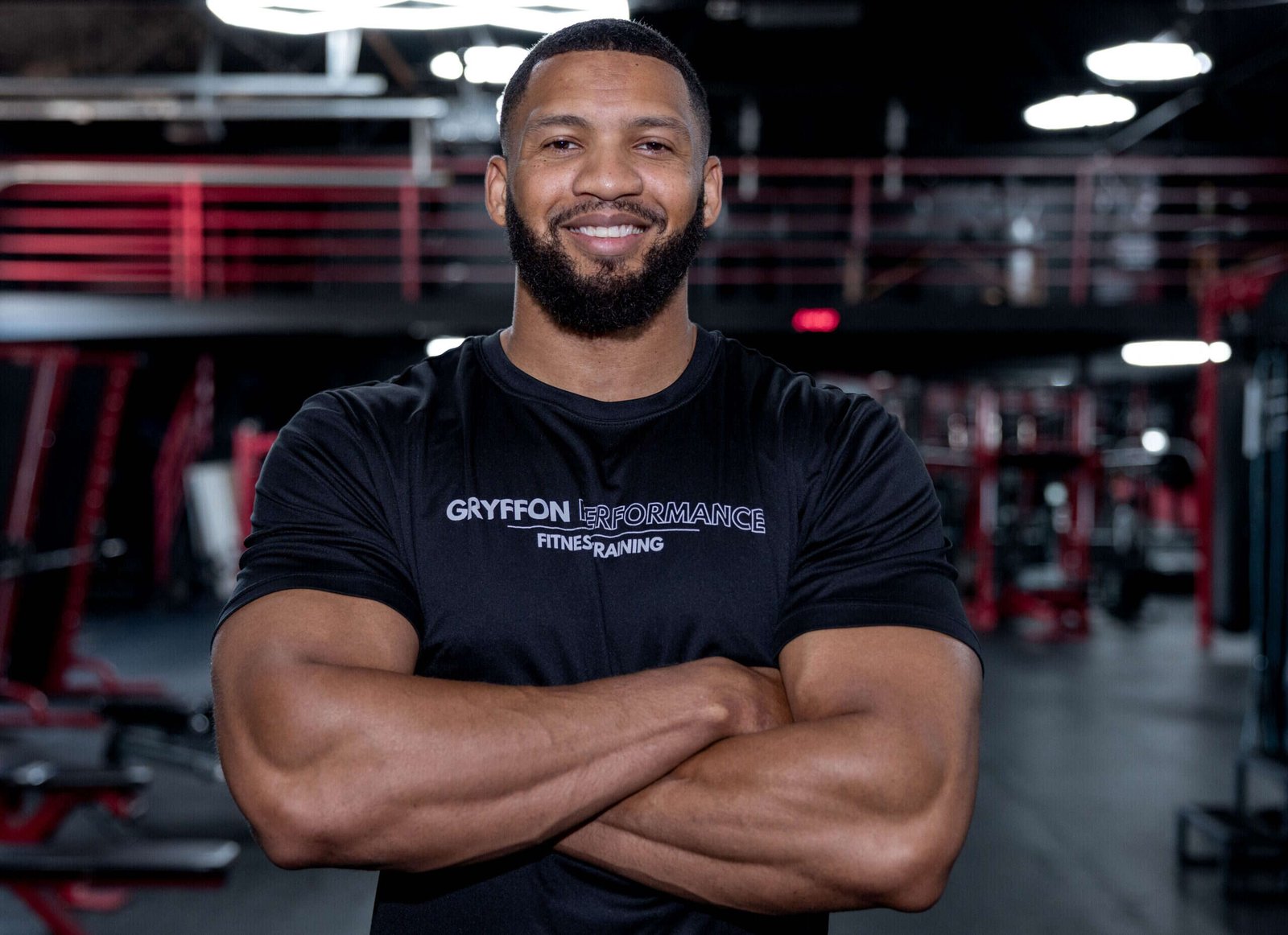
David has spent more than 15 years coaching men and women. He came back from a serious back injury and has since deadlifted 600 pounds, so trusting a joint again is something he’s had to do himself.
A personal trainer for knee pain in Dallas
Gryffon Performance is a private training studio at 1925 E Levee St, Dallas, TX 75207, in the Dallas Design District, with free parking. We’re about 12 minutes from Highland Park and close to Uptown, Oak Lawn, the Medical District and Bluffview, and we coach people from the Park Cities and across Dallas. Get directions
50+ five-star Google reviews. Fifteen thousand square feet, private, built for coaching and nothing else. Every client gets a comprehensive assessment and personalized nutrition, included.
Apply for coaching and tell us which stairs, sports or squats your knee keeps saying no to. You’ll hear back within 24 hours, and your first session with us is a complimentary strategy session.
Related reading
- Strength Training and Knee Pain: What the Research Says
- Training With Joint Pain in Dallas: What Actually Helps
General information about training, not medical advice.