
The loop around White Rock Lake used to feel easy. Now the last two miles are a grind, your pace has sat in the same place for two years, and every time you add mileage for a fall half marathon, an Achilles or a knee starts sending notes. Strength work is always “when there’s time.” There rarely is.
Maybe you’ve tried a few bodyweight circuits from a running app. It felt like work, and your running didn’t change.
The short answer: strength training for runners works when it’s heavy enough to change how your muscles and tendons handle force, and it has to be built around your mileage, not stacked on top of it. That’s where a coach earns their place. If your running has stalled or keeps getting interrupted, apply for coaching and tell us what you’re training for. Your first session with us is a complimentary strategy session.
Key points
- A meta-analysis of 22 studies found heavy resistance training improved running economy more than plyometric training did, with the bigger effects from near-maximal loads and longer programs.
- Across 27 studies, tendons adapted to loading, and how stiff they became depended on how heavy the loading was.
- Light circuits rarely give runners what they need. The load has to be real and it has to progress.
- Getting the amount right is the tricky bit: enough to adapt, timed so it doesn’t wreck your key runs.
What does strength training actually do for a runner?
Two things matter most, and neither is “toning.”
The first is running economy: how much energy you spend to hold a given pace. Two runners with the same aerobic engine can finish very differently if one of them wastes less with every stride. Stronger muscles and stiffer, springier tendons are part of how you waste less.
The second is tendon capacity. Every stride sends a jolt through your feet, ankles and knees, thousands of times a run. Your Achilles and the tendon below your kneecap store and return that energy like springs. When they can handle more, the same weekly mileage asks less of them.
What the research says
A 2022 meta-analysis by Eihara and colleagues pooled 22 studies of long-distance runners. Heavy resistance training improved running economy more than plyometric training did. The effect was small, but for a runner chasing a time, a small gain in economy can matter. Programs using near-maximal loads did better than lighter ones, and longer programs of 10 to 14 weeks beat shorter ones.
On tendons, a 2015 meta-analysis by Bohm and colleagues looked at 27 studies with 264 healthy adults. Tendons responded clearly to training, and the stiffness gains depended on loading intensity, not on the type of muscle contraction. The tendon cares how heavy it is.
Both point the same way. Three sets of twenty with a light dumbbell isn’t what changed things in these studies. Heavy, progressive work over months did.
Why runners struggle to do this on their own
Most runners know they should lift. What goes wrong is usually one of these, in our experience:
- The weights stay light. Runners worry about getting bulky or sore, so they stay at a load that never forces anything to adapt. Heavy loading in a squat or a hinge feels unfamiliar, and doing it alone without anyone watching your position is where people get nervous and back off.
- The timing fights the running. A hard leg day the night before intervals ruins both. Placing strength work so it supports the key runs, and changing that placement as race day approaches, is a planning job most people don’t have the bandwidth for.
- Form drifts under fatigue. A knee caving on a split squat, a hip shifting in a deadlift, one calf doing more than the other. You can’t see it, and it’s exactly the asymmetry that shows up late in a long run.
- It stops when mileage goes up. Peak training weeks arrive, the strength work goes first, and by race day most of what you built has faded.
What we’d train for a runner
These are the principles we work from. Your actual plan depends on your history, your mileage and your race.
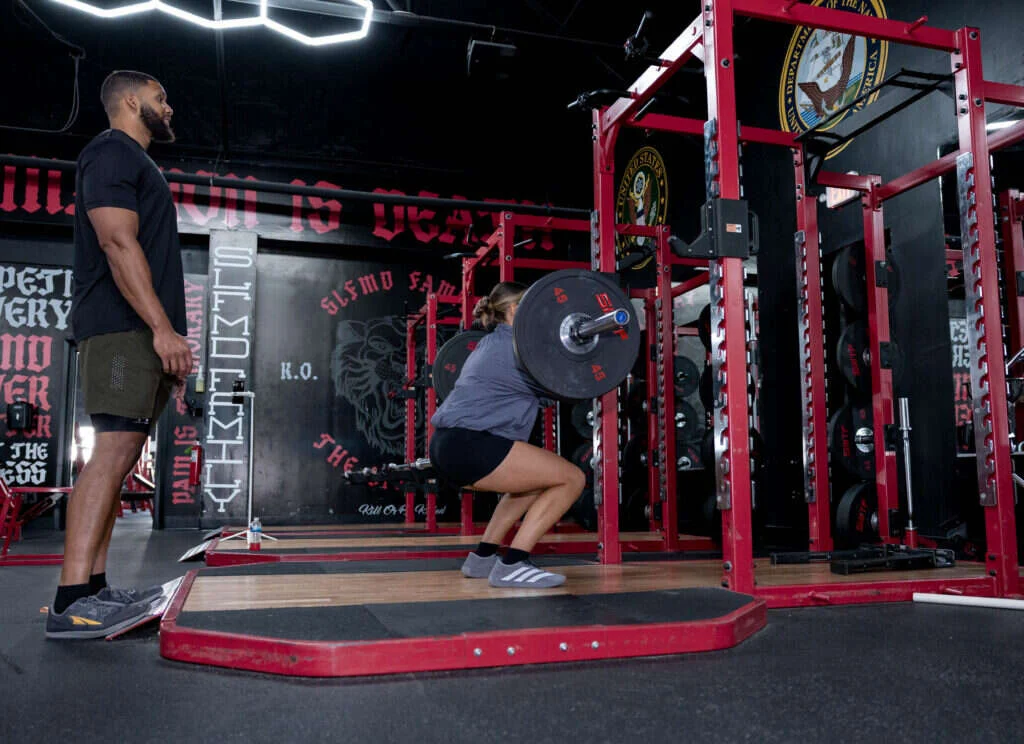
- Heavy lower body strength. Squats, hinges, split squats and step-ups, built up over weeks until the load is genuinely challenging.
- Calves and feet, properly loaded. Your calves work hard on every stride. Most runners train them with bodyweight raises that barely register.
- Single-leg control. Running is a series of one-legged landings. We train the hip and trunk to keep the pelvis level when you’re tired.
- Some jumping, earned. Hops and bounds come in once the base strength is there, and only as much as your tendons are ready for.
- Strength that moves with your season. More building in the off-season, less volume and the same intensity closer to race day.
- Fuel that matches the work. Runners often under-eat, especially when they’re also trying to lean out. Every training program here comes with nutrition coaching built for you, with targets that shift as your mileage does.
From the floor: In our experience, runners who come to us tend to have the aerobic side handled. They log the miles. What’s missing is a body that can absorb those miles, and the strength work they’ve been doing is usually too light and too inconsistent to change that.
If you’ve been “meaning to lift” for a few seasons, apply for coaching and tell us about your last training block.
Why a coach, and why us
A missed month hurts every runner, and it hurts more when you’re also running a business or a household. Our job includes keeping you lifting and running without getting hurt: every exercise, load and jump in weight is chosen around what your legs and tendons are ready for that week, and we adjust when your running asks more of you. Faster matters. Staying on the road matters more, and every strength decision we make has both in mind.
You also hand over the programming headache. Deciding what to lift, how heavy, and on which days relative to your tempo run and long run is real work. We carry it and explain the reasoning as we go, so you understand why your legs feel the way they do on race morning.
At Gryffon Performance the aim is more than a faster 10K. It’s a lean, balanced body that handles running and everything else in your week.
Your first hour with us is a complimentary strategy session, held at the studio and led by David, our founder and head coach. Bring your running log, your races and whatever’s been nagging. He’ll take you through your goals and schedule, a physical assessment, how you’re fueling and a look around the floor. You’ll leave knowing where to start and how strength slots in around your mileage.
Behind that assessment are more than fifteen years spent coaching men and women, and a rebuild of his own: a serious back injury, then a 600-pound deadlift on the far side of it.
Not sure whether that nagging Achilles is a training problem? No need to have an answer yet. Watching you move in person is where David starts, and if the Achilles turns out to need more than training, he’ll point you to a doctor he knows.
Strength training for runners in Dallas
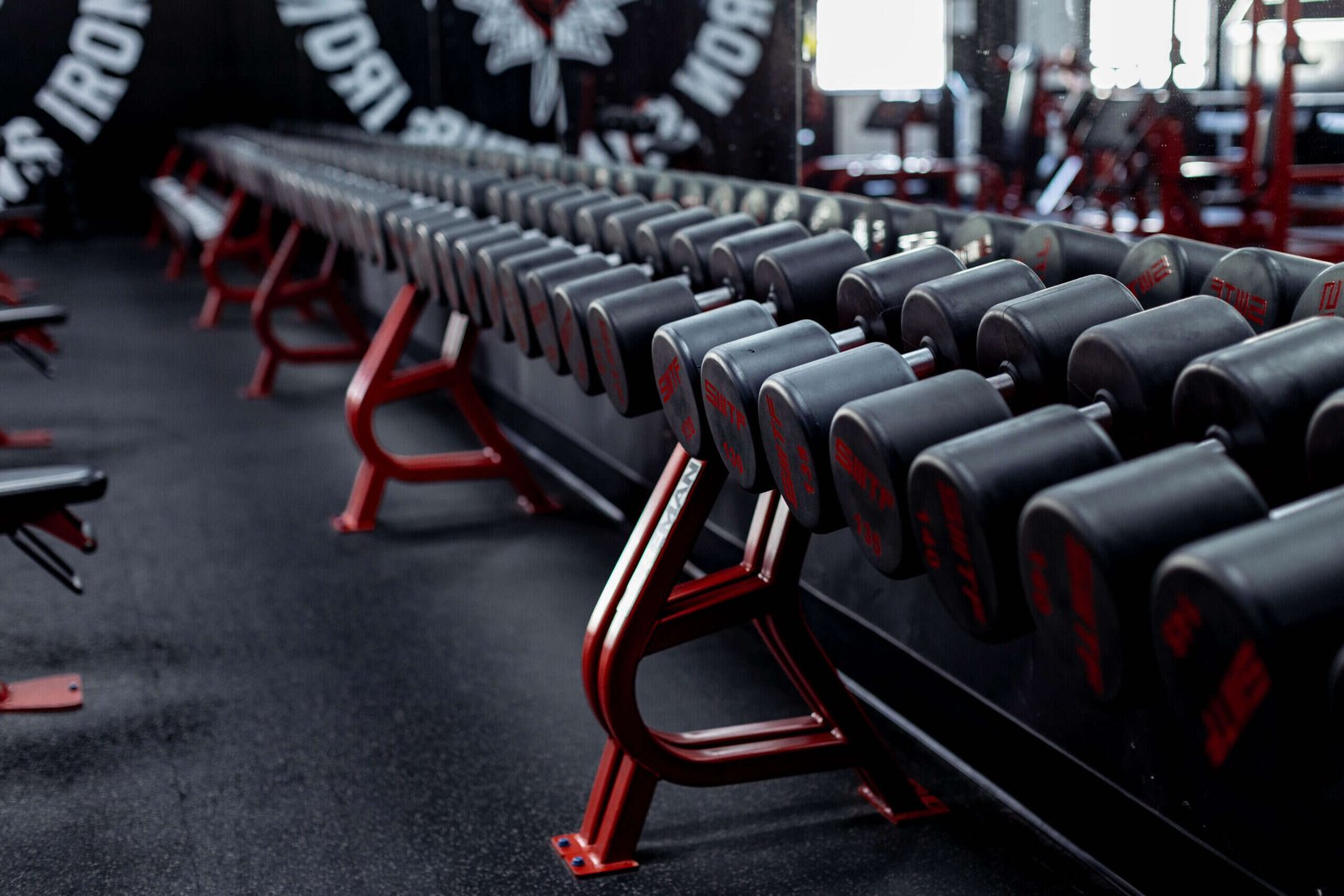
Gryffon Performance is a private training studio at 1925 E Levee St, Dallas, TX 75207, in the Dallas Design District, with free parking. We’re about 12 minutes from Highland Park and close to Uptown, Oak Lawn, the Medical District and Bluffview, and we coach people from the Park Cities and across Dallas. Get directions
50+ five-star Google reviews. Fifteen thousand square feet, private, built for coaching and nothing else. Every client gets a comprehensive assessment and personalized nutrition, included.
Apply for coaching and tell us the race or the pace you’re chasing. You’ll hear back within 24 hours, and your first session with us is a complimentary strategy session.
Related reading
- Athletic Performance Training in Dallas: Getting Capability Back
- Personal Trainer for Knee Pain in Dallas: How to Choose Who to Work With
General information about training, not medical advice.
References
- Eihara Y, Takao K, Sugiyama T, et al. Heavy resistance training versus plyometric training for improving running economy and running time trial performance: a systematic review and meta-analysis. Sports Medicine Open, 2022;8(1):138. doi:10.1186/s40798-022-00511-1
- Bohm S, Mersmann F, Arampatzis A. Human tendon adaptation in response to mechanical loading: a systematic review and meta-analysis of exercise intervention studies on healthy adults. Sports Medicine Open, 2015;1(1):7. doi:10.1186/s40798-015-0009-9