
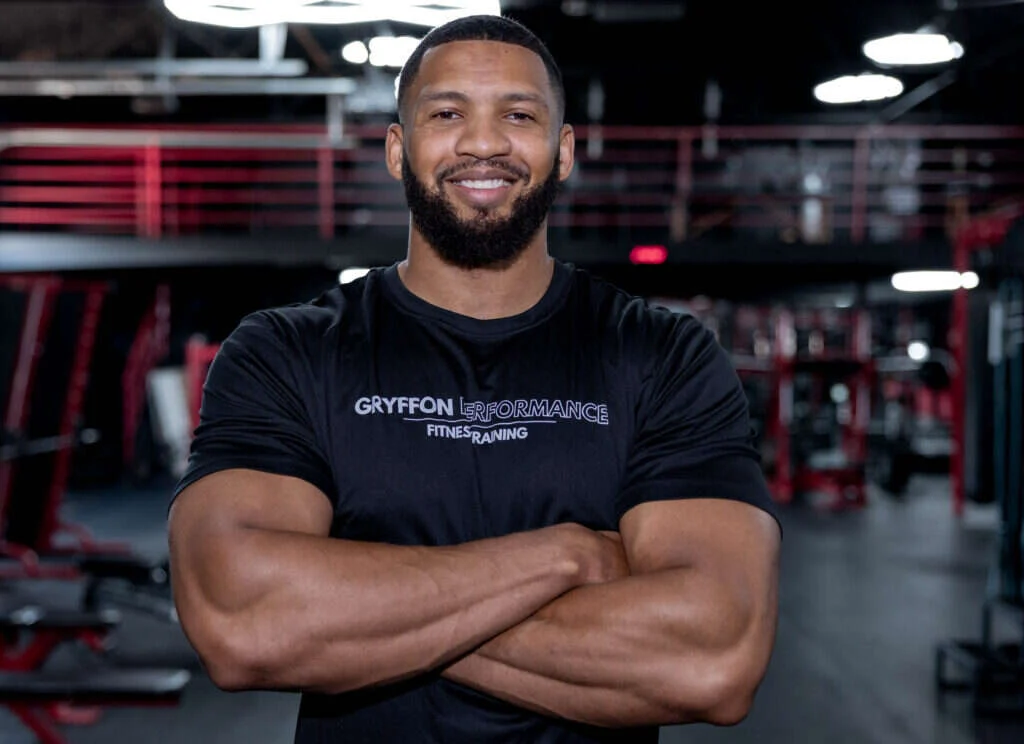
The ad found you on a Sunday night. A coach with a great physique, a program on your phone, weekly check-ins, train anywhere. You’re on the Tollway early, in meetings until dinner, and not driving anywhere to train sounded like the answer.
Maybe you tried it. You propped your phone against a water bottle, filmed a few sets, got a thumbs-up and a note about your elbows. Then a heavy stretch at work hit, the check-ins got shorter, and the program sat there unopened.
The short answer: an online personal trainer can hand you a good plan, but in-person training is where the plan gets done right. A coach in the room sees how you move, changes the weight mid-set and catches the small stuff before it turns into a sore back. If you want results without getting hurt along the way, apply for coaching and tell us what you’ve tried so far. Your first session with us is a complimentary strategy session.
Key points
- Online coaching is good at writing programs and checking in. Its blind spot is everything a phone camera can’t see while you’re lifting.
- In person, a coach reads your form, your effort and the load as it happens, and changes the plan on the spot.
- Keeping you out of injury depends on seeing you move. That’s much harder through a screen.
- Accountability, nutrition and learning why you’re doing each lift all land differently when your coach knows you face to face.
What does an online personal trainer actually do?
Credit where it’s due. A good online coach writes a solid program, sends demo videos, reviews the clips you film and checks in every week on your weight, sleep and how training went. Some add video calls. You train wherever you are, whenever your day allows.
For someone who already lifts well and mostly needs structure, that can work. The programming is often thoughtful. The check-ins add a layer of accountability most people don’t have on their own. And there’s no drive.
The question isn’t whether online coaching is legitimate. It is. The question is what it can see.
What does a camera miss?
Quite a lot, it turns out. Here’s where the gap shows up, in our experience.
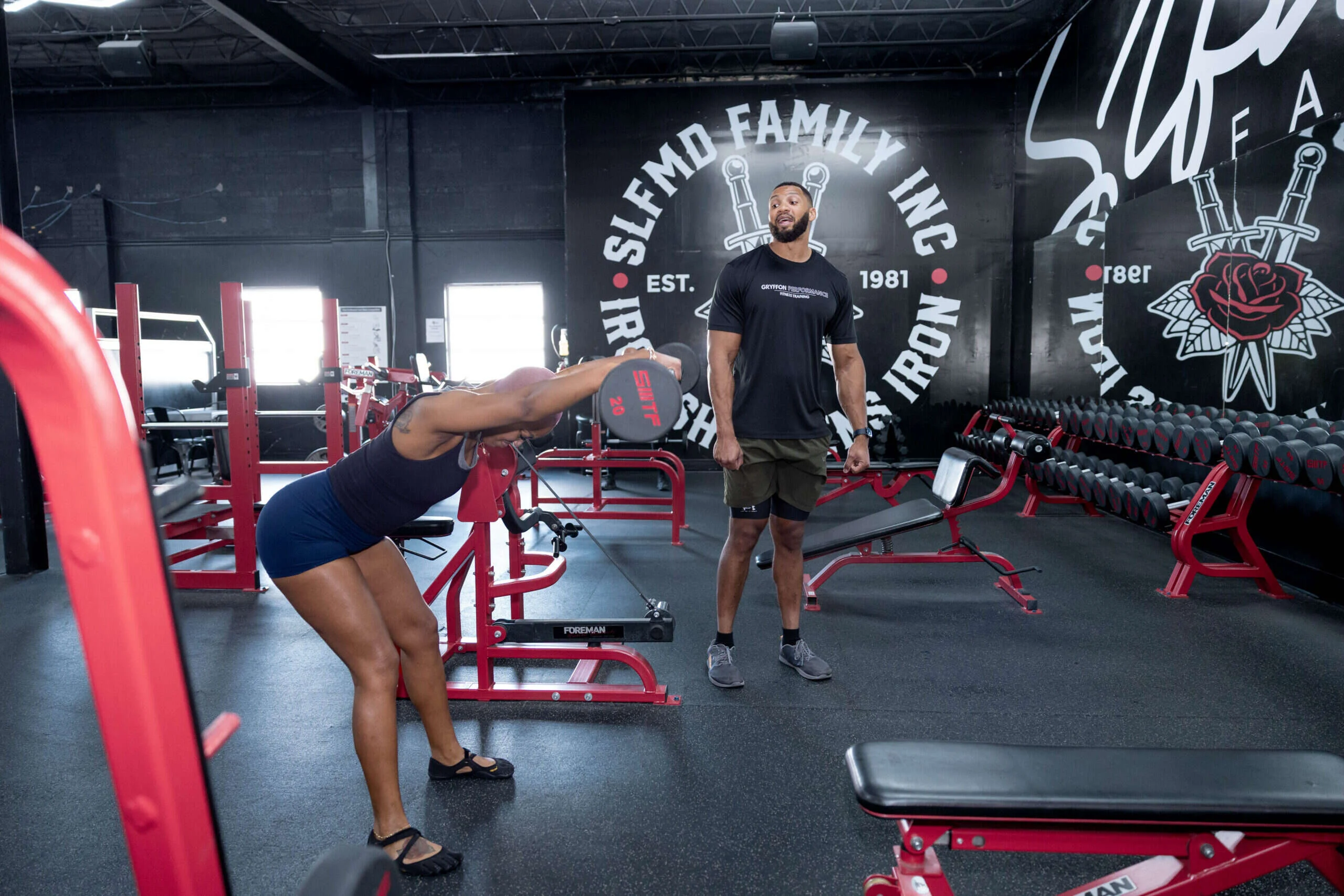
- The angle. Your phone sees one side of you, usually framed a little wrong. A hip that shifts left at the bottom of a squat is obvious from behind and easy to miss from the side. So is a lower back that rounds on the last rep of a deadlift when the camera’s in the wrong spot.
- The timing. Online feedback often shows up days later, after you’ve done the movement wrong for a week. In person, it gets fixed on rep two.
- The load. Online, you pick the weight. Most people pick too light, and on a good day some pick too heavy. A coach watching the bar speed and your face can add ten pounds or take twenty off before the set is over.
- The bad day. You slept four hours after a late flight. A coach sees it in the warm-up and changes the session. A program on your phone has no idea.
Which keeps you out of injury?
This is the big one. If you’ve got a career and people at home counting on you, a tweaked back isn’t a minor setback. It’s weeks of bad sleep, short patience and no training.
Staying out of injury is something we plan for, not something we hope for. The lifts we pick, the weight on the bar and how fast it climbs are all set so you build strength without a setback. You can’t do that well from a video clip filmed after the fact. You need to see the knee drift, hear how the breath changes when a set gets hard, and know when today is a day to back off.
That’s not a knock on online coaches. A good one does a lot with a clip and a check-in form. It’s just a different view: partial, and a few days late.
What about accountability and nutrition?
A weekly check-in form is real accountability, but it’s easy to put off. A message can wait until tomorrow, then next week. Someone expecting you at the studio is harder to ghost, and when your week falls apart, they change the plan with you instead of waiting for you to report back.
Nutrition works the same way. Plenty of online programs hand you macro targets and a tracking app. That’s a start. Our approach is to talk about food face to face: what client dinners look like, what you eat on the road, what your appetite does on heavy training weeks. Then the targets change as your weight, training and hunger do. Every training program with us comes with personalized nutrition coaching.
There’s the mental load, too. Online, you still decide when to train, find the equipment, film the sets and judge the weight yourself. In person, all of that is handled before you walk in the door.
Which one keeps you progressing?
A plan on your phone can carry you through the first few months, while almost anything works. After that, progress comes down to small calls made set by set: a little more weight here, a different stance there, an easier day when you need it. If your goal is to get strong and lean without getting hurt, and to keep progressing past that first stretch, a coach who sees every set is hard to beat.
And you learn more in person. A good coach explains the reason behind each lift and each jump in weight while you’re doing it. That’s how you start to understand your own body, which makes every hotel gym and every Saturday round easier.
From the floor: Online coaching veterans who walk into our studio usually aren’t short on programs, in our experience. Some have a folder full of them. What they haven’t had is someone who sees their hips shift on the fourth rep, or notices they’ve used the same dumbbells since spring.
If you’ve got a program and still aren’t where you want to be, apply for coaching and tell us what the last one looked like.
What in-person coaching with us looks like
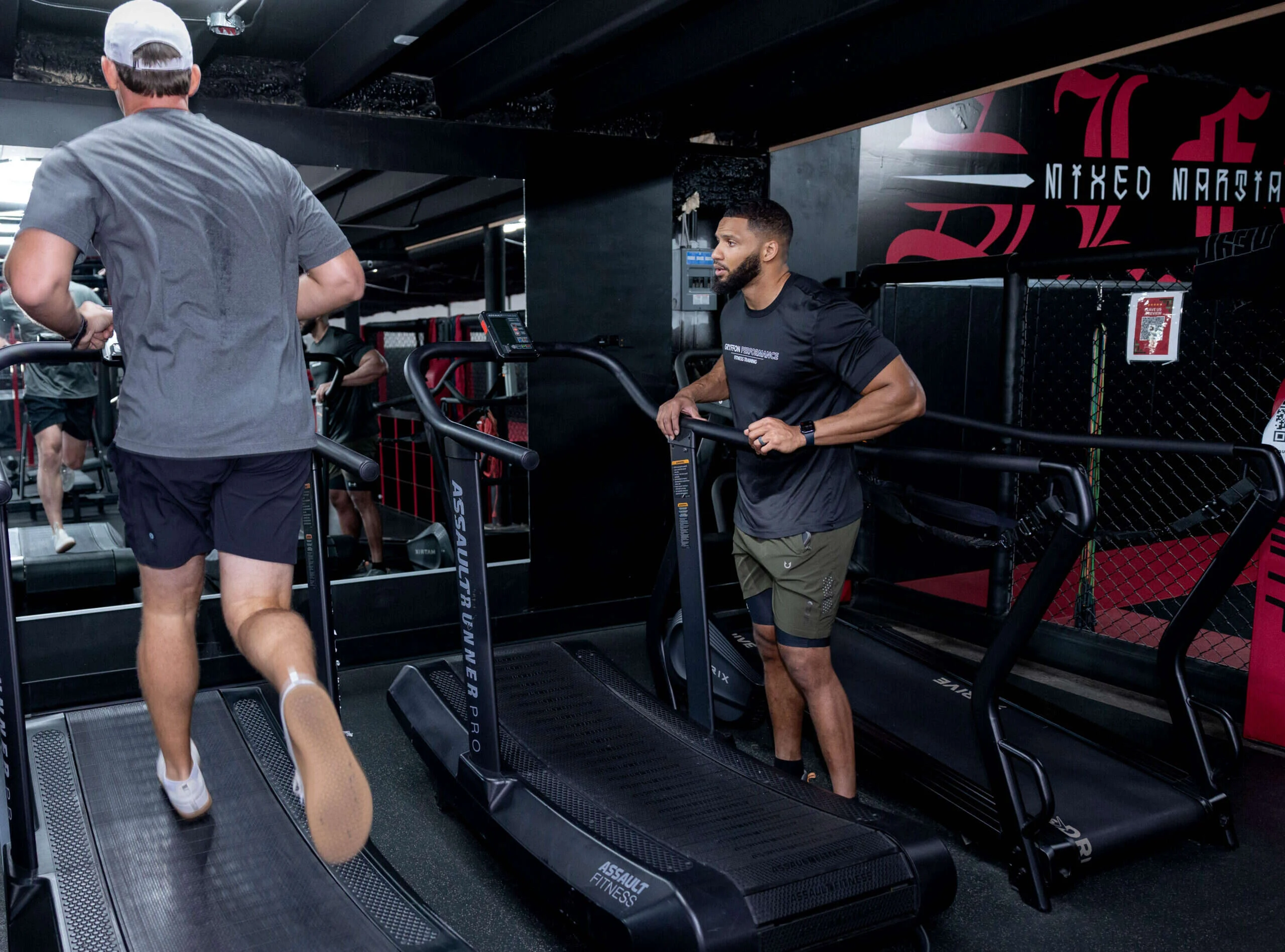
Our coaching happens in person, at our private studio in the Design District. That’s where we can watch how you move, adjust the load in the moment and build your nutrition around your real week. Knowing what to do was never the problem. Doing it right for months, with someone who catches what you’d miss, is the job.
Strength is only part of what we’re after. We coach toward a lean, balanced body, with training and nutrition that flex when your calendar does.
Everything starts with a complimentary strategy session. You’ll sit down with David, our founder and head coach, for an hour at the studio and talk through your goals, the programs you’ve followed, how your weeks really run and what aches. Then comes a movement assessment, a conversation about how you eat, and a look around the floor. You’ll walk out knowing where you’re starting, with a schedule that suits your calendar and a plan you could explain to someone else.
That assessment draws on more than 15 years of coaching men and women. David also knows the comeback side personally: a serious back injury once stopped him, and he’s since pulled 600 pounds off the floor.
Not sure where you stand after a year of training off your phone? Most people aren’t, and that’s no reason to wait. Seeing you move in person is how David finds out, and if anything turns up that’s beyond training, he has doctors he trusts to point you toward.
In-person personal training in Dallas
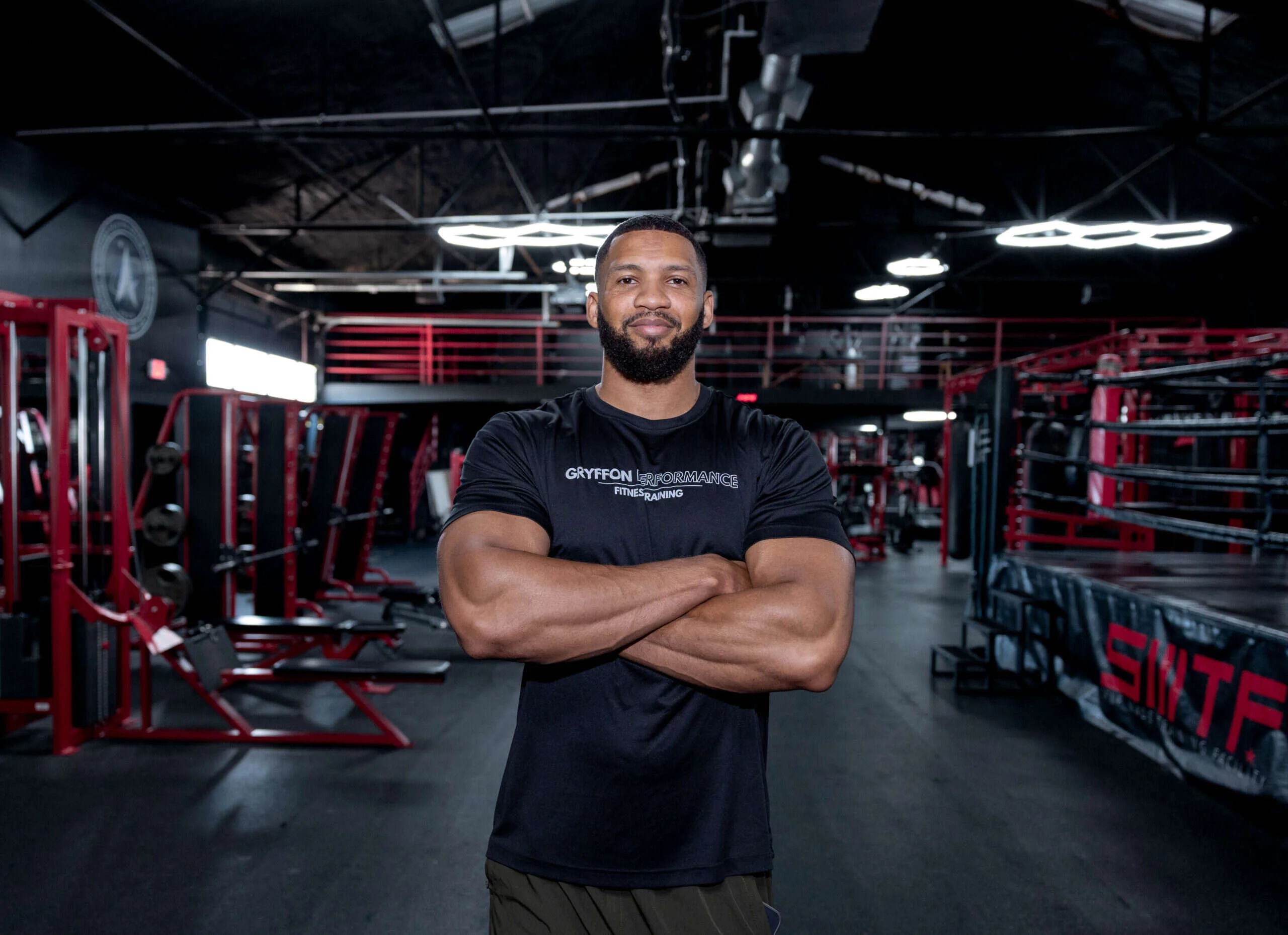
Gryffon Performance is a private training studio at 1925 E Levee St, Dallas, TX 75207, in the Dallas Design District, with free parking. We’re about 12 minutes from Highland Park and close to Uptown, Oak Lawn, the Medical District and Bluffview, and we coach people from the Park Cities and across Dallas. Get directions
50+ five-star Google reviews. Fifteen thousand square feet, private, built for coaching and nothing else. Every client gets a comprehensive assessment and personalized nutrition, included.
Apply for coaching and tell us what training on your own has and hasn’t done for you. You’ll hear back within 24 hours, and your first session with us is a complimentary strategy session.
Related reading
- Private Training Studio vs Public Gym: What Actually Changes
- What a Fitness Assessment Should Actually Cover Before You Train
General information about training, not medical advice.