
The living room rug is pushed back. A pair of adjustable dumbbells lives under the TV, and you’ve got a playlist of workout videos you’ve been working through since the spring. Some nights it’s great. You sweat, and you didn’t have to drive anywhere.
Other nights the kids need help with homework, the laptop’s still open, and the video sits paused on the warm-up. Six months in, you’re fitter than you were. You’re just not sure you’re any stronger than you were in month two.
The short answer: home workout videos are good for getting moving, and a personal trainer is how you keep progressing once the videos stop working. A video can show you a movement. It can’t see you do it, add the right load, change the plan when your shoulder complains, or coach your food. If your home routine has flattened out, apply for coaching and walk us through your current routine. Your first session with us is a complimentary strategy session.
Key points
- Home workout videos are convenient and a real step up from doing nothing. Their limits are load, feedback and progression.
- In one small randomized trial of men aged 30 to 44, those trained by a personal trainer gained 1.3 kilograms of lean mass in 12 weeks, while self-directed trainees gained none.
- Getting tired and sweaty isn’t the same as getting stronger. Muscle and strength come from load that climbs over time.
- A coach also keeps you out of injury, carries the planning, and handles the nutrition a video never touches.
What do home workout videos do well?
Credit where it’s due. They’re there whenever you are, there’s no drive, and good instructors explain movements clearly. For someone who hasn’t trained in years, a few weeks of follow-along workouts can build a habit and a little fitness. That counts.
They’re also honest about what they are: one workout, recorded once, for everyone who presses play. That’s where the limits start.
Where do home workouts stall?
Muscles adapt to a demand, and once the demand stops growing, so do they. Coaches call the fix progressive overload. To keep building strength and muscle, the challenge has to keep rising: more load, more reps, harder variations, built up over months.
At home, that runs out fast. Bodyweight and a couple of dumbbells only go so heavy. Videos tend to fill the gap with more reps, shorter rest and faster pace, which makes the workout feel harder without giving your muscles a bigger reason to grow. You end up tired every time and about the same strength month after month.
The other limits are quieter. Nobody sees your knees cave on a squat or your lower back take over on a hinge. Nobody changes the plan when your shoulder starts talking. And nobody touches your eating, which, if you’re trying to get leaner, is at least half the result.
Personal trainer vs home workouts: what the research shows
A 2014 trial by Storer and colleagues randomized 34 men aged 30 to 44, all members of the same fitness club. Half trained with a personal trainer on a structured, periodized program. Half trained on their own. Both trained three times a week for 12 weeks.
The men with a trainer gained 1.3 kilograms of lean mass. The men on their own didn’t change. Chest press strength rose 42 percent with a trainer versus 19 percent alone, leg power 6 percent versus 0.6 percent, and aerobic capacity 7 percent versus slightly down. Leg press strength improved in both, 38 versus 25 percent, and that difference wasn’t significant.
A few caveats. It’s one small trial in men, and at least one author was affiliated with the fitness club chain where it ran. The men training on their own also had a full gym, not a living room. If anything, that makes the point sharper: even with the equipment, people training on their own left a lot on the table.
What does a personal trainer give you that a video can’t?
- Someone who keeps you out of injury. That’s part of our job, not a bonus. With a career and a family, a tweaked back from a rushed set in the living room isn’t a small thing, so we choose every exercise, load and progression to make you stronger without getting you hurt.
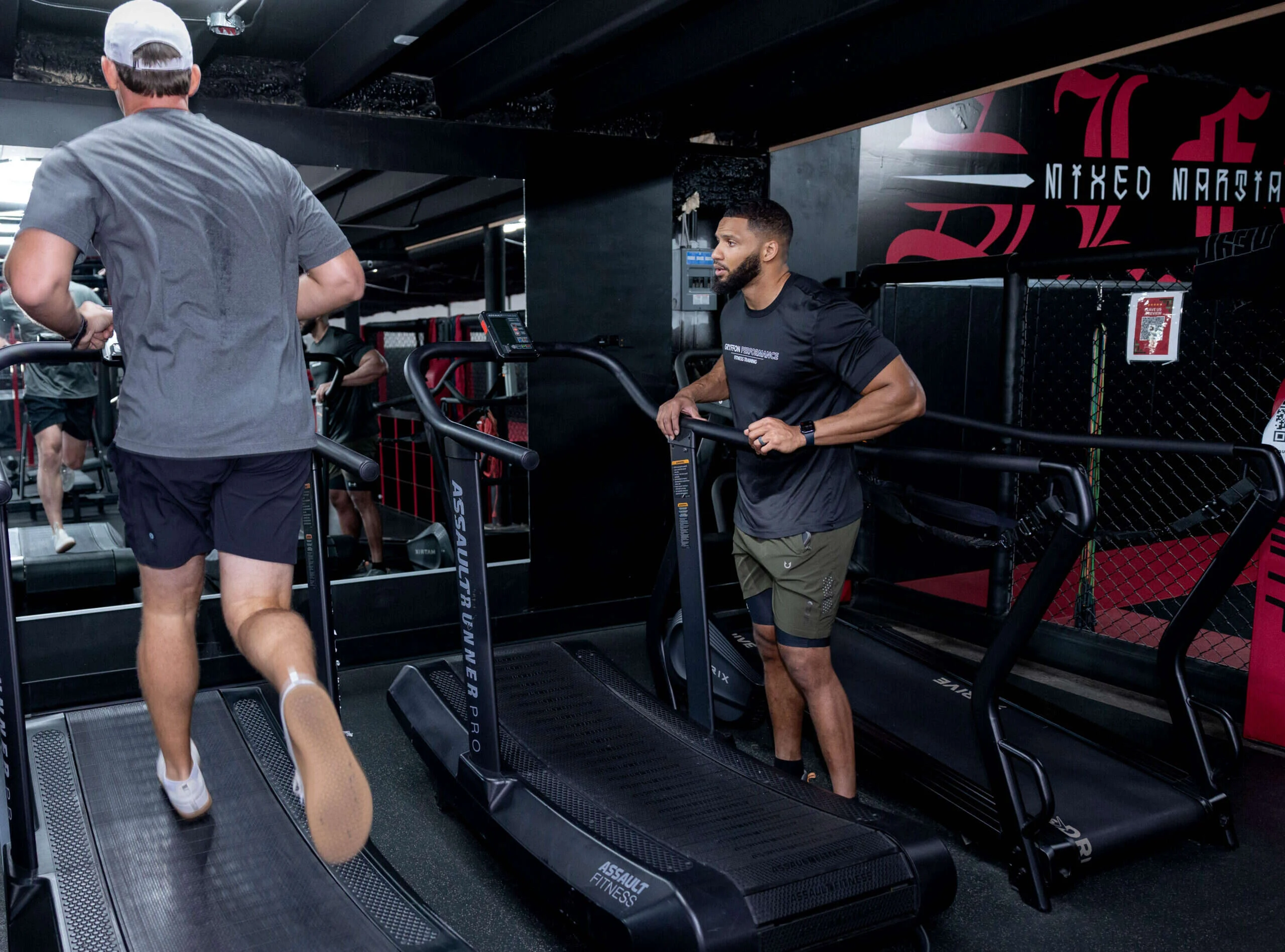
- Load that keeps climbing. A studio with racks, plates and machines means the challenge can keep growing for years, and a coach decides when and how much.
- Eyes on your reps. Nobody can watch their own form from the side. From across the room, a coach catches the knee drift or the shrugged shoulder that a camera filming you never will.
- Aches handled, not guessed at. As we see it, a knee or shoulder that grumbles is usually the muscles around it lacking strength. A video will either have you skip it or push through it. A coach swaps the movement and builds up the muscle around the joint.
- Less to plan. No scrolling for tonight’s workout or wondering what to eat. Nutrition coaching comes personalized with every training program, and both the training and the food targets get adjusted as you change.
- Someone who notices. Pausing a video costs nothing. A coach expecting you, and changing the plan when your week falls apart, is a different kind of commitment.
- Knowing why. You’ll understand what each exercise is for, so you understand your own body and training for good.
From the floor: In our experience, home-workout regulars are often fitter than they think and weaker than they’d like. They can get through a hard circuit. Put a properly loaded squat or row in front of them, coached well, and the progress tends to start moving again within weeks.
If your home routine stopped moving the needle a while ago, apply for coaching and name the lifts that stalled.
Is home training a waste, then?
No. It’s a good start, and the habit you built is worth bringing with you. The question is what happens next. Another year of the same videos tends to mean another year of the same body. The honest cost of staying put is time: months of real effort that could have been building strength.
We’re after more than getting through a tough workout. Gryffon Performance coaches you toward a lean, balanced body, with strength you can see and feel in everything you do outside the studio.
Your first time in, you get a complimentary strategy session: sixty minutes across the table from our founder and head coach, David. Tell him what your home routine looks like, what you want, how your week runs and anything that’s been sore. From there it’s a physical assessment, a conversation about food and a look at the training floor. You’ll head home with a clear starting point, training that fits around work and family, and a plan with reasons behind every piece.
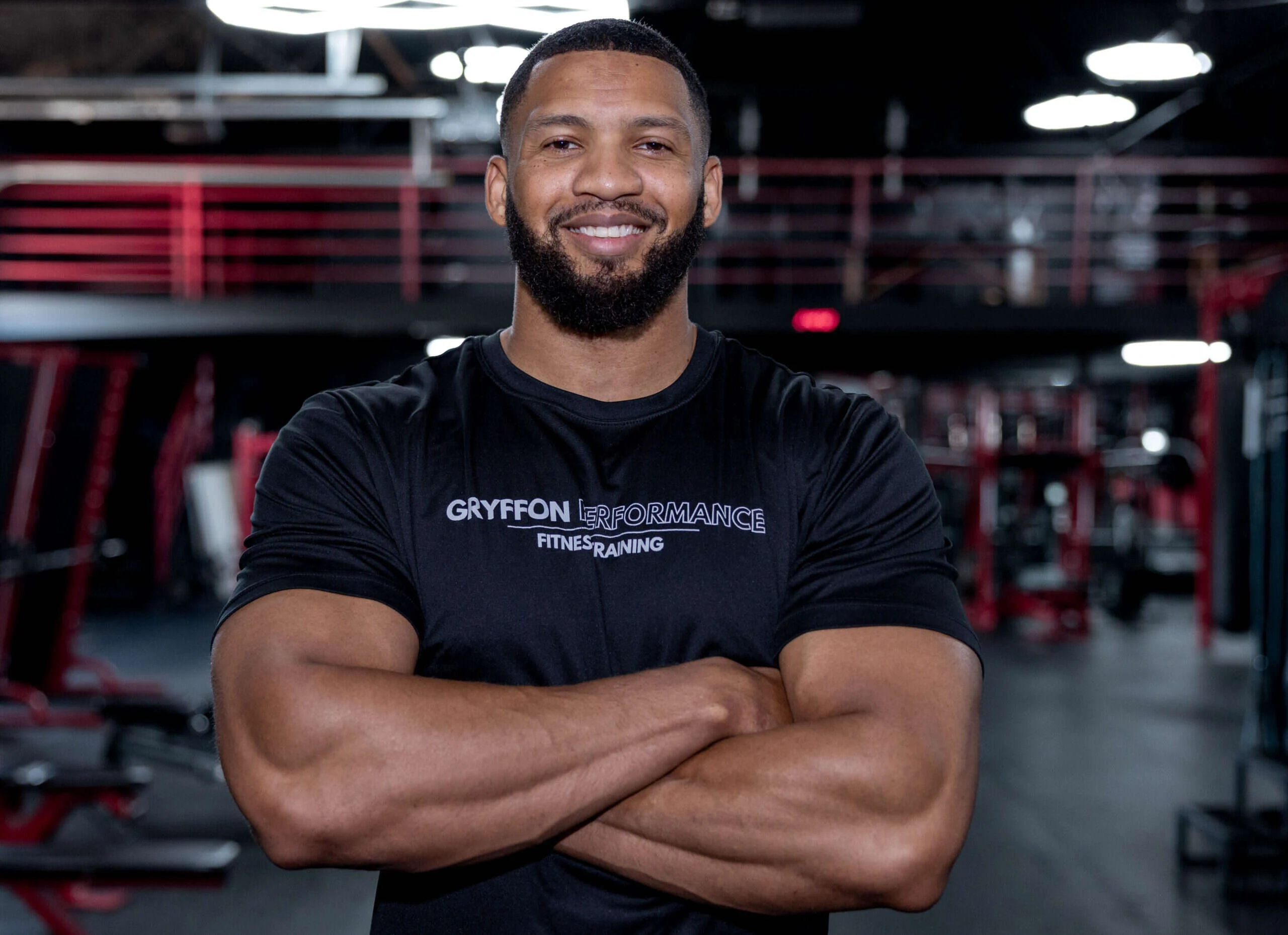
David has watched plenty of hard work go nowhere over 15-plus years coaching men and women. His own story is the opposite: after a serious back injury, steady, progressive training took him to a 600-pound deadlift.
Wondering whether you’re ready for heavier training? You don’t have to know yet. That’s what the in-person assessment is for, and if anything needs more than training, David knows which doctor to send you to.
A personal trainer in Dallas, not another video
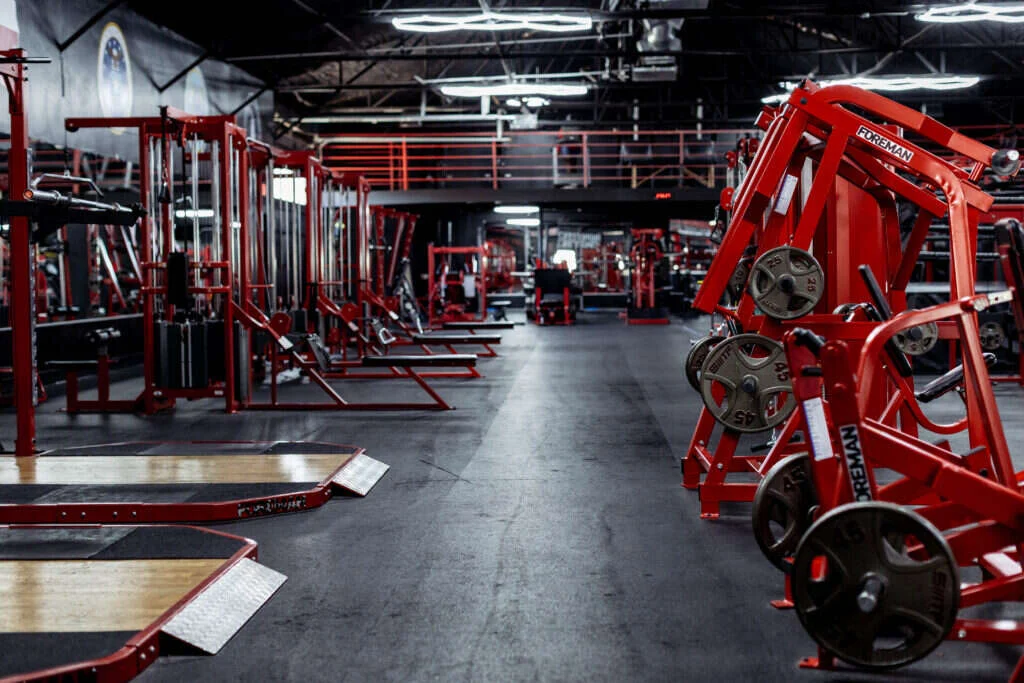
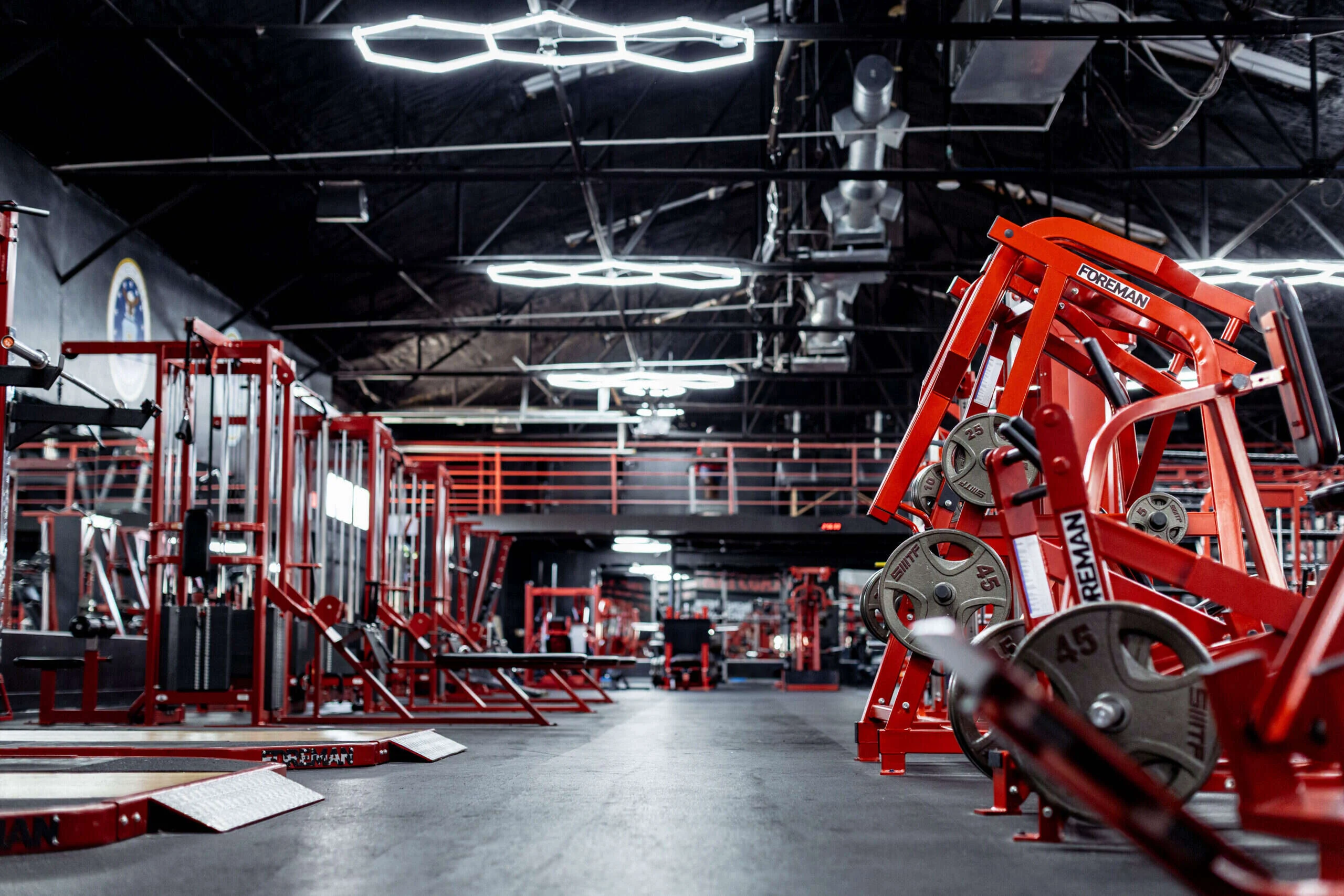
Gryffon Performance is a private training studio at 1925 E Levee St, Dallas, TX 75207, in the Dallas Design District, with free parking. We’re about 12 minutes from Highland Park and close to Uptown, Oak Lawn, the Medical District and Bluffview, and we coach people from the Park Cities and across Dallas. Get directions
50+ five-star Google reviews. Fifteen thousand square feet, private, built for coaching and nothing else. Every client gets a comprehensive assessment and personalized nutrition, included.
Apply for coaching and tell us where your home workouts left off. You’ll hear back within 24 hours, and your first session with us is a complimentary strategy session.
Related reading
- Personal Training for Preston Hollow: When the Home Gym Stops Working
- Private Training Studio vs Public Gym: What Actually Changes
General information about training, not medical advice.
References
- Storer TW, Dolezal BA, Berenc MN, Timmins JE, Cooper CB. Effect of supervised, periodized exercise training vs. self-directed training on lean body mass and other fitness variables in health club members. Journal of Strength and Conditioning Research, 2014;28(7):1995-2006. doi:10.1519/JSC.0000000000000331. PMID 24276303.